
- $400 million: The quantum photonics market in 2023, projected to surge to $3.3 billion by 2030.
- 15 millikelvin: The extreme cooling temperature required for superconducting quantum computers, a major barrier to practical deployment.
- Room temperature operation: The breakthrough enabled by Artilux's germanium-silicon detectors, eliminating the need for cryogenic cooling in photonic quantum computers.
Experts view this alliance as a critical step toward making quantum computing commercially viable by addressing key barriers like energy consumption and real-world deployment in data centers.
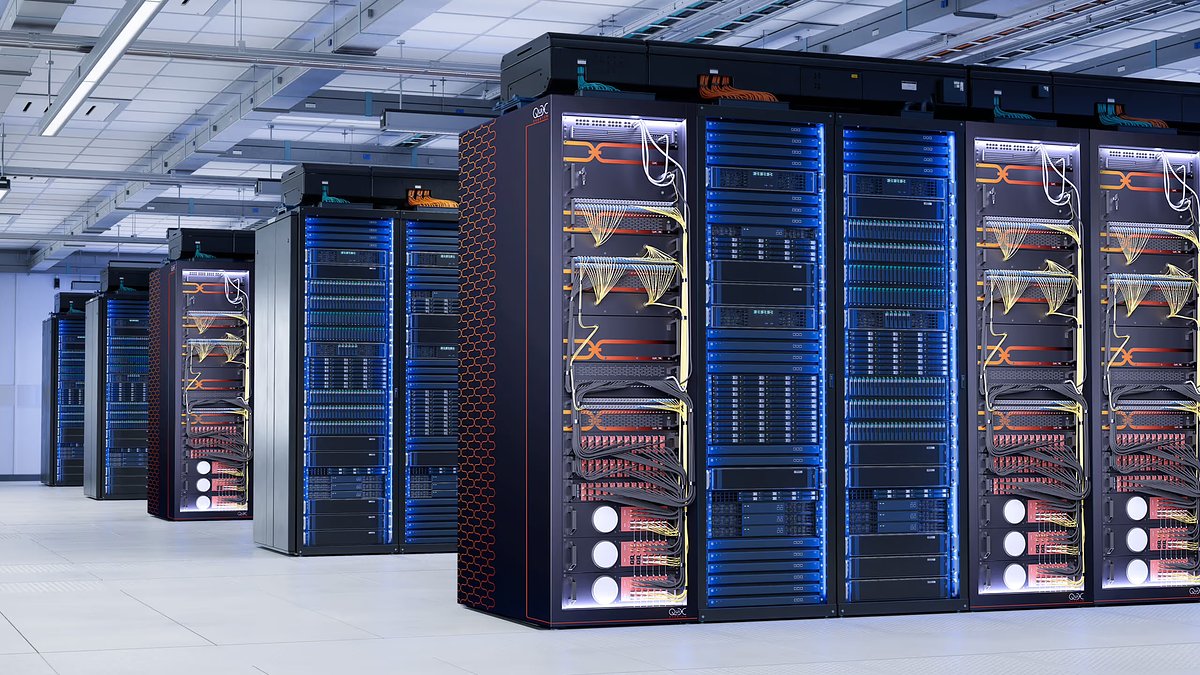
Quantum's Next Leap: Alliance Targets Data Center-Ready Systems
ENSCHEDE, Netherlands & HSINCHU, Taiwan – February 11, 2026 – In a move poised to accelerate the practical application of quantum computing, Dutch hardware leader QuiX Quantum and Taiwanese semiconductor innovator Artilux have announced a strategic collaboration. The signing of a Memorandum of Understanding (MoU) formalizes a partnership aimed squarely at solving two of the most significant barriers to quantum's widespread adoption: immense energy consumption and the challenge of deploying these powerful machines outside specialized labs.
This alliance will merge QuiX Quantum's expertise in building photonic quantum computers with Artilux's cutting-edge detector technology to create more scalable, energy-efficient, and manufacturable systems designed for integration into modern data centers. The collaboration signals a critical maturation point for the industry, shifting focus from theoretical performance to the practicalities of real-world deployment and total cost of ownership.
The Race for Practical Quantum Computing
For years, the promise of quantum computing has been largely confined to pristine laboratory environments. While various quantum architectures have demonstrated exponential speedups for specific problems, their operational requirements have kept them far from mainstream enterprise use. Superconducting quantum computers, for example, often require dilution refrigerators that cool processors to temperatures colder than deep space—around 15 millikelvin—consuming vast amounts of energy and requiring complex, costly infrastructure.
As the quantum photonics market, valued at over $400 million in 2023, is projected to surge to $3.3 billion by 2030, the pressure to overcome these practical hurdles is immense. The industry's next frontier is the data center, where quantum systems must operate as specialized accelerators alongside classical high-performance computing (HPC) infrastructure. This requires a radical rethink of quantum hardware design, prioritizing not just qubit counts but also power efficiency, a smaller physical footprint, and simplified integration.
This is the challenge the QuiX Quantum and Artilux partnership seeks to address. "As quantum computing matures into real-world applications, operating efficiently beyond specialized laboratory environments is becoming increasingly critical," the companies stated in their joint announcement. The collaboration focuses on creating quantum hardware that is inherently compatible with the power, cooling, and space constraints of existing data centers, a crucial step toward making quantum a commercially viable tool for businesses.
A Synergistic Leap in Photonic Technology
The collaboration's technical foundation lies in the synergy between two pioneering technologies. QuiX Quantum is the European market leader in photonic quantum computing, a method that uses particles of light—photons—as qubits. This approach offers inherent advantages, including the ability for the core processor to operate at room temperature and a natural resistance to electromagnetic interference, which significantly reduces the need for complex shielding and cooling compared to other quantum modalities.
However, a critical component of any photonic quantum computer is the detector, which must be able to count single photons with near-perfect efficiency. Historically, the best-performing detectors have been superconducting nanowire single-photon detectors (SNSPDs), which reintroduce the very problem photonics aims to solve: the need for extreme cryogenic cooling. This is where Artilux's innovation becomes a game-changer.
Artilux has pioneered a germanium-silicon (GeSi) photonic platform that enables the creation of high-performance single-photon avalanche diodes (SPADs) that operate efficiently at room temperature. This breakthrough, compatible with standard CMOS semiconductor manufacturing processes, eliminates the need for bulky and power-hungry cryogenic systems for the detection part of the quantum computer. By integrating Artilux's GeSi detectors directly into QuiX Quantum's system architecture, the partnership aims to dramatically simplify the overall hardware stack, reduce energy consumption, and improve manufacturability.
"We are thrilled to partner with Artilux as this collaboration supports our long-term strategy of building scalable and most energy-efficient photonic quantum computers," said Dr.-Ing. Stefan Hengesbach, CEO of QuiX Quantum. "This allows us to improve manufacturability, uptime and reduce operational complexity while further expanding practical deployment."
From Cryo-Coolers to Server Racks
The practical implications of this technological integration are profound. Instead of a massive, multi-ton apparatus requiring specialized structural support and a dedicated cooling plant, the vision is a quantum system that can be housed in a standard server rack. By removing the dependency on cryogenic cooling for detectors, the collaboration paves the way for a significant reduction in the system's overall size, weight, power, and cost (SWaP-C).
This move directly supports QuiX Quantum's objective of delivering high-performance quantum hardware that can be seamlessly installed in data centers and HPC facilities. For CIOs and IT infrastructure managers, this lowers the barrier to entry for adopting quantum technology, transforming it from a monumental capital project into a more manageable hardware integration.
Erik Chen, CEO of Artilux, emphasized the broader impact of the partnership. "We are excited to collaborate with QuiX Quantum on leveraging our detector technologies to advance and support more energy-efficient and scalable quantum hardware," he stated. "Partnerships like this help accelerate progress in next-generation photonic computing and underscores our growing role in global deep-tech innovation across multiple industrial sectors."
A Global Alliance for Deep-Tech Advancement
Beyond the technical innovation, the agreement represents a powerful example of international cooperation driving progress in a critical technology sector. It strategically combines the strengths of the Netherlands' burgeoning quantum ecosystem, where QuiX Quantum is a leading player, with Taiwan's undisputed global leadership in semiconductor manufacturing and photonic technology, embodied by Artilux.
This cross-border synergy was highlighted by Bas Pulles, Representative of the Netherlands Office in Taipei. "We are pleased to witness the signing of this agreement between two technology pioneers; this agreement exemplifies how international cooperation can accelerate breakthrough technologies and create long-term economic and technological value for both regions," Pulles remarked.
In the global race to build a fault-tolerant quantum computer, such strategic alliances are becoming increasingly crucial. The immense complexity and capital investment required mean that no single company or country can do it alone. By combining deep domain expertise in quantum systems with world-class semiconductor capabilities, the QuiX Quantum-Artilux partnership creates a formidable force, accelerating a shared roadmap toward scalable, practical, and commercially impactful quantum computing.