
- $700M Market Cap: QBit Semiconductor achieved a market capitalization of approximately $700 million after its debut on the Taiwan Emerging Stock Board.
- 29% CAGR: The Edge AI SoC market is projected to grow at a compound annual growth rate (CAGR) of nearly 29% through 2028.
- PQC Market Surge: The Post-Quantum Cryptography (PQC) market is expected to grow from $0.42 billion in 2025 to over $2.8 billion by 2030.
Experts view QBit's successful debut and focus on secure Edge AI as a validation of the critical need for specialized, quantum-resistant hardware in an AI-driven world, positioning the company as a key player in the future of secure technology.
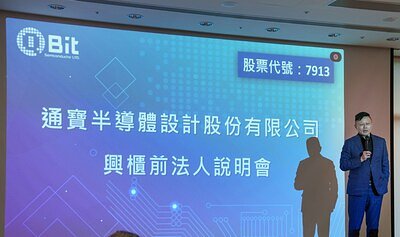
QBit's $700M Debut Signals a New Era for Secure Edge AI
TAIPEI, Taiwan – May 21, 2026 – In a resounding vote of confidence from investors, fabless semiconductor company QBit Semiconductor (TWO: 7913) achieved an approximate market capitalization of USD 700 million following its official listing on the Taiwan Emerging Stock Board (TWO) on May 15. Strong demand pushed the stock to an intraday high of NT$530 (approx. $18), marking a pivotal moment not just for the company, but for the future of secure artificial intelligence.
The successful public debut provides QBit with significant capital, but more importantly, it serves as a powerful validation of its forward-thinking strategy: building the quantum-ready, high-performance silicon that will power the next generation of Edge AI and Physical AI applications.
A New Star on Taiwan's Tech Horizon
QBit's listing is a testament to the continued dynamism of Taiwan's world-renowned semiconductor industry. The company’s debut on the Taiwan Emerging Stock Board—a market managed by the Taipei Exchange (TPEx) specifically to nurture promising enterprises before a full IPO—highlights the effectiveness of the local ecosystem in fostering deep-tech innovation.
This ecosystem is being actively cultivated. Initiatives from Taiwan's Financial Supervisory Commission (FSC) and exchange operators have led to the creation of specialized boards, including the Taiwan Innovation Board (TIB), designed to streamline fundraising and ease regulatory pathways for innovative companies. The recent "Innovation Board 2.0" reform, which opened the board to retail investors, further aims to boost liquidity and establish Taiwan as a premier hub for technology investment in Asia. QBit’s success story is a prime example of this strategy bearing fruit, demonstrating the market's appetite for companies with a clear technological vision and global potential.
The robust investor reaction to QBit's listing underscores a broader market recognition of the critical need for specialized, secure hardware in a world increasingly reliant on AI-driven devices.
Strategic Backing and Competitive Edge
At the heart of QBit Semiconductor is an R&D team comprised of seasoned veterans from global tech giants like Qualcomm and CSR. Led by Chairman Simon Shen, the company has carved out a niche in the complex field of System-on-Chip (SoC) development. Its flagship products integrate three core capabilities: Intelligent Image Processing, Precision Motion Control, and Energy-Aware Sensing Management.
This unique combination has already found a home in multi-function printers, photo printers, and medical imaging solutions. However, the company's vision extends far beyond its current applications, targeting the high-growth markets of robotics, drones, and other forms of Physical AI.
A significant catalyst for QBit's trajectory was a strategic investment from Arm in early 2026. This move was particularly noteworthy as it marked Arm's first direct investment in a Taiwanese IC design company, placing QBit firmly within the influential SoftBank and Arm ecosystem. The partnership is a powerful endorsement of QBit's technological prowess and provides a collaborative framework to advance innovation in areas like advanced image processing and security. This backing, combined with support from Taiwan's National Development Fund, gives QBit a formidable strategic foundation.
While the Edge AI SoC market—projected to grow at a CAGR of nearly 29% through 2028—is competitive with established players like MediaTek and innovators like SiFive, QBit’s differentiation lies in its holistic and security-first approach.
Securing the Future with Post-Quantum Cryptography
QBit's most significant differentiator is its preemptive integration of Post-Quantum Cryptography (PQC) into its silicon. As the world braces for the day when quantum computers become powerful enough to break current encryption standards, QBit is already delivering a solution.
The threat is not a distant-future problem. Cybersecurity experts warn of "harvest now, decrypt later" attacks, where malicious actors are already stealing and storing encrypted data, waiting for the arrival of quantum computers to unlock it. Recognizing this, the U.S. National Institute of Standards and Technology (NIST) has been working to standardize PQC algorithms. In May 2026, NIST declared the shift to quantum-resistant algorithms an "immediate, non-negotiable operational requirement."
QBit was ahead of the curve. Its QB7 series of SoCs achieved certification from NIST's rigorous Cryptographic Algorithm Validation Program (CAVP) back in 2025. This certification is not a mere rubber stamp; it validates that the complex cryptographic algorithms are implemented correctly and securely, providing a high degree of assurance to customers building long-lifecycle products. By embedding this capability directly into the hardware, QBit offers security that is both robust and efficient, a critical factor for resource-constrained edge devices.
This foresight positions QBit to capitalize on the burgeoning PQC market, which is projected to surge from USD 0.42 billion in 2025 to over USD 2.8 billion by 2030. The company is not just selling a chip; it is selling peace of mind for the quantum era.
From Printers to Physical AI: The Road Ahead
The capital raised from its public listing is the fuel that will allow QBit to accelerate its journey from a component supplier to a foundational technology provider. The company is already evolving beyond pure controller chips, expanding its offerings to include comprehensive ASIC services, secure architecture design, and consumable authentication modules. This strategy deepens customer relationships and transforms QBit into an indispensable partner.
The future applications for QBit's technology are transformative. An autonomous drone delivering medical supplies, a surgical robot performing a delicate procedure, or a city's critical infrastructure sensors all require more than just intelligence—they demand verifiable security. An AI that cannot be trusted is an AI that cannot be deployed. QBit’s quantum-resistant SoCs are designed to provide that trust.
With its successful market debut, QBit Semiconductor is now armed with the resources to deepen its research and development, expand its market presence, and turn its ambitious vision into reality. As the digital and physical worlds continue to merge, the company is strategically positioned not just as a new player on the stock market, but as a key architect for a more intelligent and fundamentally secure connected future.