
- 80% of health outcomes are influenced by social drivers of health (SDOH) like income, shelter, and food access.
- 2023 HRSA competition: Leto Tech's software placed second in a national competition, validating its potential.
- 10,000+ U.S. companies have adopted the Public Benefit Corporation (PBC) model, aligning with Leto Tech's structure.
Experts agree that addressing social drivers of health through technology like Leto's platform is critical, as clinical care alone cannot solve systemic health disparities.
Purdue Startup Launches Tech to Tackle Social Drivers of Health
WEST LAFAYETTE, Ind. – April 08, 2026 – A new software platform from Indiana-based startup Leto Tech PBC is aiming to revolutionize how social service and healthcare professionals connect their clients with vital community resources. Launched this week, the system digitizes what has long been a manual, time-consuming process, offering a streamlined tool for organizations dedicated to supporting vulnerable populations.
The software is designed for a wide range of users, from caseworkers at federally qualified health centers and hospitals to staff at universities and churches. It functions as a highly customizable electronic version of a social worker's traditional three-ring binder, a repository of essential information that is often cumbersome and difficult to update. Leto's platform transforms this binder into a dynamic, searchable database, aiming to make the process of finding and referring clients to services like food banks, housing assistance, and mental health support more efficient and effective.
The Caseworker's New Digital Toolkit
At its core, Leto's system is designed to reduce the administrative burden on frontline professionals, allowing them to focus more on direct client interaction. The platform enables users to create a customized digital directory of resources that can be searched in multiple ways, including through targeted screening questions, keywords, organization name, or geographic location.
Once an appropriate resource is identified, caseworkers can share the referral with clients through a secure text message or a professionally formatted document. This modernizes the communication process and provides clients with clear, actionable information.
"It provides automated processes to move through enrolling and referring a client to local social services," said team member Nicole Adams, who was instrumental in the software's creation. The system's flexibility is a key feature; as Adams noted, "It can exist as a stand-alone web application or be embedded into electronic health records or student information systems." This integration capability is crucial for scalability, as it allows hospitals, clinics, and universities to incorporate the tool directly into their existing workflows, minimizing disruption and encouraging adoption.
Addressing the 80% of Health Outside the Clinic
The launch of Leto's platform comes at a time of growing recognition within the healthcare industry that clinical care is only one piece of the wellness puzzle. It is now widely accepted that as much as 80% of a person's health is determined by social drivers of health (SDOH)—the conditions in which people are born, grow, live, and work.
"This 80% represents the environment someone lives in and the resources they have, including income, shelter, food, transportation, education and health behaviors," Adams explained. "For example, it is very difficult to manage your diabetes through diet if you don’t have access to nutritious food."
By facilitating connections to these essential resources, Leto's software directly targets the root causes of many health issues. The platform is entering a competitive and rapidly evolving market for SDOH technology. Established players like Unite Us and Findhelp have built extensive networks to coordinate "whole-person care." Leto aims to differentiate itself not only through its highly customizable and embeddable technology but also through its foundational mission. The platform's three-pronged approach—focusing on enhanced screening, deeper client connection through engagement tools, and robust analysis of outcomes—is designed to provide organizations with a clear understanding of which interventions are most effective.
From University Lab to Public Benefit Corporation
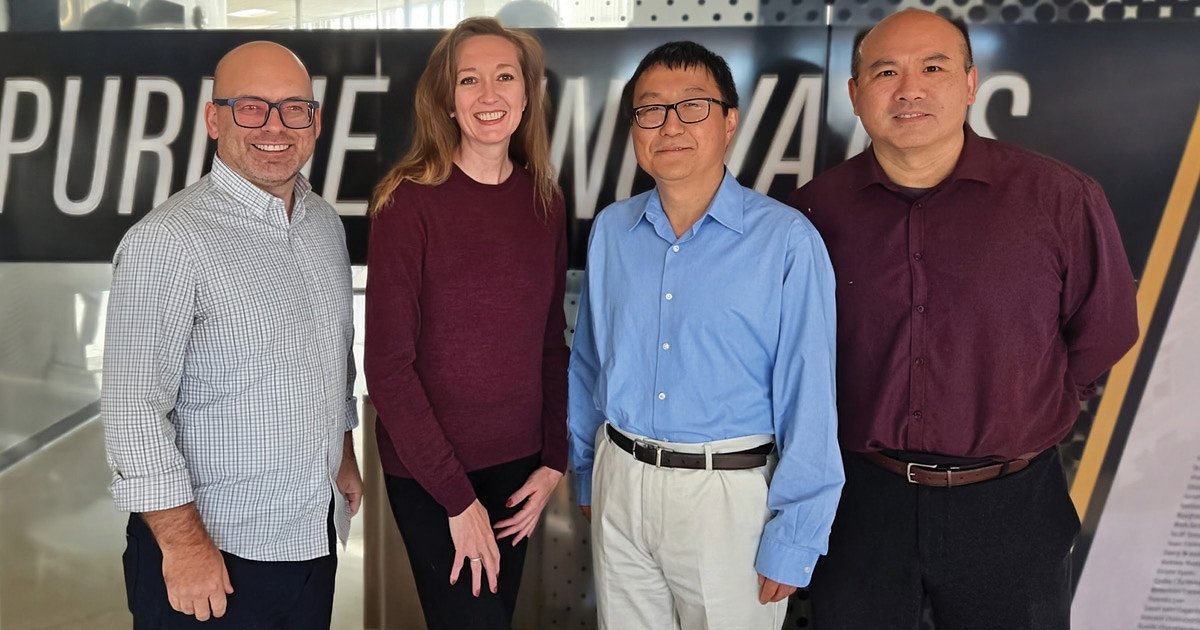
Leto Tech's journey from a concept to a commercial product is a testament to the power of university-led innovation. The software originated as a research project at Purdue University, developed by a team including Adams, an associate research professor at the Regenstrief Center for Healthcare Engineering; Nan Kong, a professor at the Weldon School of Biomedical Engineering; and Baijian Yang, a professor in the School of Applied and Creative Computing.
The project gained significant momentum in 2023 when it placed second in a national competition held by the federal Health Resources and Services Administration (HRSA), validating its potential to improve care coordination. Following this success and after hundreds of hours of conversations with caseworkers, the software was further developed with support from the Regenstrief Center and validated by healthcare organizations in central Indiana.
The intellectual property was disclosed to the Purdue Innovates Office of Technology Commercialization (OTC), which registered a copyright and subsequently granted an exclusive license to Leto Tech PBC for commercialization. This process highlights Purdue's robust ecosystem for translating academic research into market-ready solutions that address pressing societal needs. In January 2025, Adams partnered with Mike Shepard to found Leto with a clear mission: to improve healthcare through better resource and relationship management.
Crucially, the founders chose to structure the company as a Public Benefit Corporation (PBC), a for-profit entity legally bound to consider its social impact alongside financial returns. This model, now adopted by over 10,000 U.S. companies, aligns with the startup's core values. "We want to make a positive impact on society," Adams stated. "We are here to support the people and organizations that help people live better lives. Many of these organizations are underfunded, and we don’t want a high price tag to get in their way of using our product."
Navigating the Path to Widespread Impact
While the promise of such technology is immense, the path to widespread adoption is not without its challenges. The field of social service technology often grapples with issues like engaging over-burdened community-based organizations, navigating complex data privacy regulations, and overcoming resistance to changing established workflows. Many smaller non-profits lack the resources or incentives to adopt new digital platforms, a hurdle any new entrant must address.
Leto's design appears to anticipate some of these obstacles. Its potential for integration with existing EHR and student information systems could lower the barrier to entry for larger institutions. Furthermore, its user-centric development process, which involved extensive feedback from caseworkers, suggests a product built with the end-user's daily realities in mind.
The platform’s emphasis on analysis may prove to be its most compelling feature for long-term scalability. By integrating resource management data with client outcomes, Leto provides a mechanism for organizations to measure the impact of their services. This ability to demonstrate tangible results—such as improved health metrics or higher student retention—is critical for securing funding and justifying investment in new tools. As social service and healthcare systems become increasingly intertwined, the ability to close the loop on referrals and prove their effectiveness will be paramount for any platform seeking to make a lasting difference.