
- 5 years of R&D: PUMA's NITRO™ technology, proven in running, is now adapted for football.
- 180 grams: The Ultra Nitro 7 boot weighs just 180 grams, designed for explosive energy return.
- €300 million investment: PUMA plans to invest €300 million in 2025 to fuel innovation.
Experts would likely conclude that PUMA's strategic deployment of NITRO™ technology into football boots represents a significant challenge to Nike and Adidas' dominance, backed by substantial R&D and investment.
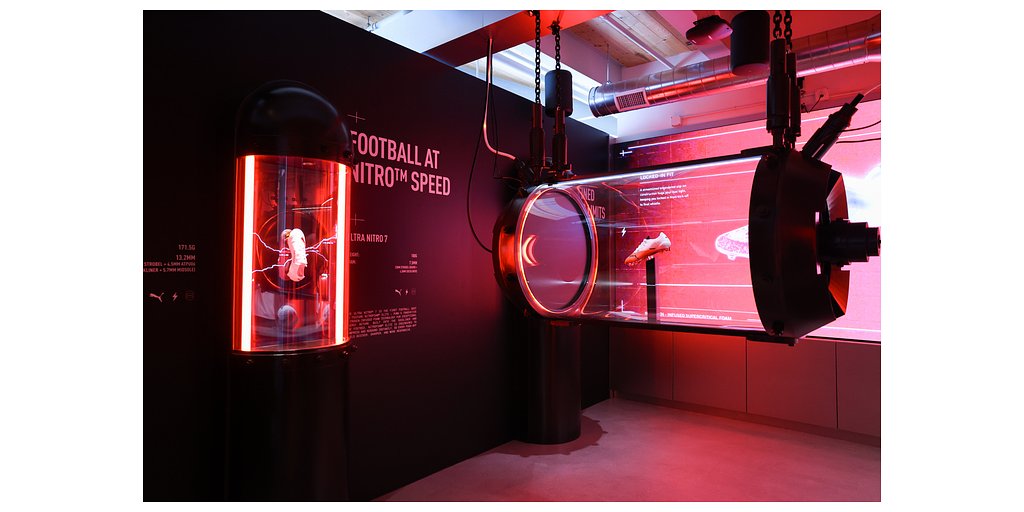
PUMA's NITRO Gambit: A Tech-Fueled Assault on the Football Market
LOS ANGELES, CA – June 11, 2026 – In a meticulously orchestrated event blending high-tech spectacle with grassroots authenticity, global sports brand PUMA has officially declared its intent to disrupt the football footwear market. The launch of the PUMA NITRO™ Lab in Los Angeles was more than a product reveal; it was a strategic deployment. By integrating its celebrated NITRO™ foam technology into a football boot for the first time with the new Ultra Nitro 7, PUMA is weaponizing an innovation honed on the running track to challenge the long-standing duopoly of Nike and Adidas on the pitch.
This is not merely a new shoe. It’s a calculated move underpinned by years of R&D, significant financial investment, and a clear ambition to capture a greater share of the global athletic market. The launch signals a pivotal moment for PUMA as it leverages its deep expertise in material science to redefine one of the most critical metrics in modern football: speed.
The Science of Speed: A Five-Year Bet Pays Off
The core of PUMA's new offensive is NITRO™ technology, an innovation that has already reshaped the brand’s running division since its debut in 2021. The technology involves a supercritical foaming process that infuses nitrogen gas into the foam, creating a material that is exceptionally lightweight, cushioned, and responsive. This isn't an unproven concept; it's a battle-tested formula. Runners in NITRO™-powered shoes, like the acclaimed Fast-R3, have reached podiums globally, including an Olympic bronze medal for Molly Seidel, cementing the technology's performance credentials.
Now, that same DNA has been meticulously adapted for the unique demands of football. Romain Girard, PUMA's VP of Innovation, articulated the philosophy behind the transition. “NITRO is built on one obsession: what does the athlete actually need to go faster?” he said. “Five years of testing, refining, and perfecting NITRO with some of the world’s best runners gave us the answer, and those learnings are now inside the Ultra Nitro 7.”
The result is a boot engineered for explosive energy return. The Ultra Nitro 7 integrates NITROFOAM™ ELITE directly into the sockliner and footbed, designed to compress and rebound instantly with every stride and touch. Weighing a mere 180 grams, it pairs this responsiveness with a minimalist, high-tensile ULTRAWEAVE upper for lightweight precision and a SPEEDSYSTEM 2.0 outsole architected for propulsive traction. PUMA is betting that this combination will provide a tangible performance advantage that players can feel.
A Strategic Assault on the Football Footwear Duopoly
PUMA is entering a fiercely defended territory. The high-performance football boot market has been dominated for decades by Nike, with its Mercurial line and visible Air Zoom technology, and Adidas, with its iconic Predator and agile F50 ranges. Breaking into this space requires more than just a good product; it requires a disruptive technology and a sound market strategy.
PUMA's strategy appears to be a direct assault on the 'speed' category, positioning the Ultra Nitro 7 as a direct competitor to the fastest boots on the market. The company’s ambitions are explicitly quantified: PUMA aims to increase its global athletic footwear market share from 5.2% in 2024 to 7% by 2026. This launch is a critical pillar in achieving that goal, particularly in the lucrative North American soccer market, where the brand is investing heavily in visibility and grassroots connections.
Dominique Gathier, VP of Teamsport, PUMA, emphasized the scale of the ambition. “The Ultra NITRO 7 will make its debut on the pitch at the biggest tournament in the world,” he stated, confirming the boot’s role as a flagship product. “With the PUMA NITRO Lab, we have created the space to show PUMA’s ambition to bring innovation to football, always with the obsession to help athletes perform at their best.”
Winning Hearts and Cleats: The Athlete-Centric Ecosystem
Technology alone does not guarantee market success. Validation is key, and PUMA is executing a two-pronged strategy to win over both elite professionals and aspiring players. The top of the pyramid is secured by a roster of high-profile athletes, including Christian Pulisic, Diogo Dalot, and Cody Gakpo, who will wear the Ultra Nitro 7 during this summer's major international tournament. Their performance on the world's biggest stage will serve as the ultimate real-world test and marketing showcase.
Simultaneously, PUMA is building its foundation from the ground up. The NITRO™ Lab launch event was notable for its 'community-first' approach. Before the global media descended, PUMA opened its doors to a group of young players from the LA Breakers, a local youth football club, giving them the first look and feel of the new boots. This gesture is part of a broader strategy to foster authentic connections and build brand loyalty from an early age, creating an ecosystem where the brand is seen as a partner in player development, not just a supplier of equipment.
Beyond the Boot: A Glimpse into PUMA's Innovation Pipeline
The NITRO™ Lab event also served as a window into the company's future, reinforcing that the Ultra Nitro 7 is a starting point, not a final destination. Frosted display cases offered previews of next-generation concepts like the Ultra Vision and Ultra Vision∞ boots, the futuristic PUMA 3D Atom concept boot, and the Cryo Vest, a performance cooling garment for athletes in extreme heat.
This pipeline is backed by serious financial commitment. PUMA has earmarked significant capital expenditures, including a reported €300 million for 2025, to enhance its infrastructure and fuel its innovation engine. This long-term vision, which also integrates sustainability targets, demonstrates a holistic commitment to securing a leadership position in sports performance technology. The message from Los Angeles is clear: PUMA is not just here to compete; it is here to change the game by systematically injecting proven, high-performance technology into every facet of the athlete's experience.