
- Market Growth: Home battery backup sector projected to grow from $6 billion in 2024 to $24 billion by 2034.
- FridgeGuard Capacity: 1024Wh, powers a standard refrigerator for up to 15 hours.
- HomePower 3600 Pro Max: Expandable to 43kWh, supports 120V and 240V for high-draw appliances.
Experts would likely conclude that Jackery’s residential energy solutions represent a significant step toward mainstreaming home energy autonomy, combining technological innovation with cost-effective, scalable power resilience.
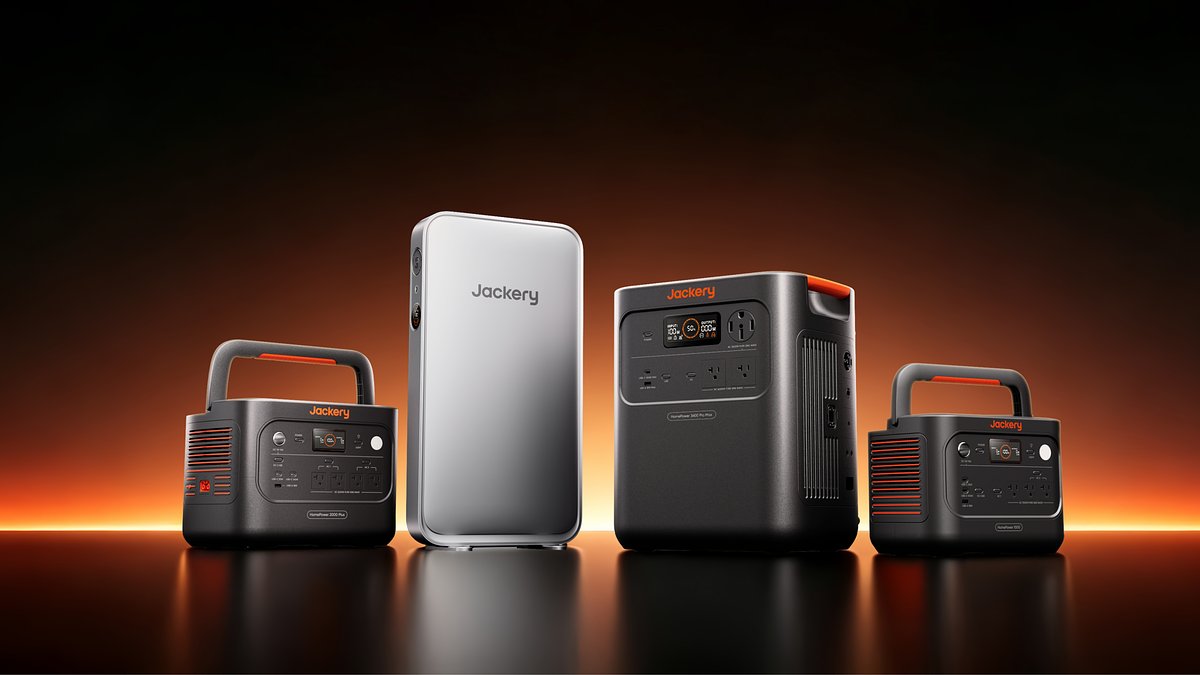
Powering the Home Front: Jackery’s Bid for Energy Autonomy
FREMONT, CA – June 17, 2026 – As aging power grids strain under the pressures of extreme weather and surging demand, the concept of energy resilience is migrating from the garage into the heart of the modern home. Capitalizing on this pivotal shift, portable power leader Jackery today unveiled a significant expansion of its residential ecosystem, aiming to reframe backup power from a cumbersome utility into a seamlessly integrated household appliance. The launch is headlined by the award-winning FridgeGuard, a slimline refrigerator battery, and a new, tiered HomePower Series designed to offer scalable energy autonomy.
This move places Jackery squarely in the center of a booming market. The home battery backup sector, valued at nearly $6 billion in 2024, is projected to swell to over $24 billion by 2034, driven by a consumer base increasingly seeking shelter from blackouts and volatile utility costs. Jackery's strategy is not just to sell a product, but to sell a new paradigm of domestic power security—one that is quiet, clean, and aesthetically conscious.
The Appliance of Resilience: Power Moves Indoors
For decades, home backup power meant a noisy, gas-guzzling generator relegated to the outdoors. Jackery’s latest offerings challenge this legacy with a design-first approach. The centerpiece of this evolution is the FridgeGuard, which recently earned a prestigious iF DESIGN AWARD 2026. With a svelte 2.6-inch profile and a finish designed to complement contemporary stainless steel appliances, it is built to be seen—or to disappear alongside a refrigerator.
This product embodies a strategic pivot from purely functional hardware to a lifestyle-integrated solution. Its 1024Wh capacity can keep a standard refrigerator running for up to 15 hours, safeguarding hundreds of dollars in groceries during an outage. The system is engineered for permanent standby, featuring a 10-millisecond Uninterruptible Power Supply (UPS) switchover that ensures the appliance never notices the grid has failed. This response time is critical and competitive, matching or exceeding offerings from rivals like EcoFlow.
“For today's families, a backup power system is no longer an optional gadget, but a reliable household appliance,” said Steven Wang, CEO of Jackery, in the company's announcement. This statement encapsulates the industry's broader ambition: to make energy independence as commonplace as a dishwasher. By making the technology approachable, with a plug-and-play setup and a sub-$600 price point for Costco members, Jackery is lowering the barrier to entry for renters and homeowners who might be intimidated by complex, whole-home solutions.
Scalable Power for an Unreliable Grid
Beyond single-appliance protection, Jackery is targeting whole-home resilience with its revamped, three-tiered HomePower Series. This lineup reflects a market-wide trend where companies like Anker SOLIX and Goal Zero are also offering modular systems that can grow with a family's needs. The common technological thread is the adoption of Lithium Iron Phosphate (LiFePO4) batteries, now the industry standard for their superior safety and longevity.
Jackery claims its LiFePO4 platform can endure 6,000 full charge cycles while retaining 70% of its capacity, translating to a potential 16-year operational lifespan. This is at the high end of consumer-grade specifications and a crucial factor in the total cost of ownership calculation against generators, which require frequent maintenance and fuel.
The flagship HomePower 3600 Pro Max is positioned as a direct replacement for gas generators. Its base 3.6kWh capacity can be expanded to a massive 43kWh, enough to power a home’s core circuits for over a week. With a 4000W output and support for both 120V and 240V, it can handle high-draw appliances like central air conditioners and water heaters. The system's Auto Backup technology, when paired with a Manual Transfer Switch, provides the same automated, instantaneous power transition as permanently installed standby units, but without their noise, emissions, or complex installation.
For those seeking a more modest entry point, the HomePower 2000 Plus v2 offers a 2kWh capacity expandable to 12kWh. Its 2400W output is sufficient to run multiple essential appliances simultaneously. The entry-level HomePower 1000 v2, meanwhile, is purpose-built for a different kind of modern crisis: the loss of digital connectivity.
The ROI of Resilience: Cost, Savings, and Sustainability
While the peace of mind offered by uninterrupted power is invaluable, the financial calculus remains a primary driver for consumers. Jackery's aggressive launch pricing, with discounts ranging from 38% to 51%, makes a compelling initial case. The HomePower 2000 Plus v2, for instance, is debuting at $899, a steep cut from its $1,799 regular price.
These prices put Jackery's modular systems in a competitive position against rivals, but the long-term value proposition hinges on displacing both utility bills and the cost of traditional generators. The company claims the HomePower 3600 Pro Max can save homeowners up to $4,238 annually through Time-of-Use (TOU) scheduling, where the battery charges on cheap, off-peak electricity and discharges during expensive peak hours. While this figure represents an ideal scenario in a high-cost energy market, independent analyses suggest typical annual savings from TOU arbitrage are more conservatively estimated between $900 and $1,500. The real ROI emerges when factoring in the avoidance of fuel and maintenance costs associated with gas generators, which can run into thousands over the system's lifespan.
Beyond cost, the environmental argument is potent. Unlike generators that burn fossil fuels, Jackery's systems run silently and without emissions. Their compatibility with solar panels allows for true off-grid, renewable energy generation. This aligns with Jackery's stated corporate goals, which include reducing its carbon footprint and using more sustainable materials in production. The long-term viability of these claims will depend on the development of robust recycling infrastructure for LiFePO4 batteries, but the operational benefits over combustion-based alternatives are immediate and clear.
Securing the Digital Lifeline
The widespread shift to remote work has turned reliable internet and power from a convenience into an economic necessity. An outage is no longer just an inconvenience; it's a direct threat to productivity and income. The HomePower 1000 v2 is engineered specifically for this reality.
Its 1024Wh capacity and 1500W output are more than enough to power a complete home office setup—laptop, monitors, and networking gear—for days, not minutes. Where a standard desktop UPS offers a brief window to save work, the HomePower 1000 v2 provides up to 57 hours of continuous productivity for a laptop. Its sub-10ms switchover ensures that sensitive electronics and active video calls are never interrupted, while 3kV surge protection shields expensive equipment from the voltage spikes common during storms.
Features like Jackery Priority Routing™, which automatically funnels remaining power to the most critical devices during a prolonged outage, demonstrate a nuanced understanding of the modern user’s needs. By creating a dedicated solution for digital continuity, Jackery is targeting a vital and growing segment of the market for whom uptime is non-negotiable.