
- 5% boost in data center power efficiency with 800 VDC architecture
- 45% reduction in material costs with thinner copper cables
- 98% efficiency in AC-to-DC conversion for 800 VDC Power Racks
Experts agree that Delta's 800 VDC power architecture and integrated cooling solutions represent a critical advancement in addressing the energy and thermal challenges of next-generation AI infrastructure, ensuring sustainable and scalable growth for the industry.
Powering the AI Revolution: Delta Unveils Next-Gen Infrastructure
SAN JOSE, Calif. – March 16, 2026 – The artificial intelligence revolution runs on electricity, and its thirst is becoming unquenchable. As AI models grow exponentially more complex, the data centers that train and run them face an impending crisis: a power and thermal wall. At the NVIDIA GTC conference, global power management leader Delta Electronics unveiled a comprehensive suite of solutions designed not just to scale that wall, but to rebuild the very foundation of the AI factory.
In a significant collaboration with NVIDIA, Delta is showcasing an integrated ecosystem of power, cooling, and microgrid technologies engineered to support the next-generation 800-volt direct current (VDC) architecture. This move signals a fundamental shift in how data centers are built, addressing the core challenges of energy efficiency, deployment speed, and scalability that threaten to bottleneck AI's progress.
The 800-Volt Game-Changer
The heart of the new approach is the transition from legacy 415-volt alternating current (AC) systems to a more efficient 800 VDC power architecture. This is more than an incremental upgrade; it's a strategic redesign that promises to boost overall data center power efficiency by up to 5%. By reducing the number of power conversion steps between the grid and the GPU, this architecture drastically cuts down on energy wasted as heat. The higher voltage also allows for the use of thinner, lighter copper cables, reducing material costs by as much as 45% and freeing up critical space within crowded server racks.
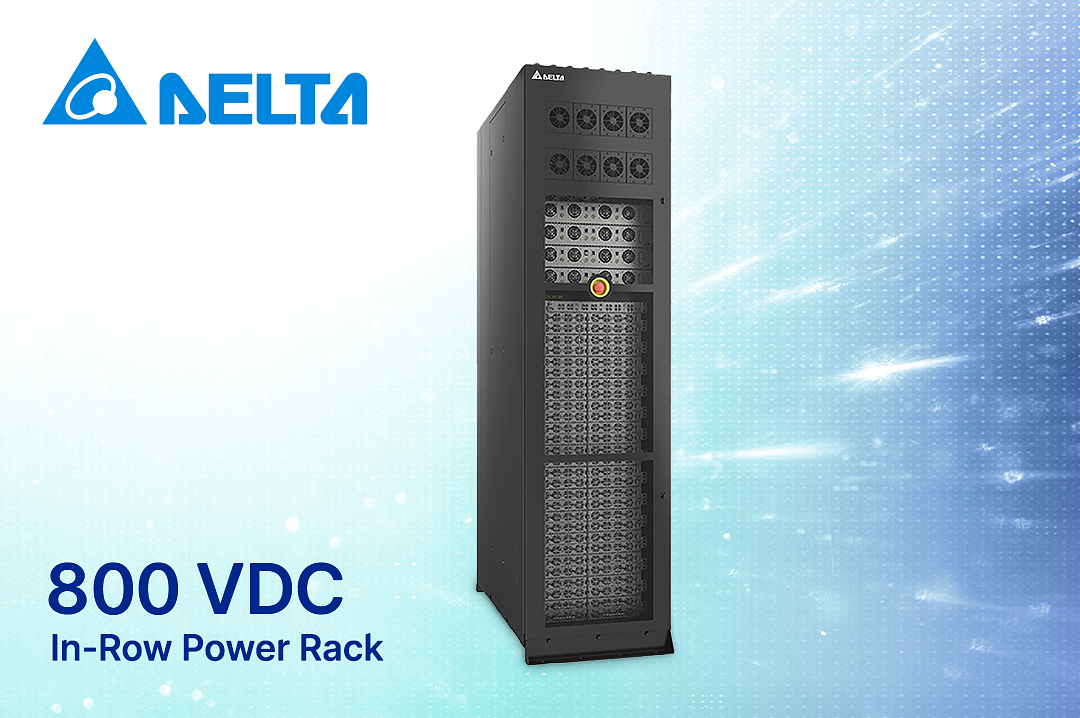
Delta's showcase provided a tangible look at this future. The company debuted its 800 VDC In-Row 660kW Power Racks, featuring an impressive AC-to-DC conversion efficiency of up to 98%. These racks come with 480kW of embedded battery backup units (BBUs), ensuring a stable and uninterrupted power supply for volatile AI workloads. This integration allows data centers to handle the massive, millisecond-scale power swings characteristic of GPU training without destabilizing the system.
"The 800 VDC power architecture proposed by NVIDIA for the AI factories of the future is a game-changer," said Franziskus Gehle, Vice President of Delta Electronics (Americas). "As AI systems push electrical and thermal limits, we are excited to showcase the depth and breadth of our solutions that are designed for how future AI factories are actually built, powered, cooled, and operated efficiently."
Keeping AI Cool Under Pressure
With immense power comes immense heat. The computational density required for modern AI means that traditional air cooling is no longer sufficient. Delta's presentation put a strong emphasis on its advanced liquid cooling technologies, designed to dissipate the thermal load of next-generation AI servers.
A key highlight is the new 2.4-megawatt (MW) In-Row Coolant Distribution Unit (CDU). This liquid-to-liquid system is capable of removing 2,400kW of heat—enough to cool hundreds of high-performance servers—within a compact footprint. Engineered specifically for 800 VDC architectures, it features redundant pumps and an innovative channel design to maximize thermal transfer. For even larger deployments, Delta also presented a scalable 3MW CDU, demonstrating a clear roadmap for cooling the multi-megawatt AI racks of tomorrow.
Further demonstrating its deep integration with the NVIDIA ecosystem, Delta also revealed cooling solutions tailored for the NVIDIA MGX and GB300 NVL72 architectures, including in-rack CDUs and new micro-channel cold plate designs. This ensures that the foundational cooling infrastructure is co-designed with the cutting-edge processors it is meant to support.
Building a Resilient, Green AI Foundation
Beyond raw power and cooling, Delta addressed the two most pressing long-term challenges for the AI industry: sustainability and speed of deployment. The company unveiled a sophisticated Microgrid Solution that aims to make AI factories more resilient, sustainable, and faster to bring online.
Central to this solution are two key innovations: Solid State Transformers (SST) and Solid Oxide Fuel Cells (SOFC). The newly developed SST boasts a leading efficiency of up to 98.5% while converting medium-voltage AC from the grid directly to 800 VDC, further streamlining the power chain. Meanwhile, the SOFCs provide clean, quiet, and resilient onsite power generation. Unlike traditional gas turbines or diesel generators, SOFCs produce far lower CO2 emissions and can run on greener fuels like hydrogen in the future.
Crucially, this onsite generation capability helps solve the 'time-to-power' problem that plagues new data center construction. By providing a reliable power source independent of lengthy utility grid upgrades, Delta claims its SOFC solution can slash deployment timelines from years to mere months. Combined with all-in-one energy storage systems and an intelligent management platform, the microgrid ensures that AI factories have a stable, sustainable, and self-sufficient power source.
The Ecosystem Powering the AI Empire
While Delta's announcements at GTC are significant, they also illuminate a broader strategy by NVIDIA and the industry at large. Building the AI factories of the future is not a task for a single company; it requires a robust ecosystem of specialized partners, the unsung heroes working behind the scenes. Delta is a key player, but it is part of a larger industry-wide movement.
NVIDIA has been actively collaborating with a host of power and infrastructure leaders, including Vertiv, Schneider Electric, and Eaton, to create reference designs and foster a competitive market for 800 VDC solutions. This collaborative approach ensures that hyperscalers and data center operators will have a diverse and reliable supply chain to build out their next-generation infrastructure.
The innovations on display are not merely product updates; they represent the critical enabling technologies that will determine the pace and ultimate scale of AI development. As the focus shifts from the chips themselves to the massive infrastructure needed to support them, the work of companies like Delta is moving from the backroom to the spotlight, proving that the future of artificial intelligence will be built on a foundation of smart, efficient, and sustainable power.
Topics & Related
AI & Machine Learning
Artificial Intelligence
Generative AI
ESG
Decarbonization
AI & Software Platforms
Related Company Pulse