
- 50 gigawatts of orders secured by Heron Power from prospective customers, primarily hyperscale data center developers.
- 30% smaller and 25% lighter solid-state transformers (SSTs) compared to traditional transformers, with up to 98.5% efficiency.
- 6% improvement in Net Present Value (NPV) projected for projects using the integrated Heron-LG system.
Experts would likely conclude that this partnership represents a significant step toward modernizing the U.S. electrical grid, combining cutting-edge AI-driven technology with domestic manufacturing to address critical energy challenges.
Powering America's Future: A New Alliance Tackles the Grid's AI Problem
SCOTTS VALLEY, CA – June 02, 2026 – The invisible infrastructure that powers our modern world is under unprecedented strain. A confluence of mass electrification, a resurgence in domestic manufacturing, and the explosive, energy-hungry growth of artificial intelligence is pushing the U.S. electrical grid toward its limits. Into this high-stakes environment comes a new collaboration that isn't just about managing the crisis, but about building a more resilient and domestically-rooted system for the future.
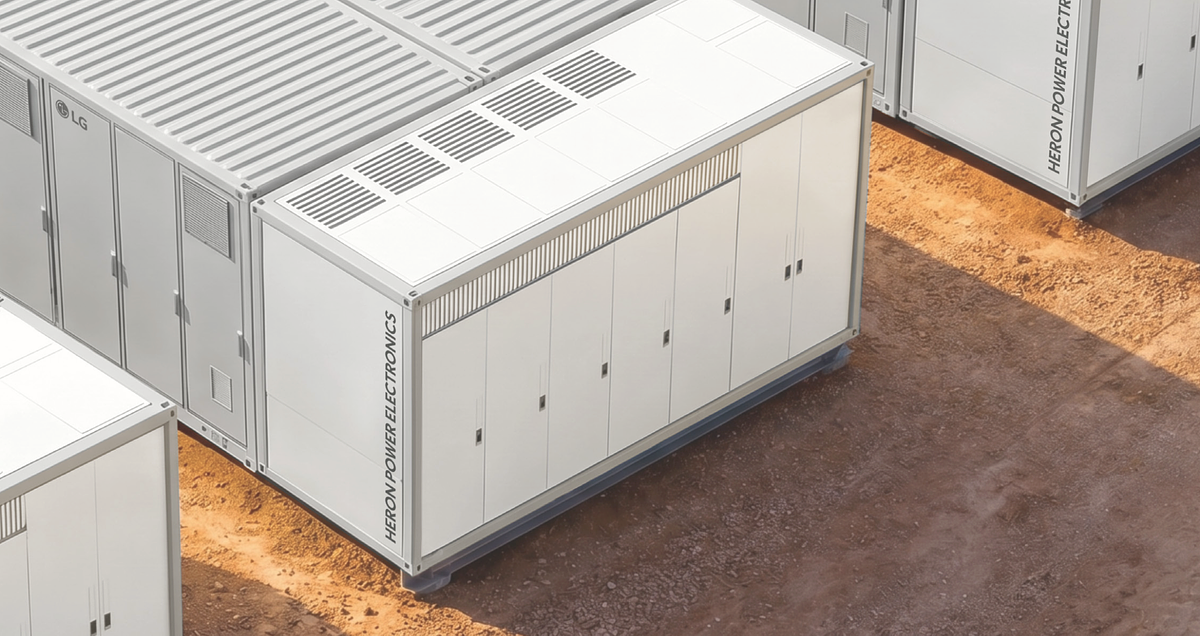
Heron Power, a dynamic U.S. startup in power electronics, announced today a design and engineering partnership with LG Energy Solution Vertech, the energy storage integration arm of the global battery leader. The alliance aims to create a fully integrated, American-made energy storage platform, uniting Heron’s breakthrough solid-state transformers with LG’s proven, U.S.-manufactured battery systems. It’s a move that signals a critical shift from simply adding more power to fundamentally rethinking how we convert, store, and deploy it.
A Made-in-America Power Play
At the heart of the collaboration is a shared commitment to strengthening the American energy supply chain at a moment of profound vulnerability. The partnership will integrate Heron Power’s “Heron Link” solid-state transformer with LG Energy Solution Vertech’s battery energy storage systems into a single, validated DC-to-AC platform. This creates a turnkey solution for utility-scale projects and, crucially, for the high-load-growth sectors that are driving today’s demand surge: data centers and advanced manufacturing.
“This collaboration reflects a shared commitment to advancing American energy manufacturing and delivering next-generation infrastructure at scale,” said Drew Baglino, CEO of Heron Power and a former top executive at Tesla. “By engineering a holistic solution together, we are unlocking higher power density, greater efficiency, and faster deployment for developers building the grid of the future.”
The synergy is clear. By pairing two domestically manufactured technologies, the companies aim to provide project developers with a high-performance, de-risked solution that can be deployed with greater speed and scale. This directly addresses bottlenecks that have historically slowed grid modernization—long lead times for foreign components and complex integration challenges on site.
“By working together to create this new integrated offering, we’re able to provide customers a unique and novel energy storage solution that provides massive value,” added Jaehong Park, CEO and President of LG Energy Solution Vertech. “Our clients can choose to elevate the efficiency of their projects while leveraging advanced, American-made solutions.”
The Transformer, Reimagined
While the partnership is significant, the underlying technology from Heron Power represents a potential revolution in power electronics. The company is commercializing the solid-state transformer (SST), a digital, intelligent successor to the conventional copper-and-steel transformer that has remained largely unchanged for over a century.
Traditional transformers are passive, bulky, and inefficient under variable loads. Heron’s SSTs, by contrast, are built with modern power electronics and sophisticated software. This allows them to be dramatically smaller and lighter—about 30% smaller and a quarter of the weight—while delivering superior performance. The company claims its Heron Link can achieve up to 98.5% efficiency in converting power from medium voltage to the rack level, a significant jump that reduces wasted energy and operational costs.
For developers, the benefits are tangible. The integrated Heron-LG system promises to reduce the physical footprint of a project’s DC power block by 30%, boosting energy density to an impressive 385 MWh per acre. Combined with a 2.4% gain in round-trip efficiency and streamlined installation, the companies project an improvement in overall project economics of up to 6% Net Present Value (NPV). In an industry where every percentage point matters, this is a compelling proposition.
More importantly, SSTs provide a level of intelligent control that is impossible with their analog predecessors. They can actively manage power flow, correct for voltage sags and swells, and integrate seamlessly with smart grid control systems, making them an essential building block for a more dynamic, responsive, and resilient energy network.
Solving AI's Insatiable Energy Appetite
Nowhere is the need for this technology more acute than in the data centers powering the AI revolution. The demand for electricity from these facilities is growing at an exponential rate, creating a global power problem. The integrated solution from Heron and LG is squarely aimed at this market. Heron has already stated its Heron Link is purpose-built to serve accelerated computing, delivering power directly from the grid's medium voltage to the 800V DC power that servers crave, eliminating multiple wasteful conversion steps and bulky equipment.
This explains the intense market interest. Despite being a young company founded in 2024, Heron Power has already secured a staggering 50 gigawatts of orders from prospective customers, many of them hyperscale data center developers. This pre-market validation, backed by over $178 million in venture funding from top-tier investors like Andreessen Horowitz and Breakthrough Energy Ventures, underscores the urgency of the problem Heron aims to solve.
By providing a denser, more efficient, and faster-to-deploy power solution, the collaboration offers a pathway for the tech industry to scale its AI ambitions without overwhelming local grids. It is a powerful example of how corporate innovation can directly address systemic challenges, aligning the pursuit of technological progress with the need for sustainable infrastructure.
From Pilot to Production: The Path Ahead
The immediate next step for the partnership is a pilot deployment targeted for later this year, which will serve to validate the integrated system’s performance in a real-world project environment. Success there will pave the way for broader commercial availability.
Heron Power is moving aggressively to meet the demand it has already generated. The company is in the process of building out its U.S. manufacturing capacity, with plans for its first factory to be operational before the end of 2027. The goal is ambitious: to produce 40 gigawatts of transformers annually. This scale is essential to its mission of “debottlenecking” the growth of electricity consumption and generation.
This collaboration is more than a simple business deal; it is a blueprint for how a nation can rebuild its industrial and technological base. By linking cutting-edge innovation with domestic manufacturing, Heron Power and LG Energy Solution Vertech are not just selling a product—they are building a critical piece of America's 21st-century infrastructure.