
- 100 GHz: TFLN modulators achieve extreme bandwidths exceeding 100 GHz.
- $40 billion: The global optical interconnect market is projected to surpass $40 billion by 2031.
- 8-inch wafers: Production will expand to 8-inch wafers, increasing chip yield and reducing costs.
Experts view TFLN photonics as a transformative technology for AI data centers, offering unparalleled speed, efficiency, and scalability, with this partnership marking a critical step toward mass adoption.
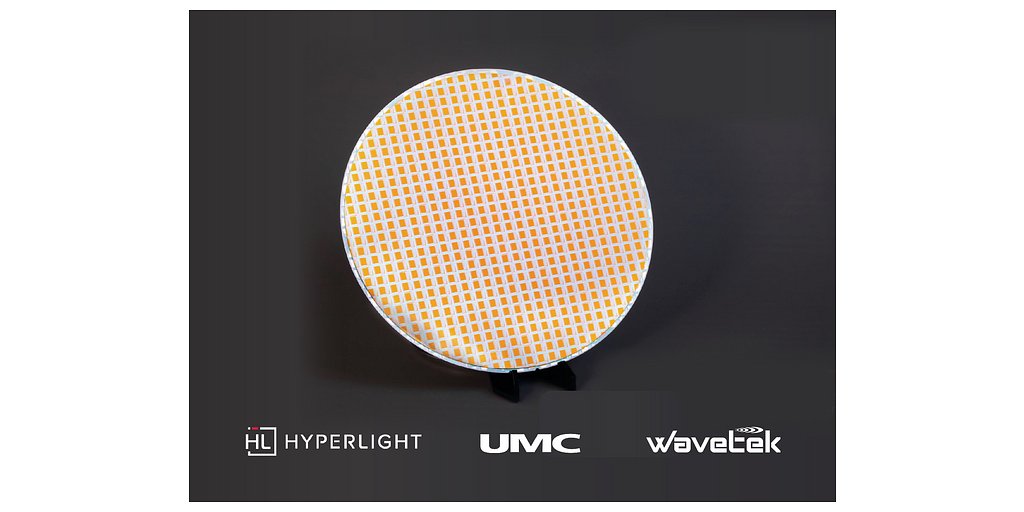
Powering AI's Future: TFLN Photonics Enters High-Volume Production
CAMBRIDGE, Mass. & HSINCHU, Taiwan – March 11, 2026 – A strategic partnership announced today is set to solve one of the biggest bottlenecks threatening the future of artificial intelligence: the speed and efficiency of data transfer. HyperLight Corporation, a pioneer in advanced photonics, has joined forces with semiconductor manufacturing giant United Microelectronics Corporation (UMC) and its subsidiary Wavetek to bring a revolutionary optical technology into high-volume production.
The collaboration will mass-produce HyperLight’s TFLN (thin-film lithium niobate) Chiplet™ Platform, a move that signals the technology's transition from a promising niche material to an industrial-scale solution poised to redefine the backbone of AI data centers and cloud infrastructure.
The TFLN Revolution: A New Engine for Data
As AI models grow exponentially more complex, the demand for computing power and data throughput has skyrocketed. This has placed immense strain on the optical interconnects—the high-speed light-based communication systems—that form the nervous system of modern data centers. Traditional technologies like silicon photonics (SiPh) and indium phosphide (InP) are beginning to hit performance and power consumption walls.
This is where thin-film lithium niobate enters the picture. TFLN represents a monumental leap forward by taking the exceptional electro-optic properties of bulk lithium niobate and engineering it onto a compact, chip-scale platform. This enables performance gains that were previously unattainable in a manufacturable format.
The advantages are striking. TFLN modulators can achieve extreme bandwidths exceeding 100 GHz, operate at low CMOS-level drive voltages, and exhibit ultra-low optical loss. Unlike other platforms that generate significant heat during modulation, TFLN's intrinsic properties ensure fast, linear performance with negligible heat generation or drift. This trifecta of speed, efficiency, and stability is precisely what AI networks need.
“TFLN has long been recognized as one of the most important technologies for the future of optical interconnects, but the industry has been waiting for a path to true manufacturing scale,” said Mian Zhang, CEO of HyperLight, in the official announcement. “The era of TFLN as a niche technology is over.”
Forging a Path to Mass Production
The journey from a laboratory breakthrough to a globally available product is fraught with challenges, a chasm that many innovative technologies fail to cross. This partnership is designed to bridge that exact gap. It combines HyperLight’s role as the platform architect with the proven, high-volume foundry expertise of UMC and Wavetek.
HyperLight and Wavetek, a specialized compound semiconductor foundry, had already established a successful collaboration, qualifying a high-volume manufacturing line for TFLN on 6-inch wafers. This initial success laid the critical groundwork, proving the technology was ready for a real-world production environment.
Now, UMC, a top-tier global semiconductor foundry, is bringing its immense scale and expertise to the table. The partnership will expand production to larger 8-inch wafers, a crucial step for increasing chip yield per wafer and driving down costs, making TFLN economically viable for mass-market deployment.
“To achieve 1.6T bandwidth and beyond, TFLN is emerging as a promising material to deliver the bandwidth requirements for next-generation data center connectivity,” noted G C Hung, Senior Vice President of UMC. “UMC is pleased to be a key 8-inch manufacturing partner to bring HyperLight’s scalable platform to the mass market.”
This tiered approach—from HyperLight's design, to Wavetek's specialized process, to UMC's global scale—creates a robust pipeline to industrialize advanced photonics in a way that has rarely been seen before.
Meeting the Insatiable Demand for Data
The market urgency for this technology cannot be overstated. The global optical interconnect market is projected to surpass $40 billion by 2031, with the segment for AI data centers growing at a blistering pace. As data centers upgrade to 800G and now emerging 1.6T (terabits per second) optical modules, the underlying components must evolve.
The demands of next-generation AI hardware illustrate the scale of the challenge. A single advanced AI server, like NVIDIA's GB200, can require up to 72 high-speed 1.6T optical modules. Multiplying that by the tens of thousands of servers in a hyperscale data center reveals a staggering demand for efficient, high-bandwidth interconnects.
HyperLight’s TFLN Chiplet™ Platform is architected to meet this diverse need head-on. It unifies the requirements for short-reach data center links, longer-reach telecom modules, and emerging co-packaged optics (CPO) within a single, standardized, and manufacturable foundation. This platform approach simplifies the ecosystem for customers, reduces manufacturing risk, and accelerates the adoption of TFLN across the industry.
A Foundation for Future Innovation
While the immediate focus is on solving the AI data crunch, the implications of mass-produced TFLN extend far beyond the data center. The same properties that make it ideal for optical interconnects—speed, efficiency, and linearity—also make it a key enabling technology for a host of other advanced applications.
These include next-generation telecommunications, quantum computing and sensing, advanced LiDAR systems for autonomous vehicles, and precision test and measurement equipment. By creating a high-volume, cost-effective manufacturing base for TFLN, the partnership is building a foundational platform that innovators across multiple industries can build upon.
Furthermore, the extreme energy efficiency of TFLN directly addresses one of the most pressing concerns in the tech industry: the massive and rapidly growing power consumption of data centers. By reducing laser consumption and enabling direct-drive from CMOS chips, TFLN contributes to a more sustainable scaling path for computing. This collaboration does more than just scale a component; it lays a high-volume manufacturing foundation for the next decade of photonic innovation.
Topics & Related
Semiconductors
Artificial Intelligence
Quantum Computing
AI & Software Platforms
Related Company Pulse