
- Partnership Launch: PowerA teams up with Meridian GMT to create the "Project X-Ray Flight Deck," a modular wireless controller for PC and Xbox.
- Market Strategy: PowerA leverages its global manufacturing and distribution to amplify Meridian GMT's niche flight simulation expertise.
- Target Audience: The controller aims to bridge the gap between standard gamepads and complex flight simulation setups, targeting both PC and console gamers.
Experts would likely conclude that this partnership represents a strategic shift in gaming hardware, blending mass-market accessibility with niche authenticity, potentially reshaping the flight simulation market.
PowerA's Flight Plan: Betting on a Niche Maverick to Conquer Simulation
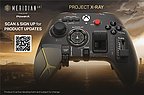
ST. PAUL, MN – June 12, 2026 – At first glance, the announcement from FlightSimExpo 2026 seems straightforward: PowerA, a titan of mass-market gaming accessories, is partnering with Meridian GMT, a boutique flight simulation hardware startup. The initial fruit of this union is the “Project X-Ray Flight Deck,” a modular wireless controller for PC and Xbox. But to dismiss this as just another peripheral launch is to miss the tectonic shift it signals. This is not merely a product collaboration; it is a masterclass in corporate strategy, a calculated maneuver by PowerA to conquer high-fidelity niche markets by embracing the very specialists that define them.
This partnership, unveiled under the banner of a new “Fueled by PowerA” initiative, represents a sophisticated new model for growth in the gaming hardware space. Instead of acquiring a niche player outright or attempting to build specialized expertise in-house, PowerA is leveraging its greatest assets—global manufacturing, distribution, and retail power—to amplify a smaller innovator. In Meridian GMT, PowerA has found a partner with deep community credibility and a clear vision for the future of simulation. It's a deal that telegraphs a future where the line between mass-market accessibility and enthusiast-grade authenticity becomes increasingly blurred.
A New Flight Plan for the Mainstream
The centerpiece of the announcement, the Project X-Ray Flight Deck Controller, is itself a strategic marvel. For decades, aspiring flight simmers faced a steep barrier to entry: a choice between a standard gamepad that lacked immersion or a complex, expensive, and desk-dominating setup of yokes, throttles, and pedals. Project X-Ray aims to carve out a new category in between. Described as a “versatile handheld flight system,” its modular design with interchangeable throttles, flaps, and faceplates promises an authentic, cockpit-inspired experience within the familiar form factor of a console controller.
This approach is designed to democratize the hobby. By making the controller compatible with both PC and Xbox Series X|S, PowerA and Meridian GMT are directly targeting the massive console gaming audience, many of whom were introduced to flight simulation through the stunning accessibility of titles like Microsoft Flight Simulator. “This partnership marks an exciting new chapter for PowerA as we expand into more immersive ways to play,” stated Matt Hiler, Sr. Director of Marketing and Strategic Partnerships. The key words are “approachable” and “exciting”—a clear signal that the goal is to bring dedicated flight control to players who might otherwise never venture beyond a standard controller.
For Meridian GMT, this solves the classic startup problem of scale. For PowerA, it provides an instant injection of authenticity into a market where credibility is paramount. The partnership effectively allows PowerA to serve a passionate and high-spending community without the years of R&D and brand-building it would take to earn their trust alone.
PowerA's Calculated Ascent into Niche Markets
To truly understand the significance of this deal, one must look at the history of Meridian GMT and its founder, Nicki Repenning. Repenning is a well-known figure in the simulation community, having previously founded Honeycomb Aeronautical, a brand lauded for producing high-quality, affordably priced hardware that challenged established players. However, that venture was also marked by significant production delays and a public fallout, leading Repenning to a “fresh start” with Meridian GMT.
This history is not a liability for the partnership; it is the very foundation of its strategic brilliance. PowerA is not just investing in a company; it is investing in a proven design philosophy and a founder with a reputation for innovation, while simultaneously providing the operational backbone to mitigate the exact risks—manufacturing and logistics—that have historically been a challenge. The “Fueled by PowerA” initiative appears to be a template for future expansion: identify a category innovator with a strong product vision but limited scale, and provide the global infrastructure to bring their products to the world.
Nicki Repenning’s own words in the press release underscore this dynamic: “By partnering with PowerA, we’re combining Meridian GMT’s expertise in advanced flight simulation hardware with PowerA’s ability to deliver innovative gaming experiences at scale.” For Meridian, this is the missing piece of the puzzle. The company had already announced an ambitious roadmap of modular hardware, including the Horizon+ yoke and Latitude+ throttle quadrant, but faced community skepticism about its ability to deliver. With the backing of PowerA, a subsidiary of ACCO Brands Corporation, those concerns about production and distribution largely evaporate, leaving only the promise of Repenning's design expertise.
Beyond the Controller: A Modular Ecosystem Takes Flight
The Project X-Ray controller is not an isolated product but rather the entry point into a broader, more ambitious ecosystem envisioned by Meridian GMT. The company’s founding principles are realism, modularity, and community collaboration. The modularity seen in the handheld—interchangeable parts for different aircraft—is the same philosophy behind its entire upcoming product line. The idea is to create a “scalable flight deck” where users can start with a single component and gradually build a more complex setup over time, with all parts designed to work together seamlessly.
This stands in stark contrast to the traditional hardware market, where users are often locked into a single brand’s ecosystem and major upgrades require replacing entire devices. Furthermore, Meridian GMT’s commitment to realism goes beyond form factor. The company has touted its use of advanced “Quantum Leap” TMR (Tunnel Magneto-Resistance) sensors in its premium products, which offer higher precision than the Hall-effect sensors commonly used by competitors. This is the “deep flight simulation expertise” PowerA is buying into—a level of technical detail that resonates powerfully with hardcore enthusiasts.
By launching this partnership with a highly accessible product like Project X-Ray, the two companies are building a powerful on-ramp. A casual gamer might buy the handheld controller for their Xbox, enjoy the experience, and then discover the upgrade path to Meridian’s more advanced yokes and throttles. This strategy has the potential to not only capture new customers but also to cultivate them, growing their interest and investment in the hobby over time. It’s a long-term play that could reshape the competitive landscape, putting pressure on incumbents like Logitech and Thrustmaster, who now face a formidable alliance of niche innovation and mass-market might.