
- 80% of China's tea sets are produced in Dehua County, making it a dominant force in ceramic manufacturing.
- 100-billion-yuan (≈$14 billion) industrial cluster is Dehua's target by 2027 as part of its internationalization strategy.
- 100 pieces of 'Blanc de Chine' porcelain are featured in the multi-city exhibition tour across Italy.
Experts view Dehua's strategy as a masterful blend of cultural heritage and modern branding, leveraging UNESCO recognition and high-profile partnerships to transform its porcelain into a global luxury symbol.
Porcelain Diplomacy: Crafting a Global Wellness Brand from Ancient Clay
GUBBIO, Italy – November 25, 2025
In the quiet, medieval town of Gubbio, a fascinating dialogue is unfolding. It's not one of words, but of form, texture, and history. The "Way of White Porcelain" exhibition, which opened last week at the Gubbio Museum, places the ethereal white porcelain of Dehua, China, alongside the vibrant, storied ceramics of its Italian host. On the surface, it’s a stunning cross-cultural art show. But look closer, and it reveals a masterfully crafted strategy, a modern-day form of porcelain diplomacy that carries profound implications for how cultural heritage can be leveraged to build a global brand in the wellness and lifestyle space.
This is more than just an art tour; it is a case study in soft power and international market penetration. As over 100 pieces of exquisite 'Blanc de Chine' begin a multi-city tour across Italy, the government of Dehua County is not just sharing its history. It is carefully positioning its most famous export for a new era of global commerce, moving beyond the museum pedestal and onto the tables of the world’s finest restaurants and into the homes of discerning consumers.
A Legacy of Luster
To understand the strategy, one must first appreciate the product. Dehua porcelain, known in Europe for centuries as 'Blanc de Chine' or "white from China," is no ordinary ceramic. Originating from the kilns of Fujian province as early as the Song Dynasty, its reputation is built on a unique, translucent glaze with a warm, ivory-like glow. This signature appearance comes from a local clay with an exceptionally low iron oxide content, allowing it to be fired into a form that is both delicate and resilient.
Historically, its beauty was in its minimalist elegance. Unlike the more famous blue-and-white porcelain, Blanc de Chine pieces were often undecorated, relying solely on their sculptural form and lustrous surface. This understated aesthetic captivated European collectors when it arrived via the Maritime Silk Road—Marco Polo himself is said to have brought a Dehua piece to Europe in 1295. It went on to inspire the nascent European porcelain industry, with famed workshops like Germany's Meissen trying to replicate its otherworldly quality.
Today, this legacy is being strategically amplified. The Dehua kilns were recently inscribed on the UNESCO World Heritage List, cementing their historical importance. This official recognition provides an invaluable narrative for a region that is home to over 4,000 ceramic enterprises. Dehua is already a powerhouse, producing nearly 80% of China's tea sets and a significant portion of daily-use ceramics found in European and American homes. The goal now is to elevate the brand from mass producer to a symbol of luxury, heritage, and refined living.
From Kiln to Global Market
The exhibition in Gubbio is a pivotal move in Dehua's ambitious "Internationalization Strategy." This is not simply about cultural goodwill; it is a calculated campaign to build a 100-billion-yuan (approximately $14 billion) industrial cluster by 2027. The strategy involves a multi-pronged approach: strengthening key manufacturers, encouraging technological innovation in production, and, most importantly, building a powerful global brand.
A key indicator of this upscale pivot is Dehua white porcelain's recent partnership with the Michelin Guide. By becoming an official partner, Dehua is strategically placing its high-end dinnerware in the context of elite gastronomy. It’s a brilliant move that bypasses traditional retail channels to associate the product directly with an experience of luxury, quality, and taste. The visual of a chef's creation presented on the pure, white canvas of a Dehua plate is a powerful marketing tool.
The Italian exhibition tour serves a similar purpose. It acts as an "international showcase window," introducing the 'Blanc de Chine' story to a sophisticated European audience. By presenting the porcelain in a high-culture setting, alongside Italy’s own revered artistic traditions, organizers are framing Dehua not as a commodity, but as a piece of living history—an object of desire with a story worth investing in. This lays the groundwork for future collaborations, from artist exchanges to industrial partnerships, with plans already in motion for a permanent "Blanc de Chine" center in Italy.
A Dialogue in Clay
The choice of Gubbio as the starting point for this initiative is itself a stroke of strategic genius. This is not a random pairing. Gubbio is a town steeped in its own celebrated ceramic history. During the Renaissance, it was world-renowned for the work of Mastro Giorgio Andreoli, a master of iridescent "lustreware" finishes that produced shimmering ruby red and gold effects. By bringing Dehua porcelain here, the organizers created a true dialogue between two of the world's great ceramic traditions.
The exhibition fosters a sense of mutual respect rather than a one-sided promotion. Visitors can appreciate the serene, sculptural minimalism of a Ming Dynasty Guanyin figure and, in the same space, admire the exuberant color and technical brilliance of a Renaissance-era Italian plate. This shared appreciation for craftsmanship and artistry forms a powerful bridge.
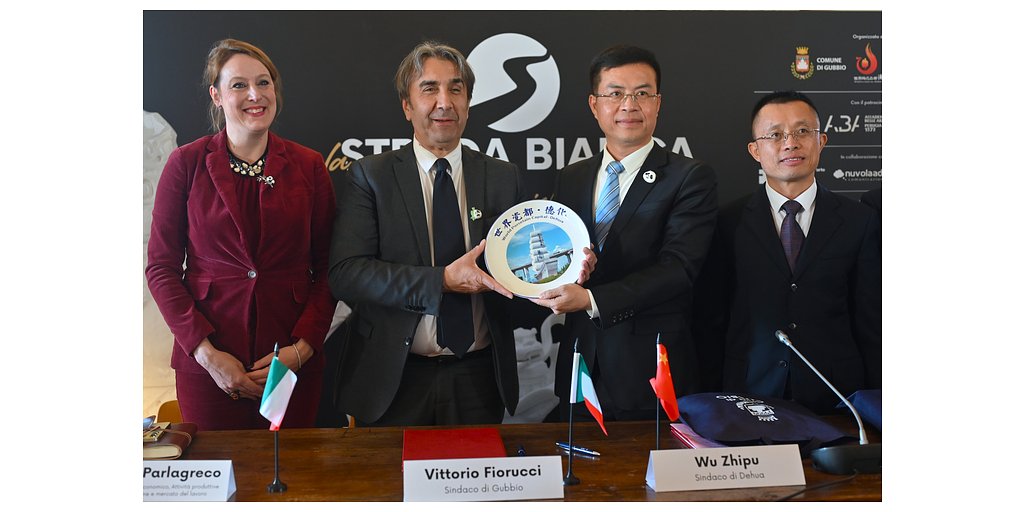
This partnership is being formalized beyond the museum walls. In a significant move, Dehua and Gubbio have signed a letter of intent to become sister cities. This deepens the relationship from a temporary exhibition to a long-term commitment for cooperation in culture, industry, and logistics. A planned "dual-masters co-creation program" will bring artisans from both regions together, a forward-thinking initiative that promises to generate new, culturally hybrid creations and further entwine their economic and artistic futures.
The event in Gubbio demonstrates a sophisticated understanding of global marketing. Instead of just exporting a product, Dehua is exporting a cultural experience and co-creating a new narrative with a respected international partner. This approach builds a much more resilient and authentic brand identity than a conventional advertising campaign ever could. It reflects a shift from simply selling objects to curating a lifestyle, where the story behind the product is as valuable as the product itself. As Eastern and Western traditions continue to find common ground in the pursuit of beauty and craftsmanship, this ancient art form is proving to be a remarkably modern tool for building connection and commerce.