
- 100+ poets, writers, and literary scholars from China and the Arab world participated in the 2026 International Youth Poetry Festival (China-Arab States Session).
- The festival spanned five days in Guangdong Province, blending cultural heritage and technological innovation.
- The event is part of a broader initiative launched in 2024, with previous sessions focusing on BRICS nations and Latin American countries.
Experts would likely conclude that the festival effectively demonstrates the power of literature as a tool for cultural diplomacy, fostering cross-cultural understanding and human connection through shared poetic experiences.
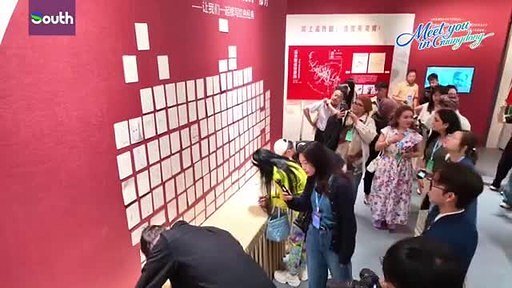
Poetry on the Pearl River: Bridging Worlds Between China and Arab Youth
GUANGZHOU, China – May 19, 2026 – As the luminous skyline of Guangzhou glided past, a group of young poets from China and the Arab world gathered on the open deck of a river cruise. Against the shimmering backdrop of the Pearl River, they shared verses and quiet conversations, marking the culmination of a remarkable five-day journey through southern China's Guangdong Province.
"I thought we would simply read poetry in a hotel, or perhaps in a conference room," said Tunisian poet Anouar Ben Hassine, his voice filled with wonder. "But it feels like a dream—I keep saying it… it feels like a dream."
This dream-like experience was the Guangdong leg of the 2026 International Youth Poetry Festival (China-Arab States Session), an ambitious cultural program that brought together over 100 poets, writers, and literary scholars. The event, organized by the China Writers Association, concluded its southern tour on May 12 before continuing to Beijing. It stands as a testament to the growing role of literature in fostering international dialogue.
A Journey Through Heritage and High-Tech
The festival's itinerary was a carefully curated immersion into the dual identity of modern China. Participants traveled between Guangzhou, a city steeped in over two millennia of history, and Shenzhen, a metropolis synonymous with technological innovation and meteoric growth. This juxtaposition was designed to provide a rich canvas for creative inspiration.
In Guangzhou, the poets explored the region's deep cultural roots. They visited the Cantonese Opera Art Museum, delving into a vibrant local art form, and walked through spaces that echoed the city’s past as a crucial hub on the ancient Maritime Silk Road. The journey on the Pearl River itself was symbolic; for centuries, this waterway has been a conduit for trade and cultural exchange, connecting China with the wider world.
In stark contrast, the visit to Shenzhen offered a glimpse into the future. The group toured the headquarters of global tech giants like Huawei and Tencent, witnessing firsthand the engine of China's innovation economy. They also explored modern urban oases like the Shenzhen Bay Cultural Park. For many, the landscape on the way to the city was as inspiring as the destination itself. "On the road to Shenzhen, there are a lot of hills and trees, and a lot of green," noted Anouar Ben Hassine. "The green always reminds me of something about fertilizing a successful future... And then I wrote a poem. I never thought I could write here, but it came suddenly."
This blend of ancient heritage and futuristic vision provided a powerful narrative, showing the poets a China that honors its past while sprinting toward the future. The experience was designed not just as a tour, but as a deep, multi-layered cultural and sensory immersion.
The Unwritten Itinerary of Human Connection
While the official schedule was packed with tours and formal readings, many participants found the most profound moments occurred in the spaces in between. On bus rides between cities, over shared meals, and in late-night conversations, language barriers dissolved, and genuine connections were forged. It was here, outside the structured program, that the true spirit of the festival flourished.
Poetry became a shared language, a vehicle for expressing complex personal histories and forging new bonds. For some, the journey was deeply emotional and cathartic. "I'm so happy to be back in Guangzhou again," shared Mira Ahmed, author of City of Flowers. "This city holds some of the most difficult memories of my life. Before arriving, I had already decided to write a poem for the city. When I was writing, I became so overwhelmed by emotion that at times I was unable to continue. The poem became my personal gift to Guangzhou that I deeply cherish."
Her experience underscores a central theme of the festival: poetry is not an abstract art form but a lived, deeply human experience. It is born from movement, emotion, and encounter. The verses written during these five days were not mere souvenirs; they were artifacts of personal and collective discovery, testaments to the power of place to unlock memory and creativity.
A Growing Platform for Cultural Diplomacy
The 2026 China-Arab States session is the latest chapter in the International Youth Poetry Festival's expanding mission. Launched by the China Writers Association in 2024, the festival has quickly become a significant platform for cultural diplomacy. The inaugural event in 2024 focused on BRICS nations, followed by a 2025 session dedicated to China and Latin American countries. This consistent effort highlights a strategic focus on using literature to build bridges and foster mutual understanding between China and the world's youth.
These festivals are a key component of China's broader cultural outreach, aiming to project a nuanced image of the nation that encompasses both its rich traditional heritage and its dynamic contemporary society. By inviting young literary talents from around the globe, the organizers create an environment for authentic, people-to-people exchange that transcends political rhetoric. The program in Guangdong, followed by visits to iconic sites like the Great Wall and the Palace Museum in Beijing, is designed to give participants a comprehensive and personal understanding of Chinese civilization.
In a world often defined by conflict and misunderstanding, the festival quietly poses a powerful question: does literature still have a role to play? For the more than 100 participants who traveled through Guangdong, the answer was not found in grand declarations but in the simple, profound act of sharing a poem, a meal, or a conversation.
Poetry, as experienced in Guangdong, was not an escape from reality but a deeper engagement with it. It emerged as something fragile, immediate, and intensely human, forged in the act of traveling together and speaking across cultures. As the festival's final night in the south drew to a close on the waters of the Pearl River, what was created was not an ending, but a new current of understanding, still unfolding and moving forward.