
- 35 million buildings in Europe targeted for energy-efficient upgrades by 2030 under the EU's Renovation Wave strategy.
- A+++ ErP energy rating for the airMono, qualifying it for maximum government incentives.
- R290 refrigerant with a Global Warming Potential (GWP) of just 3, compliant with future EU F-Gas Regulations.
Experts view PHNIX's airMono as a game-changing solution for urban heat pump adoption, addressing critical space constraints and aligning with stringent environmental regulations, while offering long-term sustainability and financial benefits for homeowners.
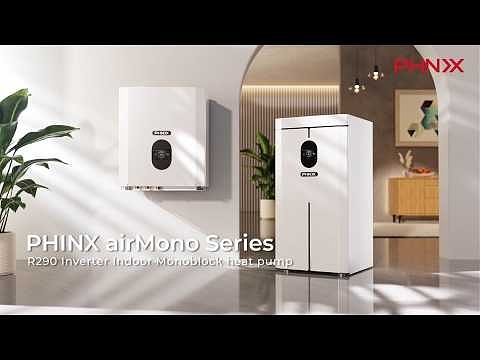
PHNIX Unveils Indoor Heat Pump to Solve Urban Retrofit Crisis
GUANGZHOU, China – April 17, 2026 – Global heat pump manufacturer PHNIX has officially launched the airMono, a revolutionary indoor monoblock heat pump engineered to overcome a critical barrier to green energy adoption in Europe's cities. The new system, which provides heating, cooling, and domestic hot water, is installed entirely inside a residence, eliminating the need for a bulky outdoor unit and offering a breakthrough solution for millions of homeowners in space-constrained urban environments.
The launch comes as the European Union aggressively pursues its 'Renovation Wave' strategy, which aims to upgrade 35 million buildings by 2030 to be more energy-efficient. With national policies like Germany's Building Energy Act (GEG) and the UK's Boiler Upgrade Scheme (BUS) accelerating the phase-out of fossil fuel boilers, the airMono arrives at a pivotal moment in the continent's energy transition.
Solving the Urban Space Crisis
For years, the widespread adoption of heat pumps in dense urban areas has been stymied by a simple, physical problem: a lack of space. The iconic terraced houses of London, historic apartment buildings in Paris, and mid-row homes across Germany often lack the exterior room, or planning permission, to install a traditional outdoor heat pump unit. This has effectively excluded millions from accessing the most efficient form of electric heating.
PHNIX's airMono directly confronts this challenge with a design that moves the entire system indoors. By utilizing a sophisticated air ducting system for air intake and exhaust, the unit can be comfortably housed in a kitchen, utility room, or garage, preserving the building's external facade. The system is designed to connect to a home's existing water tank, positioning it as a direct, low-disruption replacement for legacy gas or oil boilers.
The European heat pump market, projected to resume 10-15% annual growth after 2027, is increasingly demanding solutions that fit diverse housing stock. This indoor-only approach not only makes installations possible in previously unsuitable properties but also significantly reduces aesthetic objections, a common hurdle in historic districts.
Future-Proofing the Home with R290 and High Efficiency
Beyond its innovative form factor, the airMono is engineered for long-term sustainability and financial viability. The unit boasts a top-tier A+++ ErP energy rating, a critical benchmark that ensures homeowners can access the maximum available government incentives. According to PHNIX, this efficiency level qualifies the unit for Germany's substantial BEG funding and the UK's BUS grant.
Crucially, the system utilizes R290, a natural propane refrigerant with a Global Warming Potential (GWP) of just 3. This positions it far ahead of tightening environmental regulations. The EU's revised F-Gas Regulation mandates a ban on F-gases with a GWP of 150 or more in small monoblock heat pumps by 2027, with a total phase-out of all fluorinated gases in these units by 2032. By adopting R290, the airMono is already compliant with these future rules, offering consumers a secure, long-term investment that won't be rendered obsolete by environmental policy.
In markets like Germany, this choice of refrigerant carries an additional financial benefit. The use of a natural refrigerant can trigger a 5% 'Efficiency Bonus' under the BEG funding scheme, potentially allowing homeowners to cover more than half of the total investment cost through subsidies.
The Safety and Practicality of Indoor Propane
While the environmental benefits of R290 are clear, its use indoors raises valid questions about safety, as propane is classified as a highly flammable (A3) substance. The industry has addressed these concerns with stringent safety standards and integrated technologies. Modern R290 systems are designed in accordance with protocols like IEC/EN/UL 60335-2-40, which outline how to build safe indoor units with flammable refrigerants.
To mitigate risk, the airMono incorporates advanced safety features. These typically include integrated R290 leak detectors that can sense gas concentrations far below the lower flammability limit. If a leak is detected, these systems can automatically shut down the unit and activate a fan to safely vent the refrigerant outdoors. PHNIX, a company with over two decades of experience in the European market and numerous patents in heat pump technology, has invested in dedicated anti-explosion laboratories to test and validate the safety of its R290 products.
Installation and maintenance must be performed by certified technicians trained to handle flammable refrigerants. However, the monoblock design simplifies the process compared to split systems, as it contains all refrigerant within a single factory-sealed unit, eliminating the need for complex on-site refrigerant line work. PHNIX also highlights a three-side quick-access design, allowing technicians to service key components without needing to move the entire unit, streamlining future maintenance.
Smart Integration for the Modern Home
The airMono is more than just a heating appliance; it's an intelligent hub for home energy management. The unit is integrated with PHNIX's AI-driven service ecosystem, which includes the NIKIGPT AI assistant and a dedicated IoT platform. This connectivity transforms the heat pump into a smart device, offering a new level of control and efficiency.
Through this platform, homeowners can remotely manage their heating, cooling, and hot water, adjust settings, and monitor energy consumption from anywhere via a smartphone app. The AI component promises to optimize performance based on user habits, weather forecasts, and even fluctuating energy prices, potentially further reducing running costs. For installers and service technicians, the IoT connectivity enables remote diagnostics and troubleshooting, allowing for faster service and proactive maintenance, often without the need for an in-person visit.
This convergence of sustainable hardware and smart software reflects a broader industry trend toward integrated home energy ecosystems. As homes become more connected, devices like the airMono are set to play a central role in managing energy flows, interacting with solar panels, battery storage, and smart grids to create a more resilient and efficient domestic energy landscape.