
- New Product Launch: Phenomenex introduces Luna Omega HILIC LC Columns to improve analysis of polar compounds.
- Market Impact: Targets critical sectors like biopharmaceuticals, clinical diagnostics, and food safety.
- Technical Advancement: Uses thermally modified fully porous particles for enhanced durability and performance.
Experts would likely conclude that Phenomenex's new HILIC columns represent a significant advancement in analytical chemistry, offering a more reliable and user-friendly solution for separating polar compounds, which could accelerate research and improve accuracy in key scientific fields.
Phenomenex Tackles a Key Challenge in Scientific Analysis with New Columns
TORRANCE, CA – June 08, 2026 – In the high-stakes world of scientific research, where accuracy and speed can mean the difference between a medical breakthrough and a stalled project, even the smallest molecules can pose the biggest challenges. Today, Phenomenex, a life sciences technology company under the Danaher umbrella, announced a significant step forward in addressing one of analytical chemistry’s more persistent hurdles with the launch of its Luna Omega HILIC LC Columns.
This new product line is designed to enhance the separation and analysis of highly polar compounds—a notoriously difficult class of molecules found everywhere from our bodies to our environment. By expanding its trusted Luna Omega portfolio into the specialized area of hydrophilic interaction liquid chromatography (HILIC), Phenomenex aims to deliver a more reliable and user-friendly tool for scientists in critical sectors, including biopharmaceuticals, clinical diagnostics, and food safety.
The Persistent Problem of Polar Compounds
For decades, the gold standard for separating chemical mixtures has been reversed-phase liquid chromatography. However, this powerful technique struggles when faced with polar compounds—small, water-loving molecules like certain amino acids, nucleotides, and metabolic byproducts. These substances often pass through traditional columns with little to no retention, making them nearly impossible to analyze accurately.
This is where HILIC comes in. As a complementary technique, HILIC uses a different chemical environment to retain and separate these polar analytes. Yet, despite its utility, HILIC has earned a reputation for being complex and temperamental. Scientists often grapple with long and finicky column equilibration times, unpredictable shifts in performance, and peak distortions caused by subtle changes in the experimental setup. These issues can lead to unreliable results and consume valuable time and resources, particularly in high-throughput labs where consistency is paramount.
"As method development challenges continue to evolve, scientists are asking for more reliable HILIC performance without the complexity traditionally associated with these methods," said Dr. Lauryn Bailey, Vice President of Global Sales & Marketing at Phenomenex, in the company's announcement.
This demand for a simpler, more robust solution has been a driving force in the industry. The inability to easily analyze polar compounds creates bottlenecks in everything from discovering new drug candidates and identifying biomarkers for disease to detecting emerging environmental contaminants.
Engineering Simplicity and Reliability
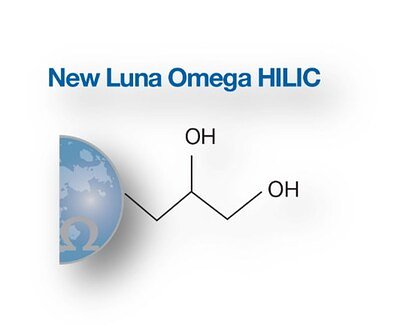
The new Luna Omega HILIC columns represent Phenomenex's direct answer to this challenge. The company has combined its deep expertise in silica particle technology with a modern surface chemistry—specifically, a robust Diol stationary phase—engineered to mitigate many of HILIC's traditional pain points. The goal is to provide predictable performance and reduce the method development guesswork that has long plagued analysts.
According to the company, the new columns are built on thermally modified fully porous particles, which enhance durability and extend column lifetime. This focus on robustness is a key consideration for regulated environments and busy labs that cannot afford unexpected downtime or the cost of frequent column replacement. By creating a more stable and reproducible platform, Phenomenex aims to make HILIC a more accessible and dependable tool for a broader range of scientists.
Dr. Bailey stated, "Luna Omega HILIC was developed to simplify HILIC method development while maintaining the selectivity and reproducibility our customers expect from the Luna Omega family." This move not only expands a successful product line but also signals a commitment to solving practical, everyday problems for researchers on the front lines of innovation.
From the Lab to Our Lives: Impact on Health and Safety
The true significance of this technical advancement lies in its potential real-world impact. Improved analysis of polar compounds is not just an academic exercise; it is fundamental to progress in fields that directly affect human health and environmental well-being.
In biopharmaceutical development, these columns can help accelerate the analysis of polar active pharmaceutical ingredients (APIs) and their metabolites, streamlining the drug discovery pipeline. In the burgeoning field of metabolomics, where scientists study the complete set of small-molecule chemicals in a biological sample, the ability to reliably detect polar metabolites can unlock new biomarkers for diagnosing diseases earlier and more accurately.
Similarly, in clinical and food testing, the Luna Omega HILIC columns are poised to improve the detection of everything from essential vitamins and nutrients to harmful contaminants and additives. As regulatory standards for food and water safety become more stringent, the need for sensitive and reliable analytical methods only grows. By enabling better detection of polar pollutants like pesticides or the now-infamous PFAS “forever chemicals,” this technology contributes directly to public health and safety.
A Strategic Move in a Competitive Field
The launch is also a calculated business maneuver in the fiercely competitive analytical instrumentation market. Phenomenex, alongside competitors like Waters Corporation, Agilent, and Thermo Fisher Scientific, is constantly vying for market share by offering solutions that promise greater efficiency and better results. By targeting a well-known pain point in HILIC analysis, Phenomenex is positioning itself as a problem-solver and strengthening its portfolio in high-growth areas.
This initiative also reflects the strategic vision of its parent company, Danaher. Known for its disciplined acquisition strategy and its powerful Danaher Business System (DBS)—a set of tools for continuous improvement and operational excellence—Danaher has built an impressive ecosystem of companies in the life sciences and diagnostics sectors. The launch of a product that enhances analytical workflows and supports key markets like biopharma and clinical diagnostics fits perfectly within this strategy. It's a prime example of leveraging specialized expertise at the subsidiary level to drive growth and innovation that aligns with the parent company's broader goals.
As Phenomenex prepares to showcase the new columns at the upcoming International Symposium on High Performance Liquid Phase Separations (HPLC 2026), the broader scientific and business communities will be watching closely to see how this new tool is adopted and what new discoveries it may help unlock.