
- 30-40 million counterfeit watches produced annually, dwarfing the legitimate Swiss watch industry's output.
- €1.9 billion annual losses to the EU watchmaking and jewelry industry from counterfeits.
- 54% of EU consumers believe buying counterfeit products is acceptable (2023 study).
Experts warn that the rise of super clone watches poses an existential threat to the luxury watch industry, eroding trust and authenticity while benefiting from systemic market failures.
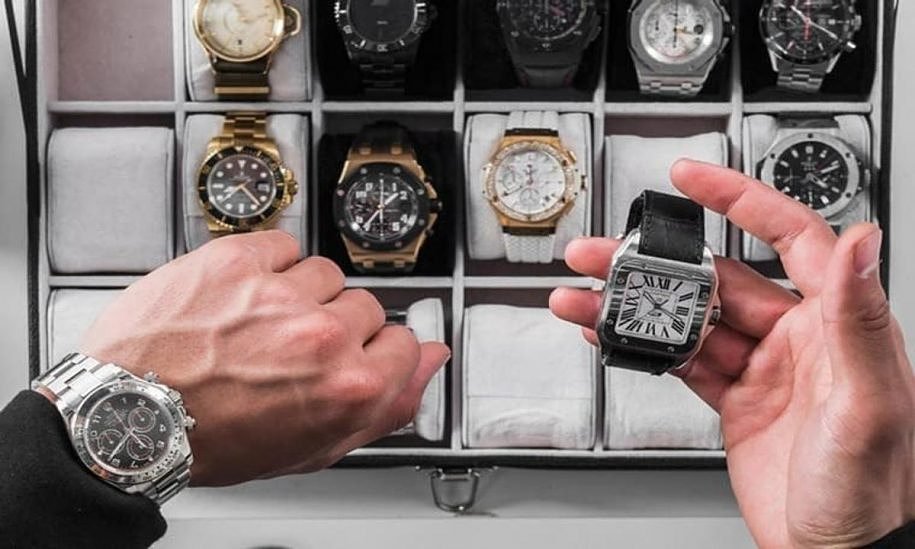
Perfection's Shadow: The Illicit Craftsmanship of Super Clone Watches
GUANGZHOU, China – June 19, 2026 – This week, an entity named LuxuryShop, operating from the heart of global manufacturing in Guangdong, issued a press release. It wasn't for a new smartphone or a breakthrough in electric vehicles. Instead, it detailed the “evolving craftsmanship standards” in the world of “super clone” watches. In a bizarre mimicry of legitimate market analysis, the release celebrated a growing consumer demand for higher quality counterfeits, noting that buyers now meticulously evaluate “case finishing, crystal clarity, and dial execution.”
For an industry that operates in the deepest shadows of intellectual property law, it was a startlingly public declaration. It signals a new phase in the multi-billion dollar counterfeit trade: a market so confident and sophisticated that its players are adopting the language of legitimate business to market illicit goods. These aren't the cheap, flimsy knock-offs sold on street corners. These are “super clones,” near-perfect replicas that are becoming so accurate they pose what many in the authentic watch world are calling an existential threat to the industry.
The Unregulated Pursuit of Perfection
The claims made by LuxuryShop, while self-serving, are not exaggerated. The super clone market has transformed from a cottage industry into a high-tech operation. Here in the Pearl River Delta, thousands of small, specialized workshops use advanced CNC machines, 3D scanners, and AI-driven reverse engineering to deconstruct and replicate the world's most sought-after timepieces, from Rolex to Patek Philippe. The goal is no longer a passing resemblance; it is 1:1 parity.
“The irony is that they are obsessed with quality,” one industry analyst who tracks the illicit trade explained. “They are using the same 904L stainless steel as Rolex. They are using sapphire crystals with the correct anti-reflective coating. Final assembly often happens in advanced clean rooms to prevent dust from getting on the dial.”
This unregulated pursuit of perfection has created products that can fool not just casual observers, but sometimes even seasoned dealers. The supply chain is deliberately fragmented to evade law enforcement. One factory might produce cases, another dials, a third bracelets, and yet another will clone the intricate mechanical movements. These components are then brought together for final assembly in anonymous workshops that can vanish overnight. It’s a system that produces an estimated 30 to 40 million counterfeit watches annually, a volume that dwarfs the entire legitimate Swiss watch industry’s output.
Beyond the Price Tag: Decoding Consumer Desire
While the press release attributes demand to affordability, the reality is far more complex. The rise of the super clone is inextricably linked to the stratospheric pricing and intentional scarcity cultivated by luxury brands themselves. With waiting lists for popular models stretching for years and secondary market prices soaring to multiples of the retail cost, a significant “luxury accessibility gap” has opened.
“Why would I pay $25,000 on the grey market for a steel watch that retails for $15,000, when I can get something that is 99% identical for $800?” asked one self-identified super clone owner on an online forum. This sentiment is echoed across a thriving digital ecosystem where buyers trade tips, compare factory outputs, and review vendors. For many, it’s not about deceiving others; it’s about appreciating a design aesthetic without participating in what they see as a broken market.
This rationale is fueling a profound shift in consumer attitudes. A 2023 study found that 54% of EU consumers believe buying counterfeit products is acceptable. In this context, purchasing a high-end replica is framed as a rational choice, a way to get the “wrist presence” and design without the financial burden or the frustration of being excluded from the authentic market. Some owners of genuine luxury watches even purchase super clones for daily wear or travel, wanting to avoid the risk of damaging or losing a five- or six-figure asset.
An Existential Threat to Authenticity
The sophistication of these replicas is creating an “authentication minefield” that is shaking the foundations of the watch market. The legitimate watchmaking and jewelry industry in the EU alone loses an estimated €1.9 billion annually, corresponding to 13.5% of sales and nearly 30,000 jobs. But the financial damage is only part of the story. The greater threat is the catastrophic erosion of trust.
Secondary market platforms, which have boomed in recent years, are now ground zero for the super clone crisis. Reports have surfaced of major online marketplaces laying off staff as they struggle to combat the influx of fraudulent listings. When a replica is so good it can pass a dealer’s inspection, how can a buyer have any confidence in a pre-owned purchase? Every transaction becomes suspect, poisoning the well for honest buyers and sellers alike.
“It’s an existential threat, particularly to the pre-owned Rolex market,” a source from a luxury goods authentication service stated. “We're in an arms race. They improve, so we have to invest in better detection methods. But it’s getting harder. Some clones even replicate the serial numbers of real watches, making database checks unreliable.” This dilution of exclusivity and the injection of uncertainty directly attacks the core value proposition of a luxury brand, which is built on a bedrock of authenticity and trust.
A Market Built in the Shadows
Behind the talk of craftsmanship and consumer trends lies a dark reality. The global trade in counterfeit goods, projected to hit $1.79 trillion by 2030, is not a victimless crime. It is a criminal enterprise often linked to organized crime, labor exploitation, and human trafficking. While customs agencies, like the U.S. Customs and Border Protection, seize millions of dollars in counterfeit watches, it is a drop in the ocean compared to the sheer volume of production.
Entities like LuxuryShop operate in a legal gray area at best, facilitating a global black market. Their decision to issue a press release is a testament to the confidence of this illicit industry. They are not just selling fakes; they are building a brand around the quality of their fakes, creating a parallel market complete with its own standards, trusted sellers, and market analysis.
This phenomenon forces a difficult question upon the legitimate luxury world: as the gap between the authentic and the replica narrows to the point of being imperceptible to all but the most expert eyes, what is it that consumers are truly paying for? Is it the object itself, or the carefully constructed, and now increasingly vulnerable, idea of authenticity?