
- 105 kWh, 140 kWh, or 210 kWh: Modular battery capacities available for the Kalmar T2 EV.
- 6 years: Comprehensive warranty on the T2 EV batteries.
- 2026 Q2: Penske to begin offering the T2 EV for lease.
Experts view this partnership as a pivotal step in accelerating the electrification of commercial fleets, particularly in yard operations, due to the combination of advanced technology, strategic leasing models, and comprehensive infrastructure support.
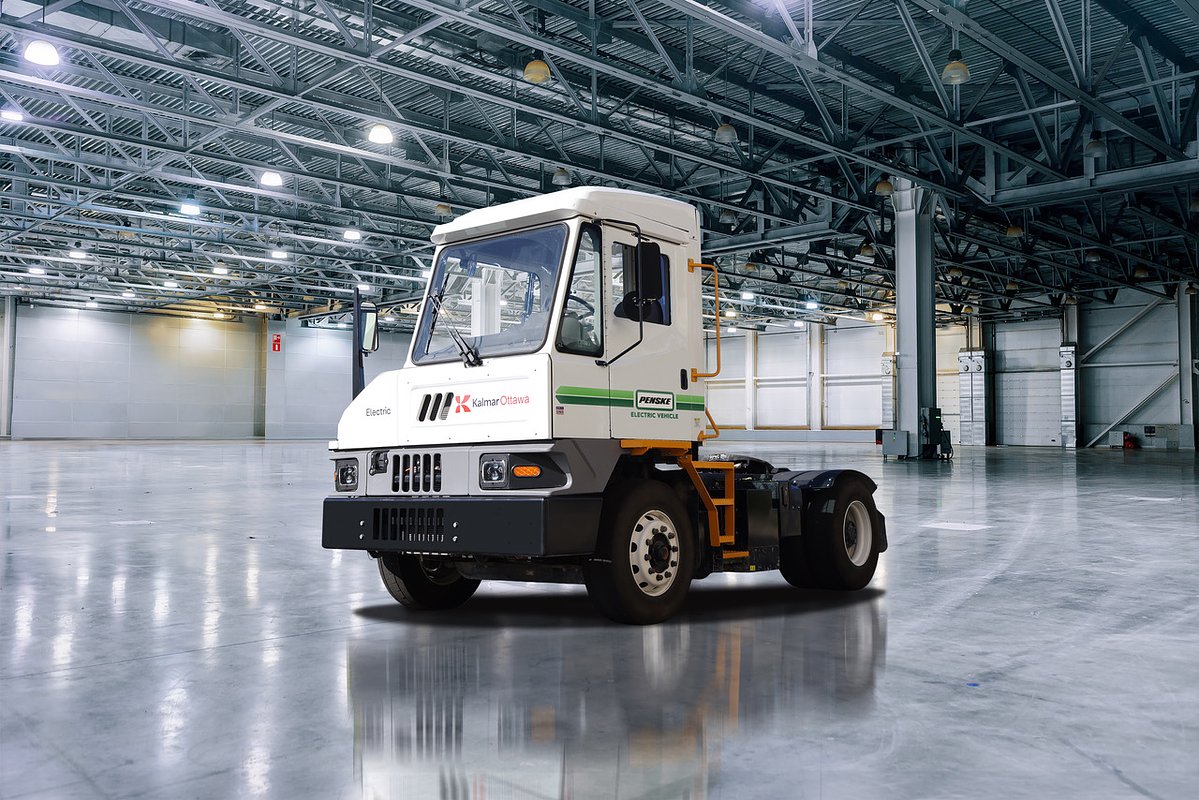
Penske, Kalmar Electrify Logistics with New T2 EV Leasing Program
LAS VEGAS, NV – May 05, 2026 – In a significant move to accelerate the green transition within the logistics sector, Kalmar Ottawa has delivered its production T2 EV electric terminal tractor to Penske Truck Leasing. The partnership, highlighted this week at the ACT Expo 2026, positions Penske as the first truck leasing company to integrate the next-generation electric yard spotter into its vast North American portfolio, making zero-emission technology more accessible than ever for fleet operators.
Penske is set to begin offering the Kalmar T2 EV for lease in the second quarter of 2026. The collaboration is being showcased with vehicles on display at both the Kalmar and Penske booths at the Las Vegas convention, and a feature in the Ride & Drive event, giving attendees a firsthand experience of the quiet, powerful performance of electric yard operations.
This initiative builds on a 20-year relationship between the two industry giants. Penske first took delivery of two T2 EV units for evaluation in late 2025, a successful trial that has culminated in this large-scale leasing program aimed at helping customers slash diesel use and achieve critical sustainability goals.
A New Era for Yard Operations
The partnership represents a pivotal moment for the electrification of commercial fleets. Terminal tractors, which operate in confined, predictable environments like distribution centers and port terminals, are widely considered prime candidates for electrification. Their duty cycles involve short-distance movements with frequent starts and stops, eliminating the range anxiety associated with long-haul trucking and making on-site charging a practical solution.
By making the T2 EV available through a leasing model, Penske is effectively lowering the barrier to entry for countless businesses. The high upfront acquisition cost of electric commercial vehicles remains a significant hurdle for many operators. Leasing de-risks this investment, allowing companies to benefit from lower operating costs and environmental advantages without a massive capital outlay.
“We’re seeing customers turn to the T2 EV not just to meet sustainability targets or comply with local emissions rules, but because it’s simply a better operating experience,” said Thor Brenden, President of Terminal Tractors at Kalmar. “We’ve taken everything that made the diesel T2 a workhorse and made it cleaner, quieter, and even easier to drive. Expanding our longstanding relationship with Penske into electric demonstrates how the market is evolving.”
Redefining the Workhorse
The Kalmar Ottawa T2 EV is not a retrofit but a purpose-built, third-generation electric vehicle developed and manufactured entirely in-house at Kalmar’s facility in Ottawa, Kansas. It is engineered to deliver robust performance without the emissions, noise, and maintenance complexities of its diesel counterparts.
Key to its design is a modular battery system, offering capacities of 105 kWh, 140 kWh, or 210 kWh. This allows customers to tailor the vehicle's energy storage to their specific operational intensity. The tractor is equipped with a CCS1 charging port and Kalmar’s DC FastCharge™ System, capable of accepting up to 150 kW to minimize charging downtime. A sophisticated Active Thermal Management System maintains the lithium-ion batteries at an optimal temperature, ensuring full power delivery in extreme climates ranging from -22°F to 122°F.
The driveline has been simplified with a direct-drive motor, eliminating the transmission and reducing the number of moving parts, which contributes to lower maintenance needs. The vehicle also comes with a comprehensive warranty, including 6 years on the batteries, providing long-term assurance to operators.
“The transition to electric yard operations has to make operational and financial sense,” noted Paul Rosa, Senior Vice President of Procurement and Fleet Planning at Penske Truck Leasing. “With Kalmar Ottawa, we’ve built a 20-year relationship based on equipment that performs in demanding environments. The T2 EV is delivering the performance standards we expect, along with measurable maintenance and operating benefits.”
Solving the Power Puzzle: Infrastructure and Support
While the vehicles themselves are ready for deployment, the most significant challenge for fleet electrification remains charging infrastructure. The process, often referred to as “pole to plug,” involves complex planning, utility coordination, and significant investment. Penske is tackling this head-on through its joint venture, Penske Energy.
Launched with ForeFront Power, Penske Energy provides comprehensive advisory and deployment services for commercial EV charging. The venture assists customers with everything from initial feasibility studies and site design to managing installation and navigating the web of regulations and incentives. This turnkey approach is critical for getting fleets rolling, as it addresses the infrastructure question that can otherwise stall electrification projects for months or even years.
Penske’s strategy includes not just consulting but also investing in its own infrastructure. The company has already deployed heavy-duty, high-speed charging stations in Southern California, some equipped with battery energy storage systems to manage grid load during peak times. As Rosa mentioned, “Penske’s EV charging services team is able to support the charging needs and get customers rolling with the T2 EV.”
A Charged Market: Competition and Regulatory Tailwinds
The Kalmar-Penske partnership enters a dynamic and growing market for electric terminal tractors. They join other key players like Orange EV, which pioneered the U.S. market, and European manufacturer Terberg, both of whom offer competing electric models. This competition is driving innovation and helping to bring down costs, benefiting fleet operators.
The push toward electrification is being heavily supported by regulatory tailwinds and government incentives. In the United States, regulations from the Environmental Protection Agency (EPA) and state-level bodies like the California Air Resources Board (CARB) are setting increasingly stringent emissions standards. Programs like California's Warehouse Actions and Investments to Reduce Emissions (WAIRE) are creating direct compliance incentives for adopting zero-emission equipment in logistics hubs.
In Canada, the federal Incentives for Medium- and Heavy-Duty Zero-Emission Vehicles (iMHZEV) Program provides significant point-of-sale rebates that can cover up to 50% of the price difference between an electric and a diesel vehicle. These financial supports, combined with the clear operational and environmental benefits, are creating a powerful business case for making the switch. This combination of advanced technology, strategic leasing models, and comprehensive infrastructure support signals a pivotal moment for the decarbonization of the commercial supply chain.