
- 17+ ready-to-use probes in the NISH system's library
- 42 slides processed in a single run, with workflows completed in 5.5 hours
- Protease-free workflow preserves tissue morphology and protein biomarkers
Experts agree that the NISH system's automation, tissue preservation, and co-detection capabilities represent a significant advancement in RNA tissue analysis, making it a valuable tool for biomarker discovery and spatial biology research.
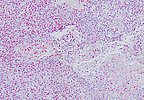
New Automated Platform to Revolutionize RNA Tissue Analysis
LOS ANGELES and BUFFALO, N.Y. – May 05, 2026 – A new partnership between Empire Genomics and Molecular Instruments is set to streamline one of the most complex and vital techniques in modern biological research. The companies today launched NISH (Neo in situ hybridization), a fully automated system designed to make high-quality RNA analysis in tissue samples faster, more consistent, and more accessible to laboratories worldwide.
The new solution combines the expertise of two industry innovators. Molecular Instruments, founded by the inventor of the underlying HCR™ technology, provides the advanced chemistry, while Empire Genomics, a Biocare Medical company with deep roots in genomic probes, brings the system to market exclusively on its NeoPATH Pro automated staining platform. This launch represents a significant step toward solving persistent challenges that have limited the widespread adoption of RNA in situ hybridization (RNA-ISH), a powerful technique for visualizing gene expression within the context of intact tissue.
Advancing Research with Protease-Free Precision
At the core of the NISH system is Molecular Instruments' HCR™ Pro RNA-ISH assay. This technology moves away from traditional methods that often require harsh chemical treatments. A key differentiator is its protease-free workflow for formalin-fixed paraffin-embedded (FFPE) tissue—the most common type of sample available for disease research.
In many conventional RNA-ISH protocols, enzymes called proteases are used to digest proteins, allowing probes to access their target RNA molecules. However, this digestion can damage the delicate tissue architecture and degrade protein biomarkers. The HCR™ Pro method bypasses this step, a critical advantage that preserves both tissue morphology and the integrity of protein targets. This preservation is not just an aesthetic improvement; it unlocks the ability for researchers to perform co-detection, visualizing both RNA and protein targets within the same tissue section.
"RNA-ISH is most valuable when the signal is clear, the tissue is preserved, and the workflow can be run consistently across samples," said Dr. Aneesh Acharya, Chief Operating Officer of Molecular Instruments. "For tissue research, the goal is not simply to detect more targets. It is to detect the right targets while preserving morphology and tissue context."
The technology's signal amplification, based on a Hybridization Chain Reaction, uses DNA hairpins that self-assemble into long polymers only when a target is present, creating a bright, specific signal with minimal background noise. This combination of high sensitivity and tissue preservation is poised to provide researchers with a much clearer and more comprehensive picture of cellular activity in diseases like cancer.
Breaking Down Barriers to Automation and Access
For many research labs, particularly those without dedicated molecular pathology teams, advanced RNA-ISH has remained out of reach due to its complexity, cost, and labor-intensive nature. The collaboration between Empire Genomics and Molecular Instruments aims to directly address these barriers.
By packaging the HCR™ Pro assay into a "ready-to-use" library of over 17 probes and integrating it into the fully automated NeoPATH Pro platform, the NISH system dramatically reduces hands-on time and the potential for human error. Laboratories can process up to 42 slides in a single run, with workflows completed in as little as 5.5 hours. This represents a significant leap in efficiency and throughput.
"This partnership addresses key barriers to RNA-ISH adoption—including workflow complexity, limited automation, and access to probes," noted John Steel, Senior Vice President and General Manager of Empire Genomics. He explained that the system provides "streamlined workflows, rapid turnaround, and scalable capacity," enabling labs to standardize and expand their research capabilities.
This move toward democratization is a strategic response to a clear market need. While competitors like Advanced Cell Diagnostics with its RNAscope technology have built vast probe libraries, the NISH system's value proposition hinges on its seamless integration and end-to-end automation on a single platform. The claim of being the "largest ready-to-use, fully automated ISH library" is specific to this integrated ecosystem, designed to offer a practical, out-of-the-box solution rather than a collection of components that require separate integration.
Shaping the Future of Biomarker Discovery
The launch of NISH arrives at a pivotal moment in biomedical research. The industry is rapidly advancing toward spatial biology—the study of gene and protein activity in their native spatial context—to unravel the complex mechanisms of disease and identify novel therapeutic targets. Technologies that can provide high-quality spatial data are in high demand.
By preserving tissue architecture, the NISH system is well-positioned to support this burgeoning field. Its ability to facilitate RNA-and-protein co-detection provides a multi-omic view of the tissue microenvironment, which is crucial for understanding cell-to-cell interactions in cancer, immunology, and neuroscience. This deeper biological insight has the potential to accelerate biomarker discovery, improve target validation in drug development, and ultimately contribute to the pipeline of next-generation diagnostics and precision medicines.
The partnership leverages the strengths of both companies: Molecular Instruments' cutting-edge chemical innovation and Empire Genomics' established market presence and expertise in probe manufacturing, backed by its parent company, Biocare Medical. This strategic alignment reflects a broader industry trend of combining specialized technologies with robust automation platforms to create powerful, user-friendly research tools. As laboratories continue to seek higher throughput and more reliable data, integrated solutions like NISH are set to play an increasingly important role in defining the future of translational and discovery research.