
- 450-year-old timeline: Pensacola's history dates back to 1559, predating St. Augustine by six years.
- 70+ points of interest: America’s First Settlement Trail connects key historic sites.
- $1559$: The year Pensacola was established as America’s first multi-year European settlement.
Experts would likely conclude that Pensacola’s historic preservation efforts balance cultural heritage with economic opportunities, though they must carefully navigate the risks of gentrification and commodification of history.
Pensacola's Living History: Where the Past is Both a Calling and a Commodity
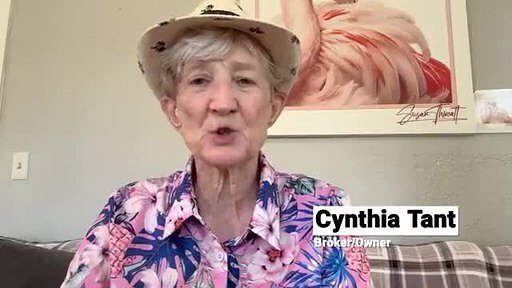
PENSACOLA, FL – June 15, 2026 – To own a home in one of Pensacola’s historic districts is to become a custodian of a story written in timber and brick. It’s a city where the past isn’t just remembered; it’s inhabited, walked through, and, increasingly, marketed. A recent feature on the media platform HelloNation, highlighting the work of real estate broker Dr. Cynthia Tant, casts a spotlight on this unique urban landscape. But peeling back the layers reveals a more complex narrative about how a city’s history is preserved, packaged, and sold, raising critical questions about the line between heritage and promotion.
The Neighborhoods That Built a City
Pensacola’s claim as America’s first multi-year European settlement, established in 1559, is not a hollow boast. The 2015 discovery of Tristán de Luna’s colonial site by the University of West Florida Archaeology Institute provided definitive proof, unearthing a story that predates St. Augustine by six years. This history breathes in the city’s oldest neighborhoods. Seville Square, with its Spanish and British colonial influences, feels like a direct portal to that past. It served as a military parade ground, and its graceful French Creole cottages stand as testament to centuries of shifting flags and cultures. Living here isn’t just a lifestyle choice; it’s an act of participation in a 450-year-old timeline.
A few miles north, the North Hill district tells a different story—one of American industrial ambition. Developed in the late 19th century, its sprawling Queen Anne and Colonial Revival mansions were built on the wealth of the lumber and shipping boom. These homes were statements, designed to project the prosperity of their owners and the city itself. Today, they continue to attract those who appreciate period craftsmanship, their ornate details a reminder of an era when Pensacola’s economic future seemed boundless.
But the most searing and resonant story may lie in Belmont-DeVilliers. Known colloquially as “The Blocks,” this district was the vibrant heart of Pensacola’s African American community, a bustling hub born from the brutal logic of Jim Crow segregation. When Black citizens were barred from the city’s white-owned establishments, they built their own. DeVilliers Street thrived with Black-owned businesses—bakeries, barbershops, and doctor’s offices. At night, it became a legendary stop on the “Chitlin Circuit,” where icons like Ray Charles, Louis Armstrong, and Aretha Franklin lit up the stage at venues like the Belmont Theatre. The district stands as a powerful monument to resilience, a community that forged its own economic and cultural universe in the face of systemic exclusion. Today, city-led revitalization projects are installing historic streetlamps and brick crosswalks, but for a neighborhood like Belmont-DeVilliers, preservation is a delicate dance. The goal must be to honor its legacy without erasing the lived experiences of its residents or paving the way for a gentrification that displaces the very culture it claims to celebrate.
Curating the Narrative, One Brick at a Time
A city’s history is one thing; the story it chooses to tell about itself is another. Pensacola is actively curating its narrative through projects like America’s First Settlement Trail. This three-mile pathway connects over seventy points of interest, guiding residents and tourists through a curated version of the city’s past. It’s a smart, cohesive way to present a complex history, a partnership between the city, tourism boards, and private foundations. But curation is, by its nature, an act of selection. The trail, with its bronze plaques and QR codes, will shape public memory for generations. What stories are centered, and whose might be relegated to the margins?
Navigating this curated landscape are professionals like Dr. Cynthia Tant. Featured in the HelloNation piece as a "Historic Home Expert," Dr. Tant is a prominent real estate broker with decades of experience in the Pensacola market. Her expertise is grounded not in academia, but in the tangible world of property transactions, client needs, and market values. She represents the intersection where history meets the economy, guiding clients who "value the sense of place created by preserved architecture." For her and her clients, a home’s story is part of its value. As one homeowner noted, being part of this continuing story is a powerful draw, connecting them to something larger than themselves. This connection is what brokers like Tant sell, and what buyers are eager to purchase.
The 'Edvertising' of Expertise
The platform that brought Dr. Tant’s work to a wider audience, HelloNation, is itself part of a fascinating new chapter in how information is shared. The company operates on a model it calls "edvertising," a blend of education and advertising. Professionals and businesses pay for their expertise to be showcased in journalist-supported articles that are designed to inform and build trust. Instead of a banner ad, a client gets a well-written feature that positions them as a thought leader.
According to its CEO, Bob Bartosiewicz, the model is a response to consumer fatigue with traditional advertising. By providing genuine knowledge, brands can build credibility and relationships. It’s an astute strategy, and the platform has gained traction, even forging partnerships with civic institutions like the U.S. Conference of Mayors. In a world saturated with noise, who wouldn't prefer an educational article to a pop-up ad?
Yet, this model walks a fine line. It blurs the traditional boundary between editorial and advertising, creating a product that looks and feels like journalism but functions as marketing. It raises fundamental questions about the nature of expertise. Is an expert someone vetted by independent journalistic inquiry, or someone with the resources to purchase the "expert" label through a sophisticated marketing platform? The article on Pensacola's neighborhoods is genuinely informative, drawing on verifiable history. Dr. Tant is undeniably a professional with deep knowledge of her local market. But the context of "edvertising" changes how we read it. We are not just learning about Pensacola; we are being introduced to a service, with history itself serving as the compelling backdrop.
For the residents of Seville Square, North Hill, and Belmont-DeVilliers, these questions are more than academic. They live inside the story. They are the ones who maintain the historic facades, attend neighborhood meetings, and grapple with the pressures of tourism and development. They understand that their homes are both deeply personal sanctuaries and assets in a city that has learned to monetize its rich, complicated, and beautiful past.