
- Price: Starts at $3,325
- Performance Boost: Intel® Core™ Ultra Series 2 processor with integrated NPU for AI tasks
- Connectivity: Wi-Fi 7 speeds up to 2.4x faster than Wi-Fi 6E
Experts would likely conclude that the Panasonic TOUGHBOOK 56 sets a new standard for rugged laptops by combining AI-driven processing, modular adaptability, and robust security features, making it a compelling choice for field professionals in demanding environments.
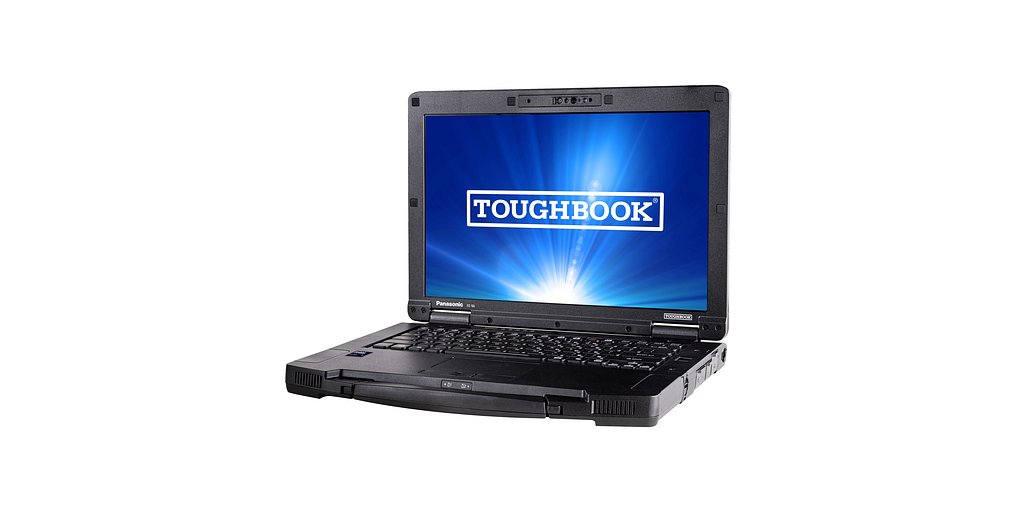
Panasonic TOUGHBOOK 56: AI Power Meets Rugged Modularity
NEWARK, NJ – April 16, 2026 – Panasonic Connect North America has raised the bar for field-ready computing with the launch of the TOUGHBOOK 56, a semi-rugged, modular laptop engineered to bring artificial intelligence and high-performance processing to the edge. Building on a three-decade legacy of durability, the new device is poised to significantly impact mobile workers in public safety, utilities, and federal sectors by combining class-leading power with unprecedented flexibility and security.
Announced today, the TOUGHBOOK 56 succeeds the popular TOUGHBOOK 55 and integrates customer-driven enhancements with cutting-edge technology. It aims to address the growing need for devices that can handle data-intensive tasks in unpredictable environments, empowering frontline professionals to work more efficiently and securely. With a starting price of $3,325 and availability slated for May, the device enters a competitive market with a compelling value proposition focused on long-term adaptability and performance.
A New Era of Intelligent Edge Computing
The most significant leap forward for the TOUGHBOOK 56 is its powerful new architecture, designed specifically for AI-driven workflows. The laptop is equipped with an Intel® Core™ Ultra Series 2 processor, featuring an integrated Neural Processing Unit (NPU) to accelerate AI tasks without draining battery life. This makes the TOUGHBOOK 56 a formidable tool for what the industry calls “AI at the edge”—processing complex data directly on the device rather than relying on a distant cloud server.
For first responders, this could mean real-time analysis of drone footage to locate a missing person. For utility technicians, it enables running sophisticated diagnostic models on failing equipment right at the scene. Panasonic pushes the performance envelope further by offering an optional AMD™ Radeon™ PRO W7500M dedicated GPU with 8GB of VRAM—a first for the rugged PC category. This dGPU option provides a massive boost for graphics-intensive applications and complex AI modeling, a feature that distinguishes it from competitors.
While rivals like Getac and Dell have also recently announced “AI-ready” rugged laptops featuring Intel's Core Ultra processors, Panasonic's combination of the Series 2 chip, a powerful dGPU option, and extensive modularity creates a unique package. The TOUGHBOOK 56 also offers an Intel® Arc Graphics option, which can improve graphic performance by up to 2.2 times over previous generations, ensuring smooth rendering of maps, schematics, and video evidence.
Unprecedented Connectivity and Field Performance
Recognizing that performance is useless without a reliable connection, Panasonic has heavily invested in the TOUGHBOOK 56's communication capabilities. The device boasts Wi-Fi 7, offering speeds up to 2.4 times faster than the previous Wi-Fi 6E standard, ensuring rapid data transfer in wireless environments. For workers in the field, the 5G modem has been upgraded to provide a 36 percent faster upload speed, critical for sending high-resolution images and reports from remote locations.
In a first for the industry, the TOUGHBOOK 56 can be configured with up to three ethernet ports, including a blazing-fast 10 Gbps option. This allows for massive file transfers, such as digital forensics imaging or vehicle system data dumps, to be completed in a fraction of the time. The laptop supports all major cellular carriers and dedicated responder networks like FirstNet and Verizon Frontline, and is ready for private cellular networks, ensuring robust connectivity even when public networks are congested or unavailable during emergencies.
Beyond raw power, the design reflects a deep understanding of its user base. Based on customer feedback, the 14-inch display now features a 16:10 aspect ratio, providing more vertical screen real estate for viewing data logs, forms, and documents. The speakers are approximately 50 percent louder with enhanced clarity for clear communication in noisy environments, and the dual-array microphone uses AI to reduce background noise. Even small details, like a new slide cover for the power port, have been added to improve durability and usability.
Redefining Longevity with Modularity and Security
Perhaps the TOUGHBOOK 56's most strategic advantage is its commitment to modularity and backward compatibility, directly addressing the Total Cost of Ownership (TCO) for large organizations. The device features six modular areas—including three user-swappable expansion packs (xPAKs), the battery, RAM, and SSD. This allows organizations to easily upgrade or customize their fleet in the field, adding features like new scanners, authentication readers, or extra ports without replacing the entire laptop.
Crucially, the TOUGHBOOK 56 maintains compatibility with existing vehicle docks for the TOUGHBOOK 54 and 55. This decision provides over a decade of docking compatibility and represents a massive cost saving for agencies and companies with large vehicle fleets, eliminating the need for expensive and disruptive installation of new docking hardware.
On the security front, the TOUGHBOOK 56 is the first rugged device to offer FIPS 140-2 encrypted SSDs, a critical requirement for federal agencies and law enforcement handling sensitive data. This is part of a comprehensive security suite called TOUGHBOOK Total Defense, which provides layered protection from the hardware firmware up to the operating system. It also introduces TOUGHBOOK Guard, an embedded security feature designed to detect hardware tampering before a device is even deployed, ensuring supply chain integrity.
“Mobile workers and the IT teams that support them need technology that can stand up to the rigors of frontline and field work,” said Dominick Passanante, senior vice president and general manager of Panasonic Connect’s Mobility Business. “We engineered the TOUGHBOOK 56 for high-end computing with AI at the edge and uncompromising security features to deliver efficient work and unwavering customer service.”
With its MIL-STD-810H certification for durability, IP53 rating for dust and water resistance, and ability to withstand 3-foot drops, the TOUGHBOOK 56 is built to survive. Yet its true innovation lies in its forward-looking design, which promises not only to endure the physical challenges of fieldwork but also to adapt to the evolving technological demands of the future. By merging raw power, intelligent processing, and strategic modularity, Panasonic has crafted a device that is less a single product and more a long-term platform for the world's most critical mobile professionals.