
- $250 million: The proposed investment for the Puerto Barú port development.
- 25%: The portion of Panama's mangroves surrounding the project.
- 60%: The decline in the black-crowned Central American squirrel monkey population due to habitat loss.
Experts warn that the Puerto Barú port project poses irreversible risks to Coiba National Park and critical mangrove ecosystems, undermining Panama's commitment to the Rights of Nature and global environmental protection efforts.
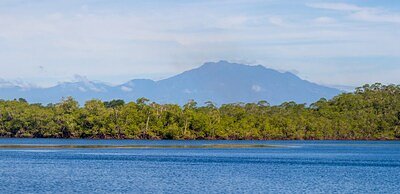
Panama Port Pits Development Against a World Heritage Site
DAVID, Panama – February 27, 2026 – A multi-million dollar port development touted as a catalyst for Panama's economy has drawn a stark warning from the United Nations, placing the project at the center of a growing international controversy over its potential impact on a UNESCO World Heritage site and one of Latin America's most vital mangrove ecosystems.
The United Nations Educational, Scientific and Cultural Organisation (UNESCO) has officially urged the Panamanian government to reassess the Puerto Barú project in David, Chiriquí province. The agency fears the port's construction and operation could cause irreversible harm to the nearby Coiba National Park and its Special Zone of Marine Protection, a site celebrated for its extraordinary biodiversity and pristine marine ecosystems.
The proposed $250 million private investment aims to transform David into a world-class logistics hub. However, it is surrounded by 25% of Panama's mangroves, and its planned navigational channel would cut through a legally protected area, sparking a firestorm of legal challenges and accusations that developers are attempting to silence environmental defenders.
A World Heritage Site in the Balance
Inscribed as a World Heritage site in 2005, Coiba National Park is described by UNESCO as an "outstanding natural laboratory" for scientific research and a critical link in the Eastern Tropical Pacific for the survival of pelagic fish and marine mammals. Its protected waters are a haven for at least 33 species of sharks and 20 species of cetaceans, while its isolated forests shelter endemic species and animals, like the Crested Eagle, that have vanished from mainland Panama.
The threat, however, extends beyond the park's official boundaries. The port's location in the Gulf of Chiriquí places it adjacent to one of the largest and healthiest mangrove forests in Central America. These forests are not just trees; they are critical climate infrastructure, providing coastal communities with a natural defense against storms and rising sea levels, acting as vital nurseries for commercial fish stocks, and sequestering vast amounts of carbon.
This delicate ecosystem provides shelter for critically endangered species, including the hawksbill sea turtle—the world's most endangered sea turtle—and the black-crowned Central American squirrel monkey, whose population has plummeted by 60% in recent decades due to habitat loss.
"UNESCO's call makes clear that the port project, Puerto Barú, poses a potential irreversible risk to Coiba National Park, and other protected ecosystems," said Vasser Seydel, President of The Oxygen Project. "Mangroves are frontline climate infrastructure; protecting communities, storing carbon and sustaining livelihoods. To endanger one of the world's most critical mangrove ecosystems, while silencing local voices and defenders, is not development, it's a global climate failure and human rights injustice."
The 'Green Port' and Its Critics
The project's developer, Ocean Pacific Financial Services Corp., has promoted Puerto Barú as Panama's first "green port," promising to operate on 100% renewable energy and set aside 30% of its land for conservation. They assert that the project will not directly cause mangrove deforestation and that its Environmental Impact Study (EIS), approved by Panama's Ministry of Environment in January 2024, was a thorough process involving over a dozen technical bodies.
However, these assurances have failed to quell fierce opposition. Independent scientific research conducted by the international consulting firm Lynker concluded that the project's EIS utilized flawed methodologies and significantly underestimated the risks to the mangroves and local biodiversity. Another analysis by the Conservation Strategy Fund (CSF) warned of significant environmental losses and suggested alternative sites for the port.
A primary concern is the massive dredging required to create and maintain a long navigational channel to the port. Critics argue this dredging will stir up sediment, smothering nearby coral reefs, degrading water quality, and destroying the very habitats that support the region's rich marine life.
"UNESCO is sounding the alarm: the Puerto Barú port risks irreversible harm to Coiba National Park and one of the most important mangrove ecosystems on the planet," said Christian Vanizette, Co-Founder of the chilli.club. "In the climate emergency we are facing, we cannot afford to destroy mangroves."
Legal Battles and Silenced Voices
The conflict has escalated from environmental reports to a high-stakes legal war. The project's EIS is currently facing two separate nullity lawsuits in Panama's Supreme Court of Justice. Filed by a coalition of environmental organizations including the Environmental Advocacy Center (CIAM) and Adopta Bosque, the lawsuits argue the EIS approval was illegal, citing procedural failures and its location within a protected area established in 2007.
While the Supreme Court has so far denied requests to provisionally halt the project, the core lawsuits challenging the legality of its approval remain active. In a move that sent shockwaves through Panama's civil society, the port's developers retaliated. In August 2025, they filed criminal and civil lawsuits against CIAM and Adopta Bosque, alleging defamation.
These legal actions resulted in court orders to freeze the NGOs' assets, including bank accounts, effectively paralyzing their ability to operate and pay staff. Over 60 organizations have condemned these actions as "strategic lawsuits against public participation" (SLAPPs)—a tactic designed to intimidate, bankrupt, and silence public dissent. These are the first lawsuits of their kind against environmental organizations in Panama, raising serious concerns about the shrinking space for environmental advocacy and freedom of speech, particularly as Panama is a signatory to the Escazú Agreement, which explicitly calls for the protection of environmental defenders.
A Test for Panama's 'Rights of Nature'
The controversy surrounding Puerto Barú serves as the first major test of Panama's pioneering Law 287. Enacted in 2022, the law recognizes Nature as a subject of rights, granting ecosystems the legal right to "exist, persist, and regenerate." It obligates the state to protect these rights and mandates that in any case of doubt, legal decisions must favor the alternative least harmful to nature.
Critics argue that advancing a project with such significant, documented environmental risks in a legally protected area makes a mockery of this landmark legislation.
"Panama made history by recognizing the Rights of Nature through Law 287, affirming that ecosystems have the rights to exist, thrive and regenerate," stated Callie Veelenturf, founder of The Leatherback Project and a leading marine biologist. "Moving forward with Puerto Barú in this location, while UNESCO calls for caution, would undermine Panama's landmark commitment, risking irreversible harm to these mangroves and threatening the ecosystem integrity of Coiba National Park. This is a critical moment for Panama to uphold Law 287, honor its moral leadership and unequivocally protect Nature."
As construction activities begin on the ground, the Panamanian government finds itself at a crossroads. It must weigh the promised economic benefits of Puerto Barú against the resounding warnings from UNESCO, the legal challenges from its own citizens, and its groundbreaking commitment to the Rights of Nature. With the future of a World Heritage site and a globally significant ecosystem hanging in the balance, the world is watching to see which path Panama will choose.