
- Launch Date: June 29, 2026
- Service Tiers: Pricing ranges from $50 (Silver) to $100 (Platinum)
- Estimated Revenue: ~$23,000/month with 10% PAA share
Experts view Khushaamdeed as a strategic pivot for Pakistan's aviation sector, blending premium hospitality with geoeconomic ambitions to compete regionally and attract high-value travelers.
Pakistan Bets on VIP Service to Remake its Global Aviation Standing
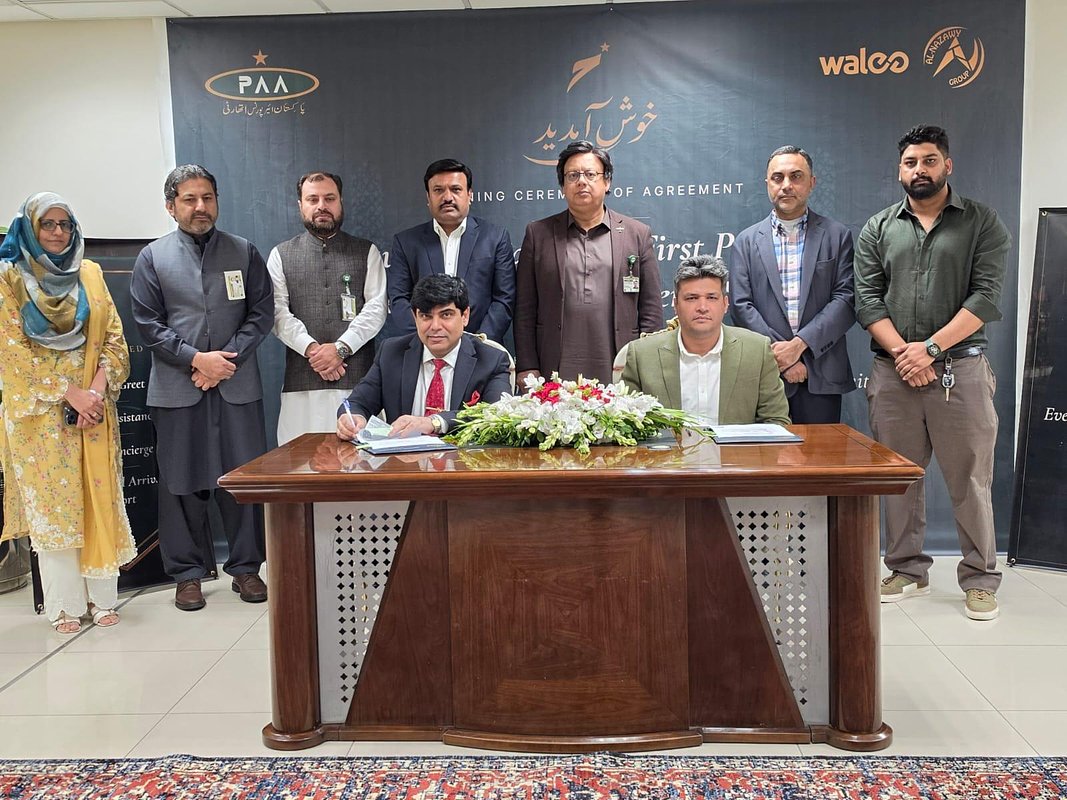
ISLAMABAD, Pakistan – June 29, 2026 – While travelers at Islamabad International Airport might only notice the crisply uniformed hosts and dedicated fast-track lanes, the launch of Khushaamdeed, Pakistan’s first premium Meet & Assist service, represents far more than a new layer of passenger comfort. It’s a calculated, high-stakes bet on the power of premium hospitality to reshape an entire nation's aviation identity and a critical test case for a new public-private partnership model designed to accelerate Pakistan's economic ambitions.
Launched this week, the service is the flagship product of Walee Al-Nazawy, a strategic joint venture that has partnered with the recently established Pakistan Airports Authority (PAA). The offering, whose name translates to “Welcome,” promises a seamless curb-to-gate experience, including dedicated hosts, expedited immigration, and full baggage assistance. While such services are standard fare in the gleaming terminals of Dubai and Doha, their arrival in Pakistan signals a deliberate and significant strategic shift aimed at closing a critical “experience gap” with its powerful regional competitors.
Deconstructing a Hybrid Partnership
The success or failure of this initiative rests on the unique and seemingly disparate strengths of its backers. On the public side is the Pakistan Airports Authority, an entity born just two years ago, in August 2024, from the bifurcation of the country's legacy Civil Aviation Authority. This restructuring was specifically designed to separate regulatory functions from airport operations, empowering a body like the PAA to pursue commercial growth and modernization with greater agility. This partnership is one of the PAA's first major tests of this new mandate.
On the private side is Walee Al-Nazawy, a fascinating hybrid of new-economy tech and old-world hospitality. The WALEE Group, founded by data scientists in 2015, has evolved into a diversified tech, media, and finance conglomerate with a footprint across the Middle East and Pakistan. Their expertise in technology, digital marketing, and platform-building represents the modern engine intended to drive Khushaamdeed’s operational efficiency and market reach. Paired with them is the Al-Nazawy Group, a seasoned player in the travel and hospitality sector with deep experience in managing complex logistics for religious pilgrimages to Saudi Arabia. This brings the essential, on-the-ground understanding of traveler needs and service delivery.
Steering this venture is a name that carries significant weight in Pakistani aviation circles: Air Marshal (Retd.) Arshad Malik, the CEO of Khushaamdeed. His resume includes not only a distinguished career in the Pakistan Air Force but also a challenging tenure as the CEO of Pakistan International Airlines (PIA) from 2019 to 2022. His appointment signals a clear intent to ground the aspirational service in rigorous operational discipline. Malik's direct experience with the national airline gives him an unvarnished view of the sector's pain points and the immense effort required to elevate service standards.
“Khushaamdeed introduces a level of passenger care and airport facilitation that has not previously existed in Pakistan,” Air Marshal Malik stated in the official announcement. “Our objective is simple: to make travel through Pakistani airports more efficient, comfortable, and welcoming while meeting international standards of service excellence.”
Closing the Experience Gap with Global Hubs
For years, international business travelers, diplomats, and the affluent Pakistani diaspora have navigated the country's airports with a sense of resignation, facing crowded queues and unpredictable processes that stand in stark contrast to the frictionless transit offered by Gulf super-connectors. Khushaamdeed aims to directly address this deficiency. The service portfolio is modeled directly on successful international counterparts like Dubai's Marhaba and Doha's Al Maha services.
According to early reports on the service structure, Khushaamdeed will likely offer tiered packages, with prices ranging from approximately $50 for a silver package to $100 for a platinum-level experience. These tiers are expected to provide varying levels of assistance, from fast-track immigration clearance and buggy transport to full concierge services and access to CIP lounges. This pricing strategy suggests an attempt to capture a broader segment of the market than just ultra-high-net-worth individuals, targeting business travelers on expense accounts, families seeking convenience, and elderly passengers needing assistance.
By creating a predictable, high-quality experience, the PAA and its partners are betting that they can change the perception of Pakistan’s airports from being merely a point of entry to being an integral, and even pleasant, part of the journey. This is a crucial element in attracting not just tourists, but also the foreign investment and business delegations that the government is actively courting.
More Than Convenience: The Geoeconomics of a Welcome Mat
Viewing Khushaamdeed as simply a luxury amenity would be a miscalculation. Its launch is deeply intertwined with Pakistan’s broader geoeconomic strategy. The initiative is part of a wider trend of Saudi investment and strategic partnership within Pakistan's aviation sector, aimed at modernizing infrastructure and strengthening the country's position as a viable regional hub for travel and transit.
A premium meet-and-greet service acts as a form of “soft infrastructure.” It sends a powerful signal to the international community that the country is serious about business and open to the world. For a diplomat arriving for a new posting or a CEO considering a major investment, the first and last impression of a country is often their experience at its primary international gateway. A smooth, efficient, and welcoming airport experience can subtly influence perceptions of the country's overall competence and stability.
This initiative is expected to directly cater to the very demographics Pakistan needs to attract: foreign delegations, overseas investors, and high-spending tourists. By removing common travel frictions, the service aims to make Pakistan a more appealing destination for both business and leisure. The potential revenue for the PAA, estimated in one preliminary report at around $23,000 per month with a 10% revenue share, is modest in the grand scheme of airport finance. The real return on investment is measured in the enhanced national image and the potential for increased foreign direct investment and business travel.
The road ahead involves scaling this model. While operations have commenced in Islamabad, the plan is to expand to other key airports, such as Karachi and Lahore. The success of this initial rollout will be watched closely as a litmus test for the viability of public-private partnerships in upgrading Pakistan’s national infrastructure. The challenge will be maintaining an impeccable standard of service as the operation grows, ensuring that the promise of a world-class experience is delivered to every customer, every time.