
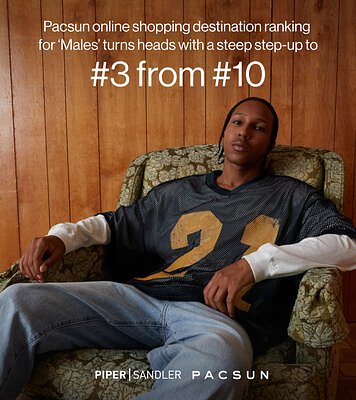
- Pacsun climbed from #10 to #3 as a preferred online shopping destination for males and from #10 to #5 among all teens in the Piper Sandler survey. - The brand rose to #5 in the apparel category from #7. - A viral TikTok video featuring Pacsun's Casey jeans led to over 60,000 pairs sold and $20 million in revenue.
Experts would likely conclude that Pacsun's success is driven by its innovative co-creation strategy, which deeply engages Gen Z and Gen Alpha consumers as partners rather than just targets, setting a new standard for youth market engagement.
Pacsun's Playbook: How Co-Creation Is Capturing the Youth Market
LOS ANGELES, CA – November 26, 2025 – In the hyper-competitive world of youth retail, where relevance is a currency more valuable than cash, specialty retailer Pacsun has just posted a resounding market signal. The company announced significant gains in the latest Piper Sandler “Taking Stock With Teens” report, a semi-annual survey that serves as a crucial barometer for brand resonance with Gen Z and the emerging Gen Alpha. Pacsun’s upward climb is not a random fluctuation; it’s the direct result of a calculated and deeply integrated strategy that treats young consumers not as a target audience, but as core business partners. This shift from demographic analysis to direct co-creation offers a compelling blueprint for any brand aiming to build loyalty with the next generation of consumers.
A Data-Driven Ascent in a Crowded Field
The numbers from Piper Sandler’s 50th semi-annual survey, which polled nearly 11,000 teens across the United States, are stark. Pacsun vaulted from #10 to #3 as a preferred online shopping destination for males, and from #10 to #5 among all teens. In the critical apparel category, the brand climbed to the #5 spot from #7. While market titans like Nike and Amazon continue to dominate the top positions, Pacsun's double-digit leaps in rank are a testament to a strategy that is clearly resonating. In a landscape where consumer attention is fragmented and fleeting, such focused momentum is a significant achievement that demands closer inspection.
The gains validate a series of deliberate, youth-centric initiatives the company has undertaken. “These rankings tell a powerful story about where youth culture is heading—and how our community is shaping it,” noted Pacsun CEO Brieane Olson in the announcement. Her emphasis on community and co-creation isn't just corporate rhetoric; it’s the central pillar of the company’s recent success. The retailer's ability to carve out a stronger position against established players like Hollister and Brandy Melville demonstrates that a deep, authentic connection with its consumer base can effectively challenge market incumbency.
The Co-Creation Engine: Beyond the Focus Group
At the heart of Pacsun’s resurgence is a fundamental shift in how it engages with its audience. The company has moved beyond traditional focus groups and market surveys to embed the voice of youth directly into its operational and strategic core. Two key initiatives exemplify this approach: the Pacsun Youth Report and the Pacsun Youth Advisory Council.
Launched in September 2025 at the company’s inaugural Purpose Summit, the Youth Report is an ambitious industry resource developed with GlobalData from a survey of over 6,000 young people. Rather than keeping the insights proprietary, Pacsun made the report a free, public-facing tool. It delves into the nuanced values of Gen Z and Alpha, revealing, for instance, that mental health remains a top priority and that music often plays a more central role in identity formation than fashion itself. This act of sharing intelligence signals a commitment to the broader youth culture ecosystem, building credibility and trust.
Even more impactful is the Youth Advisory Council, a cohort of Gen Z and Gen Alpha creators who collaborate directly with Pacsun executives. This is not a passive ambassador program. Council members participate in quarterly workshops, weigh in on everything from denim fits to campaign concepts, and receive mentorship from company leaders. The model creates a powerful feedback loop where cultural trends identified by the council can be rapidly translated into product and marketing.
The tangible return on this investment is undeniable. Council member and micro-influencer Valera Djordjevic’s TikTok video styling Pacsun's Casey jeans went viral, directly leading to the sale of over 60,000 pairs and generating more than $20 million in revenue. This single example illustrates the power of authentic, creator-led influence when harnessed within a corporate structure designed to listen and react swiftly.
Decoding the Modern Youth Consumer
Pacsun's success provides a masterclass in understanding the complex psyche of Gen Z and Alpha consumers. These digital natives exhibit what analysts call “Trend Loyalty” over traditional brand loyalty. They are fiercely loyal to a specific product or aesthetic—often one that has gone viral on platforms like TikTok—but are quick to abandon a brand if it fails to keep pace or contradicts their values. With 43% of Gen Z shoppers admitting to buying products simply because they are trending, the ability to tap into and even shape these micro-trends is paramount.
This is where Pacsun’s strategy excels. By curating a product mix that is 50% in-house brands and 50% wholesale—including trending labels like Edikted and John Galt—it positions itself as a cultural aggregator, not just a retailer. Its #2 ranking as a denim brand on TikTok and the platform's multi-million dollar contribution to its revenue underscore its success in this arena.
However, this generation also presents a complex set of values. While research shows over 70% of Gen Z actively investigate a brand's ethics and three-quarters prioritize sustainability over brand name, Pacsun’s own Youth Report uncovered a “sustainability paradox.” Many young consumers who claim to avoid fast fashion still prioritize deals and affordability, creating a gap between stated values and actual purchasing behavior. Pacsun navigates this by focusing on authenticity and transparency, building a relationship that can withstand the occasional inconsistencies of its consumer base.
The Challenge of Sustaining Momentum
While Pacsun celebrates its current trajectory—backed by a reported 17% year-to-date increase in store traffic and robust e-commerce performance—the ultimate challenge is sustainability. The very youth culture that has propelled the brand forward is notoriously fickle. Trends that burn brightly on TikTok can fade just as quickly, and the “No-Buy” movement, fueled by economic anxiety and environmental concerns, encourages more intentional and reduced consumption.
Pacsun appears to be building its defenses against this volatility by translating brand heat into tangible business infrastructure. The company is betting on physical retail's staying power with an aggressive expansion plan, aiming to open 15-20 new stores in 2025 and another 25 in 2026, with international expansion slated for 2027. By strengthening its omnichannel presence, Pacsun is working to solidify its relationship with consumers beyond the digital trend cycle.
Ultimately, Pacsun’s story is less about a single brand’s success and more about a paradigm shift in consumer engagement. It demonstrates that in today's market, relevance is not something a brand can simply purchase through advertising. It must be earned through genuine partnership and a willingness to cede a measure of control to the community it serves. For other industries watching from the sidelines, Pacsun’s playbook offers a powerful lesson: the future of consumer loyalty is not built on broadcasting to a demographic, but on co-creating with a community.