
- 50,000 analyzers installed worldwide, generating 50 million cell images daily
- 100 billion real-world data points used to train AI algorithms
- Three core lab disciplines (hematology, biochemistry, immunoassay) integrated into a single platform
Experts view Ozelle's AI platform as a significant advancement in point-of-care diagnostics, offering earlier disease detection and more efficient clinical decision-making through integrated, AI-driven analysis.
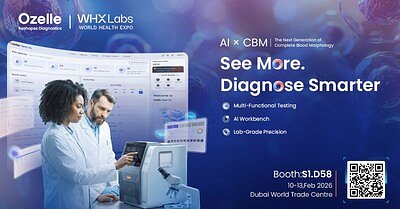
Ozelle's AI Platform Aims to Revolutionize Point-of-Care Diagnostics
DUBAI, UAE – January 23, 2026 – As the global healthcare community prepares to gather for WHX Labs Dubai 2026, one company is poised to capture the spotlight with a solution that could fundamentally reshape the landscape of medical testing. Ozelle, a global innovator in intelligent diagnostics, has announced it will unveil a next-generation platform that aims to move complex diagnostic capabilities out of centralized laboratories and into primary care clinics, pharmacies, and other point-of-care settings.
Under the theme "AI × CBM: The Next-Generation of Complete Blood Morphology," the company will showcase its integrated system from February 10–13. The solution is designed to bridge the long-standing gap between lab-grade precision and the logistical realities of real-world clinical environments, promising to make advanced diagnostics more accessible, efficient, and intelligent.
Redefining Diagnostics with Integrated AI
The centerpiece of Ozelle's presentation is its AI-powered Complete Blood Morphology (CBM) system, a technology that represents a significant leap beyond traditional hematology. Standard blood tests typically provide numerical data, such as cell counts. Ozelle's CBM, however, combines high-resolution digital imaging with sophisticated, real-time algorithmic analysis to provide a much richer, more detailed picture of a patient's health from a single drop of blood.
This system doesn't just count cells; it sees and classifies them. By identifying multiple cell sub-types—including atypical lymphocytes (ALY), neutrophil segmented cells (NSG), and reticulocytes (RET)—the platform can flag subtle abnormalities that may indicate the early stages of disease. This morphological analysis, once the exclusive domain of highly trained technicians peering through microscopes, is now automated, promising earlier detection and more informed clinical decision-making at the first point of contact.
What truly sets the solution apart is its all-in-one design. The platform integrates three core laboratory disciplines—hematology, biochemistry, and immunoassay—into a single, maintenance-free workflow. This allows clinicians to move beyond ordering standalone tests and instead build flexible, on-demand panels tailored to specific clinical scenarios. For instance, a physician suspecting an infection can run a combined panel of a complete blood count (CBC), C-reactive protein (CRP), and serum amyloid A (SAA) simultaneously. Similarly, a diabetes check-up could combine a CBC with an HbA1c test, providing a comprehensive snapshot in minutes.
The Intelligent Workbench: From Data to Decision
Generating results quickly is only half the battle; interpreting them confidently is paramount. To address this, Ozelle will highlight its Intelligent AI Workbench, known as Open Dx, an interactive diagnostic hub built directly into the analyzer. This feature aims to transform the static, often dense reports of the past into a dynamic, guided experience.
The system automatically identifies abnormal findings, flags potential risks, and provides structured overview interpretations, effectively acting as an AI-powered assistant for the clinician. This is particularly crucial in primary care or pharmacy settings, where practitioners may not have specialized laboratory training. The workbench also features conversational AI, allowing users to interactively query results and explore findings further, moving from raw data to actionable diagnostic guidance within a single, unified workflow.
This versatility extends to veterinary medicine, where the AI Workbench provides tailored diagnostic assistance and medication references, demonstrating the platform's broad applicability across different fields of care.
The Data Engine Driving Clinical Confidence
The promise of any AI in medicine rests on the quality and scale of the data used to train it. Ozelle's claims are anchored by a massive global footprint. The company reports over 50,000 of its analyzers are installed worldwide, collectively generating more than 50 million cell images every single day. This has culminated in a colossal dataset exceeding 100 billion real-world data points.
This vast repository of clinical information serves as the engine for refining and validating its deep-learning algorithms. According to the company, this continuous feedback loop ensures that the AI's performance is not only accurate but also constantly improving and adapting to the nuances of real-world patient samples. This commitment to data-driven validation, supported by what Ozelle describes as an industry-exclusive quality control system, is critical for building the clinical trust necessary for widespread adoption.
A New Paradigm for Point-of-Care Testing
Ozelle's announcement comes as the healthcare industry is already trending toward decentralization. The push for point-of-care testing (POCT) is driven by the need for faster results, improved patient convenience, and more efficient healthcare delivery. By offering an integrated, AI-guided solution, Ozelle is positioning itself not just as a participant in this trend, but as a key enabler of its next phase.
While industry giants like Sysmex, Siemens Healthineers, and Abbott are also heavily invested in AI and laboratory automation, Ozelle's strategic focus on a single, integrated, and maintenance-free device for non-specialist environments appears to be a key differentiator. It directly targets the operational and accessibility gaps that have traditionally kept advanced diagnostics confined to large hospitals.
However, the path to widespread adoption is not without its hurdles. The initial capital cost of such sophisticated technology can be a significant barrier for smaller, independent clinics and pharmacies. Furthermore, navigating the stringent regulatory frameworks for medical devices, such as the In Vitro Diagnostic Regulation (IVDR) in Europe, requires extensive clinical evidence and robust quality management. Finally, ensuring seamless integration with existing Electronic Health Records (EHR) and providing adequate training are practical challenges that must be overcome to realize the technology's full potential.
As the healthcare world converges on Dubai for WHX Labs 2026, the demonstration of such integrated systems will offer a tangible glimpse into a future where advanced diagnostics are no longer confined to the central lab, but are an accessible and intelligent tool in the hands of community healthcare providers.