
- Prolonged standing linked to lower back pain, fatigue, muscle soreness, and leg swelling (NIOSH).
- Anti-fatigue mats reduce discomfort by 30%+ in studies (PubMed).
- 9/10-inch memory foam cited as optimal balance for support (FEATOL).
Experts agree that while standing desks improve sedentary habits, ergonomic solutions like anti-fatigue mats are essential to mitigate new health risks from prolonged static standing.
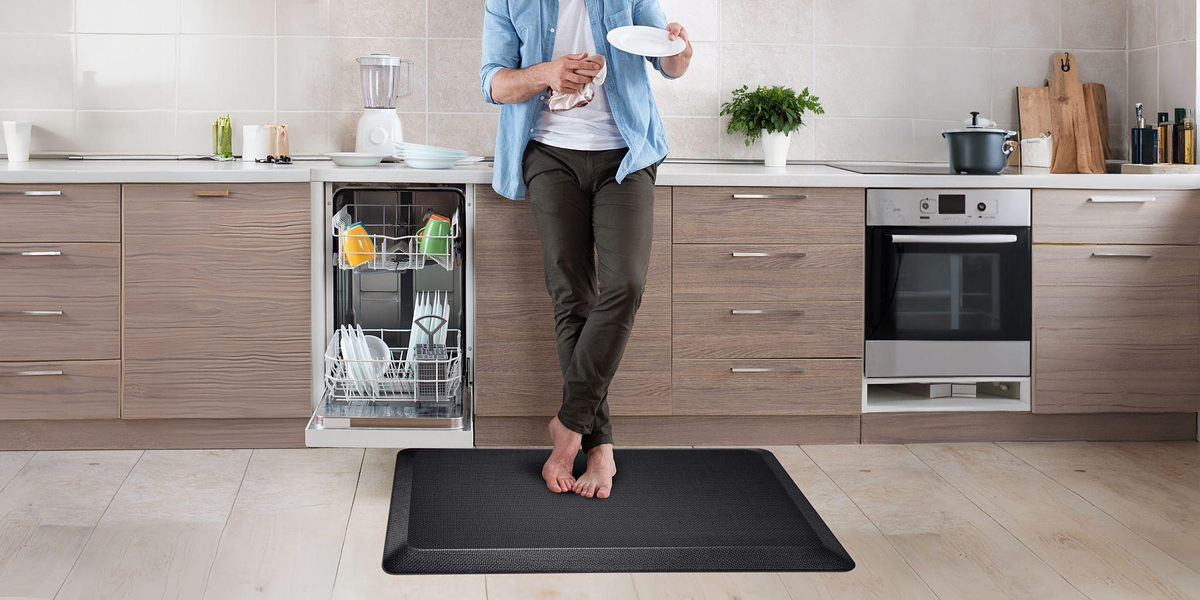
Our Stand-Up Culture Has a Pain Point. Ergonomics Is the Answer.
NEW YORK, NY – June 24, 2026 – The modern workspace, whether a corporate high-rise or a corner of a living room, has undergone a quiet revolution. We have risen from our chairs, motivated by a decade of headlines warning against the perils of a sedentary life. The standing desk, once a niche curiosity, is now a symbol of proactive wellness. Yet, in solving one problem, we’ve inadvertently created another. The simple act of standing, when prolonged and static, exerts its own subtle but significant toll on the human body. This is the paradox of our new vertical work life: we’ve embraced movement, only to find ourselves locked in a different kind of stillness.
This shift has not gone unnoticed. A growing body of evidence, and a chorus of aching feet and backs, are revealing the hidden costs of standing. In response, a market focused on ergonomic intervention is rapidly expanding, moving beyond the office to reshape comfort in every corner of our daily lives, from the kitchen to the workshop. It’s a classic story of innovation driven by necessity, where a simple foam mat becomes a critical piece of infrastructure for modern well-being.
The Hidden Toll of a Vertical Life
For decades, occupational health experts have understood the strain that standing-centric jobs in retail, manufacturing, and healthcare place on the body. Now, as this posture becomes mainstream for millions of office workers, the data is more relevant than ever. According to the U.S. National Institute for Occupational Safety and Health (NIOSH), prolonged standing is directly associated with a litany of ailments: lower back pain, physical fatigue, muscle soreness, and leg swelling.
The underlying mechanics are deceptively simple. When you stand still on a hard surface, your muscles become rigid as they work to hold you upright. This static contraction reduces blood flow, causing blood to pool in the lower extremities. The result is not just fatigue but an increased risk of long-term issues like varicose veins and chronic venous disorders. As one physical therapist explained, “The body is designed for dynamic movement, not static loads. Standing in one place for hours is like putting a car in park with the engine running—it creates strain without purpose.”
Further research paints an even more concerning picture. The Canadian Centre for Occupational Health and Safety (CCOHS) links prolonged standing to stiffness in the neck and shoulders as posture degrades over time. Some studies have even suggested a correlation between jobs that require mostly standing and a higher risk of heart disease compared to more dynamic roles. The very tool we adopted to improve our health—the standing desk—can become a source of new physical stress if not implemented as part of a broader ergonomic system.
The Science of Softer Ground
This is where the anti-fatigue mat enters the narrative. Far from being a mere comfort accessory, these mats are an engineered intervention designed to counteract the effects of static posture. Research published in outlets like PubMed confirms their efficacy, with studies showing significant reductions in lower back and limb discomfort for individuals standing on cushioned surfaces compared to a hard floor.
The principle is elegant: the mat’s cushioned, compliant surface is inherently unstable. This instability forces the user to make continuous, unconscious micro-movements in their feet and calf muscles to maintain balance. These subtle shifts are enough to stimulate blood flow, prevent muscle stiffening, and reduce the pressure on joints in the feet, knees, and spine. “They essentially trick your body into staying in a dynamic state,” noted one ergonomist. “The muscles keep firing and relaxing, which is exactly what they are supposed to do.”
The material and density of the mat are critical. A surface that is too soft can cause instability and overwork stabilizer muscles, creating a different kind of fatigue. Conversely, a mat that is too hard won't provide enough cushioning. The most effective designs strike a balance, providing enough give to reduce impact while remaining firm enough to promote productive muscle engagement.
An Industry Built on Discomfort
The rising awareness of these issues has fueled a vibrant and competitive market for ergonomic solutions. Brands like GelPro and WellnessMats have long offered premium options for kitchens and commercial settings, while companies like Sky Solutions and Kangaroo Brands have become mainstays on Amazon, targeting the burgeoning home office demographic. The market is a clear reflection of a society increasingly willing to invest in preventative health and wellness, especially as the lines between work and home continue to blur.
The pandemic-induced shift to remote work acted as a massive accelerator. Stripped of professionally designed office environments, workers began self-diagnosing their ergonomic needs, seeking out everything from monitor stands to supportive chairs and, increasingly, anti-fatigue mats. This consumer-led demand has pushed companies to innovate, focusing on durability, safety, and aesthetics to integrate these functional products seamlessly into home environments.
Designing for Daily Endurance
It is within this context that companies like FEATOL are making their mark. The brand, which specializes in ergonomic support products, recently introduced its Anti-Fatigue Mat, a product that exemplifies the industry’s direction. Its design directly addresses the core scientific principles and consumer needs that have emerged. Constructed with 9/10-inch high-density memory foam, it aims to provide the carefully calibrated balance of softness and support that experts recommend.
The design also reflects a deep understanding of user pain points. A durable PU leather surface resists punctures and stains, acknowledging that a mat in a kitchen or workshop needs to be as resilient as it is comfortable. Safety features, like a non-slip base and beveled edges to prevent tripping, are now standard expectations in a mature market. By citing research from NIOSH and PubMed in its launch, the company is signaling a commitment to evidence-based design, appealing to a discerning consumer base that wants solutions that work.
“At FEATOL, we believe comfort and support should be a natural part of everyday life, especially for people who spend long hours on their feet,” said Lora, the company’s Marketing Director. “Our goal is to create products that combine thoughtful design, durable materials, and reliable performance, helping people stay focused on what matters most rather than the discomfort that can come with daily routines.”
This sentiment captures the essence of the broader movement. The anti-fatigue mat is more than a product; it’s a small but powerful adaptation to our evolving lifestyles. Whether at a standing desk, a retail counter, or a kitchen island, these simple platforms are helping us endure the demands of modern life, transforming our daily environments into spaces that support, rather than strain, our long-term health.