
- 98 lives lost in the Champlain Towers South collapse.
- Building showed signs of failure for weeks before collapse due to structural design flaws and deferred maintenance.
- AI-powered monitoring systems could have detected warnings weeks in advance.
Experts agree that advanced structural health monitoring technologies, like those offered by Estructura, are now essential for preventing similar disasters, shifting the focus from reactive to proactive infrastructure safety.
Our Buildings Are Talking. After Surfside, Are We Ready to Listen?
SAN JUAN, PR – June 26, 2026
Five years ago, a building in Florida collapsed in the middle of the night, a catastrophic failure that stole 98 lives and a community’s sense of security. For years, the story of Champlain Towers South was one of a sudden, inexplicable tragedy. Now, we know better. The final report from the National Institute of Standards and Technology (NIST), released just days before this grim anniversary, confirms what many engineers suspected: the building did not simply fall. It gave up, slowly, over a period of weeks. The real tragedy of Surfside is not that the building failed, but that it was screaming for help, and no one had the tools to listen.
The Anatomy of a Failure Foretold
The NIST investigation is a forensic masterpiece, a 10,000-page autopsy of a disaster. Its conclusion is unambiguous. The collapse began not with a sudden event, but with the quiet failure of two connections between the pool deck and the garage columns in early June 2021, nearly three weeks before the building came down. These initial “punching-shear failures” set off a slow-motion chain reaction, redistributing loads onto a structure that, as investigators found, was dangerously compromised from the day it was built.
According to the report, the building suffered from “critically low margins of safety from the start.” In some areas, the structural design provided less than half the strength required by the building codes of its time. For forty years, this hidden vulnerability was compounded by the relentless South Florida environment. Salt air, water intrusion from a leaking pool deck, and decades of deferred maintenance corroded the reinforcing steel, steadily eating away at what little safety margin remained. NIST documented visible cracks, accelerating water leaks in the garage, and even a section of the pool deck that had detached from the main slab in the hours before the final collapse. The warnings were there, written in concrete and steel, but they were in a language our conventional inspection methods failed to translate in time.
An EKG for the Built World
While the NIST report closes a chapter on the “what” of the collapse, it opens a crucial one on the “what now?” A San Juan-based structural intelligence company, Estructura, argues that this kind of failure is precisely what modern technology is designed to prevent. The firm, born from a federal engineering contractor with deep experience in disaster response, claims its AI-powered monitoring platform could have provided a cascade of alerts weeks before the Surfside collapse.
Their solution is a kind of EKG for buildings, a vertically integrated system that combines three layers of technology. First, TerraIntel satellites use a radar technique called InSAR to scan the ground from orbit, detecting millimeter-scale subsidence or deformation that is invisible to the human eye. In the case of Champlain Towers, this would have tracked the subtle sagging of the pool deck as its underpinnings weakened. Second, a network of on-premise GeoSIG sensors—precision instruments that act like a building’s nervous system—would have registered the anomalous micro-vibrations, deflections, and load shifts as the structure’s columns began to strain. Finally, the GeoSMART AI platform would have acted as the brain, analyzing both data streams in real time. It would have recognized the patterns of a developing failure, flagging the deviations from normal behavior and triggering automated warnings.
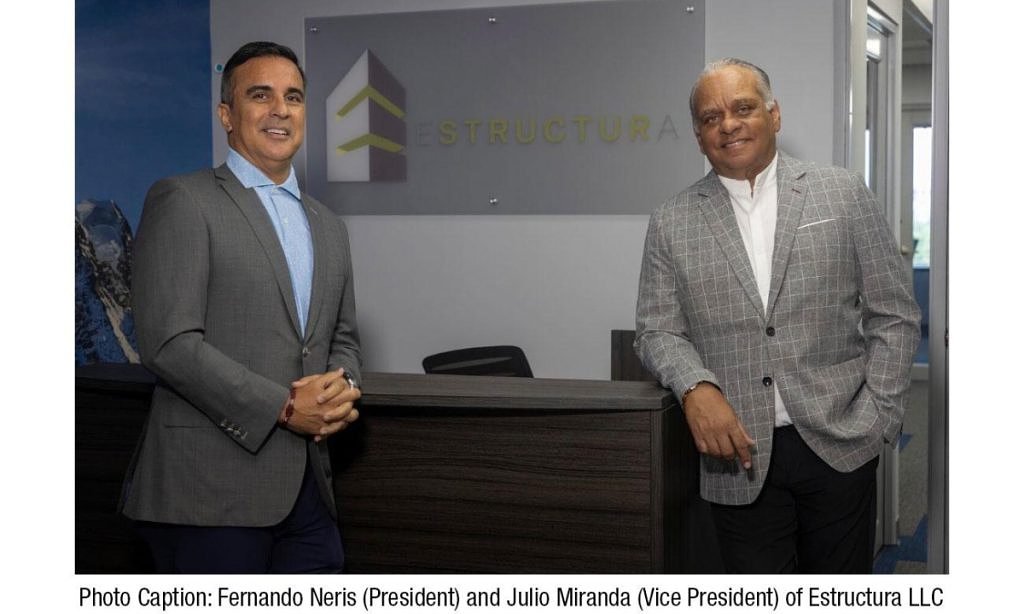
“The Surfside building gave weeks of warning that no one had the technology to read,” said Julio Miranda, Estructura’s Vice President. The alerts would not have been subtle suggestions but urgent, data-backed alarms, giving engineers, building managers, and residents the one thing they didn’t have: time. Time to investigate, time to evacuate, time to act.
From Reaction to Prediction
Estructura is not alone in this vision. The field of structural health monitoring (SHM) is undergoing a quiet revolution, moving from periodic, manual inspections to continuous, data-driven surveillance. Companies are integrating IoT sensors, cloud computing, and AI to create “digital twins” of physical structures, from bridges and dams to hospitals and high-rises. This represents a fundamental paradigm shift—away from reacting to disasters and toward proactively preventing them.
This shift is critical because the risks that brought down Champlain Towers are not unique. Estructura identifies four categories of risk that threaten structures across the Americas and beyond: original design flaws, the slow decay of aging and deferred maintenance, the cumulative stress of seismic events, and the escalating pressures of extreme climate events like hurricanes and floods. A building that survives an earthquake may be invisibly weakened for the next one. A coastal high-rise may face decades of corrosive salt spray its designers never fully anticipated. Continuous monitoring promises to make these invisible threats visible.
The company's own lineage, stemming from Dorado Services, a long-time contractor for FEMA and the Army Corps of Engineers, underscores this evolution. For decades, the parent firm has been on the front lines of disaster response. Now, its offshoot is focused on ensuring there are fewer disasters to respond to.
The High Cost of Knowing—And Not Knowing
The Surfside collapse prompted immediate legislative action. Florida’s Senate Bill 4D, passed in 2022, was a landmark step, mandating that condominium associations conduct structural integrity studies and, crucially, prohibiting them from waiving reserve funds for critical repairs. It was a direct response to the financial decisions that allowed Champlain Towers’ structural problems to fester for years. But as Miranda notes, the law addresses only one part of the equation. “A reserve fund is only useful if you know what you need to repair, and when,” he added.
This raises a difficult question for policymakers, developers, and building owners: should continuous, AI-powered monitoring be mandatory? The debate weighs the cost of implementation against the immeasurable cost of another Surfside. While critics raise concerns about the financial burden on older buildings and smaller associations, proponents point to a different set of calculations. The cost of a monitoring system, which Estructura claims clients can recover in one to two years, pales in comparison to the cost of catastrophic failure. Furthermore, the data generated can lead to significant savings through predictive maintenance, optimized repair schedules, and potentially lower insurance premiums.
Independent engineering experts increasingly see continuous monitoring not as a luxury, but as a necessity for aging infrastructure in a changing world. The conversation within professional bodies is shifting toward performance-based codes that could incorporate or even mandate such technologies for high-risk structures. The goal is to create a future where buildings are not just inert structures, but intelligent systems that can communicate their own health. Five years on, the legacy of Surfside is not just a story of loss, but a challenge. The technology to listen to our buildings now exists. The only remaining question is whether we will choose to install it.