
- $53M contract: Oshkosh Defense awarded a $53 million order for Common Bridge Transporters (CBTs) by the U.S. Army.
- $1.54B program: The order is part of the broader FHTV V program, valued at up to $1.54 billion over five years.
- $10.7B revenue: Oshkosh Corporation reported $10.7 billion in revenue in 2024.
Experts view this contract as a strategic reinforcement of the U.S. Army's modernization efforts, emphasizing the critical role of battlefield mobility and logistical support in contemporary military operations.
Oshkosh Secures $53M Deal for Army’s Critical Bridge Transporters
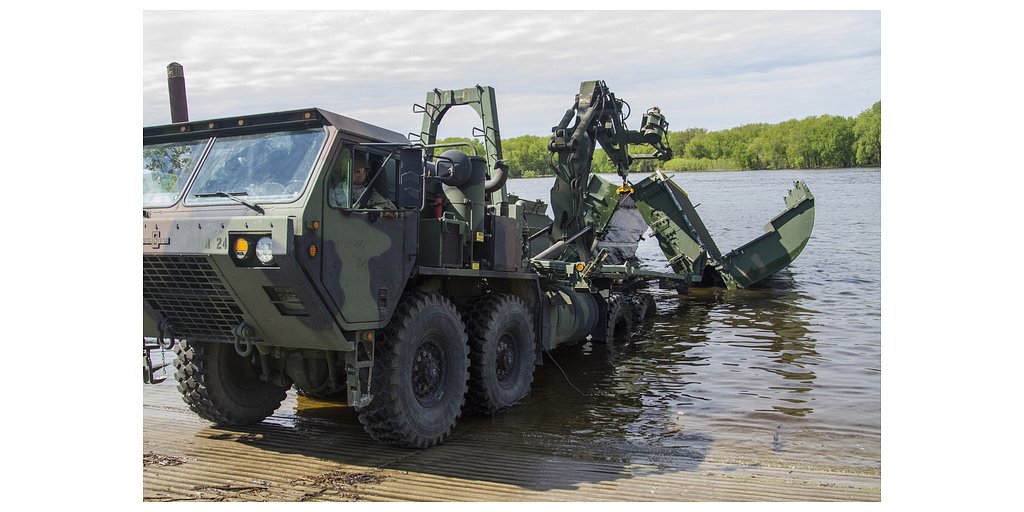
OSHKOSH, Wis. – January 15, 2026 – Oshkosh Defense, a subsidiary of Oshkosh Corporation [NYSE: OSK], has been awarded a $53 million order from the U.S. Army Contracting Command – Detroit Arsenal (ACC-DTA) for its Common Bridge Transporters (CBTs). The order, placed under the broader Family of Heavy Tactical Vehicle (FHTV) V program, will provide the U.S. Army with a crucial capability for maintaining momentum and logistical support on the modern battlefield.
The CBTs are specialized vehicles engineered to transport, launch, and retrieve the components of mobile bridges, including bridge bays and bridge erection boats (BEBs). This function is vital for enabling combat formations to cross rivers, ravines, and other wet gaps, particularly when existing infrastructure is damaged or non-existent. Built on Oshkosh’s well-established heavy tactical truck platform, these vehicles are designed for performance and reliability in demanding operational theaters.
“Soldiers need mobility they can count on, especially when formations must stay supplied and moving during conflict,” said Pat Williams, Chief Programs Officer for Oshkosh Defense, in a statement accompanying the original announcement. “The Common Bridge Transporter reflects the performance and reliability that define Oshkosh heavy tactical vehicles. We’re honored to continue supporting the U.S. Army with proven systems designed to perform in demanding, contested logistic environments.”
The Strategic Need for Battlefield Mobility
The importance of rapid bridging capabilities has been starkly illustrated in recent global conflicts. The war in Ukraine, for example, has repeatedly demonstrated that wet gap crossings are among the most complex and high-risk maneuvers for ground forces. The ability to quickly deploy temporary bridges allows armies to outmaneuver adversaries, maintain the tempo of an advance, and ensure that supply lines for fuel, ammunition, and reinforcements remain intact. Without this capability, entire divisions can be stalled, becoming vulnerable to attack.
Military strategists have noted that in potential future conflicts, particularly in theaters like Eastern Europe or the Indo-Pacific, the ability to overcome natural and man-made obstacles will be a decisive factor. Consequently, the U.S. Army has placed renewed emphasis on modernizing its engineering and logistical assets. The CBT order directly addresses this strategic imperative, strengthening the Army's ability to project force and maintain freedom of movement. This focus is not unique to the United States; allies in Europe are also working to enhance military mobility, with initiatives like the proposed “Military Schengen” zone aimed at streamlining the movement of troops and heavy equipment across borders, including upgrading infrastructure like bridges to support modern military loads.
Advanced Engineering for Contested Environments
The Common Bridge Transporter is a key element in the Army’s portfolio of bridging solutions. While systems like the M1074 Joint Assault Bridge (JAB), built on an M1 Abrams tank chassis, provide armored, forward-deployed scissor bridging, the CBT serves a different but equally critical role. It is the logistical backbone for larger bridging operations, carrying the sections of modular systems like the Improved Ribbon Bridge (IRB), which can span wider gaps. The CBT’s design, based on the proven architecture of Oshkosh's FHTV family, ensures interoperability, simplified maintenance, and a high degree of reliability under harsh conditions.
The FHTV platform is the workhorse of the Army’s heavy logistics fleet, encompassing vehicles like the Heavy Expanded Mobility Tactical Truck (HEMTT) and the Palletized Load System (PLS). By building the CBT on this common chassis, the Army benefits from a streamlined training and supply chain, reducing the logistical burden on deployed units. This approach reflects a broader military modernization strategy focused on integrating advanced capabilities onto proven, cost-effective platforms.
A Pillar of the FHTV V Modernization Program
This $53 million order is part of a much larger, multi-year effort to modernize the Army’s heavy vehicle fleet. It falls under the FHTV V program, a five-year contract awarded to Oshkosh Defense in 2024 with a potential value of $1.54 billion. The program is designed to deliver both new and recapitalized vehicles, incorporating targeted upgrades to enhance performance, extend service life, and reduce operating costs. Key goals include integrating drive-by-wire capabilities for future autonomous operations, improving fuel efficiency, and adding Condition Based Maintenance (CBM) systems.
The CBT order is the latest in a series of significant awards for Oshkosh under the FHTV umbrella, underscoring the company’s entrenched position as a primary supplier to the U.S. Army. In recent months, the company has secured other major orders, including a $165 million contract for 225 trucks and 54 trailers and a $95 million order for modernized, autonomy-ready PLS A2 vehicles. These continuous contract awards highlight the Army's long-term confidence in Oshkosh's products and its central role in the service's modernization roadmap.
From a financial perspective, while the $53 million order is a notable win, its primary impact is in reinforcing the company's long-term backlog and strategic partnership with the Department of Defense. For a corporation like Oshkosh, which reported revenues of $10.7 billion in 2024, this order contributes to the steady performance of its defense segment. Wall Street analysts maintain a positive outlook on Oshkosh Corporation's stock (OSK), citing expected growth in its Defense and Vocational segments as a key driver. This contract, while not transformative on its own, adds to the foundation of that optimistic forecast, ensuring a stable production line and reaffirming the company's market leadership in the competitive heavy tactical vehicle sector, where it competes with global giants like Rheinmetall AG and BAE Systems.
Topics & Related
Aerospace & Defense
Government Services & GovTech
International Relations
Automation
Autonomous Vehicles
Related Company Pulse