
- 16,000 structures destroyed in the 2025 Los Angeles wildfires.
- 25,000-policy portfolio with zero wildfire losses for Delos Insurance Solutions during the 2025 event.
- 700,000 policies now under California's FAIR Plan, with $700 billion in total financial exposure.
Experts would likely conclude that Delos' forward-looking, physics-based wildfire risk model offers a viable solution to California's insurance crisis, enabling more accurate risk assessment and expanding coverage to previously uninsurable homes.
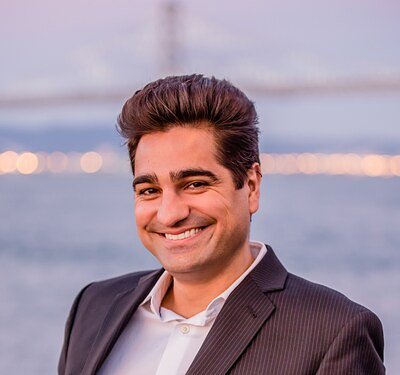
Beyond the Burn Zone: A New Model for Wildfire Insurance
SAN FRANCISCO, CA – January 15, 2026 – One year after ferocious Santa Ana winds fueled the catastrophic Los Angeles wildfires of January 2025, the landscape of Southern California is not the only thing that has been irrevocably altered. The state's property insurance market, already in crisis, was pushed to a breaking point. Yet, amid the devastation that destroyed over 16,000 structures, a San Francisco-based insurtech firm, Delos Insurance Solutions, emerged not only unscathed but with a bold new proposition for the state's abandoned homeowners.
New analysis released by Delos highlights a crucial lesson learned from the ashes of 2025. The report contrasts the fate of the Palisades and Eaton fires, which evolved into destructive urban conflagrations, with the nearby Sunset fire. Igniting just a day later under similar drought conditions, the Sunset fire was quickly contained with no structural losses. The difference, Delos argues, was not ignition, but scalability. Factors like fuel continuity and the feasibility of suppression determined which sparks became infernos.
This insight is the core of a sophisticated risk model that allowed Delos to suffer zero wildfire losses across its 25,000-policy portfolio during the event. Now, the company is leveraging that success to expand coverage to approximately 270,000 homes previously deemed uninsurable by the private market.
Decoding Catastrophe: The Physics of Fire
For years, the insurance industry has relied on models rooted in historical burn patterns to price wildfire risk. But as climate change makes past events an unreliable prologue, that approach has faltered, contributing to the mass withdrawal of major insurers from the California market. Delos, founded by aerospace engineers in 2017, has taken a fundamentally different path.
Instead of looking backward, their model looks at the physics of fire behavior. It analyzes over 200 data layers—from NASA satellite imagery tracking vegetation health to high-resolution wind and topographical data—to understand how a fire might behave in a specific location. It is a granular, forward-looking approach that assesses the potential for a fire to grow beyond the limits of suppression efforts.
"These fires made it painfully clear that wildfire risk isn't about whether a fire starts — it's about whether the landscape allows it to become unstoppable," said Kevin Stein, CEO of Delos Insurance Solutions, in a statement. "The Sunset fire never found momentum. Palisades and Eaton did. Our wildfire risk model is designed to distinguish between those outcomes, and that distinction matters for communities, insurers, and access to coverage."
This method allows the firm to identify properties within high-risk zip codes that are, in fact, defensible and insurable, a distinction older models often miss. By quantifying the actual risk with this level of precision, Delos claims it can reclassify a majority of homes traditionally labeled "high-risk" into more moderate categories, opening the door for affordable private insurance.
A Lifeline in a Crisis-Stricken Market
The timing of Delos' expansion could not be more critical. California's insurance market is in turmoil. In the last two years, major carriers like State Farm and Allstate have drastically reduced their exposure, pausing new policies or non-renewing existing ones, leaving hundreds of thousands of homeowners scrambling. This exodus has funneled an unprecedented number of residents into the California Fair Access to Insurance Requirements (FAIR) Plan, the state's insurer of last resort.
The FAIR Plan, designed as a temporary safety net, has seen its policy count swell to nearly 700,000, with its total financial exposure skyrocketing to over $700 billion. This has placed immense strain on the public backstop, which offers more limited coverage at often higher prices. Delos estimates that as many as 50% of properties currently on the FAIR Plan could qualify for private coverage under its more nuanced underwriting criteria.
For Delos, the mission is about more than just data and balance sheets. "We are a Californian company, many of our team members, and their friends and families, have lived through evacuations, smoke-filled weeks, and uncertainty in their communities as to whether insurance will still be there when it's needed," Stein stated. "It's about keeping our neighbors insured, our communities intact, and families from being forced out because coverage disappeared."
This approach provides a glimmer of hope for homeowners who feared they were facing an uninsurable future, offering a potential path back to the stability of the private insurance market.
Aligning Innovation with Policy Reform
Delos' success is unfolding against a backdrop of sweeping regulatory change. Recognizing that the old rules were failing, the California Department of Insurance (CDI) has been advancing its "Sustainable Insurance Strategy." A cornerstone of this reform, finalized in late 2024, is the move to allow insurers to use forward-looking catastrophe models for rate setting—the very type of modeling Delos has championed.
However, this new allowance comes with a critical condition: any insurer that uses these advanced models must commit to writing more policies in wildfire-distressed areas, aiming to cover at least 85% of their statewide market share in those regions. The goal is to reverse the trend of insurer retreat and depopulate the overburdened FAIR Plan.
Delos' business model is inherently aligned with this new regulatory framework. By design, the company seeks to find insurable properties within high-risk zones, making it a natural partner in the state's effort to stabilize the market. Their demonstrated ability to accurately price risk while expanding coverage offers a powerful proof of concept for the CDI's strategy.
"Better risk differentiation doesn't just protect balance sheets," Stein said. "It expands access to affordable insurance and allows public backstops like the FAIR Plan to focus on the truly highest-risk areas."
As regulators approve more catastrophe models from other providers, Delos' proven track record and alignment with state policy objectives position it as a key player in shaping the future of California's insurance landscape. This fusion of private-sector innovation and public policy reform may prove essential to navigating the state's new climate reality.
Topics & Related
Policy Change
Revenue
Insurance
Data-Driven Decision Making
Related Company Pulse