
- 25:1 ROI: Independently validated return on investment for Osara Health's Cancer Coach program.
- 71% Return-to-Work Rate: Highest among all conditions studied in Swiss Re's 2025 report.
- 66% Improvement Rate: Two-thirds of participants saw physical and mental health benefits.
Experts would likely conclude that Osara Health's data-driven, hybrid care model sets a new standard for post-cancer survivorship support, demonstrating both clinical efficacy and strong financial ROI.
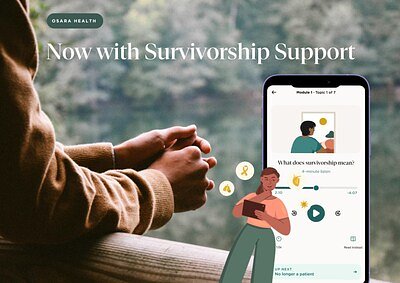
Osara Health’s Strong Signal: A 25:1 ROI on Post-Cancer Survivorship Care
NEW YORK, NY – June 05, 2026 – In a strategic move that sends a clear signal about the evolving business of healthcare, digital health company Osara Health has announced a significant expansion of its Cancer Coach program. The company is pushing beyond active treatment support into the often-neglected territory of survivorship, a phase where patients can feel most isolated. While many companies make claims about impact, Osara Health is backing its expansion with formidable, independently validated metrics: a 25:1 return on investment and new peer-reviewed research showing physical and mental health improvements for two-thirds of its participants.
This isn't just another app launch. It's a calculated entry into a critical gap in the healthcare continuum, signaling a maturing market where demonstrable value—both human and financial—is becoming the ultimate differentiator.
Bridging the 'Cancer Care Cliff'
The end of cancer treatment is a moment of triumph, but for millions, it's also the edge of a precipice. The structured support of the clinic recedes, leaving survivors to navigate a complex new reality. Osara Health aptly terms this the 'Cancer Care Cliff,' a period marked by persistent physical, emotional, and practical challenges. The company's own whitepaper on the topic paints a stark picture, revealing that nearly 54% of cancer survivors live with a clinically relevant fear of recurrence, and one in four experiences significant psychosocial distress.
This experience was famously described as being "Lost in Transition" in a landmark 2006 report from the Institute of Medicine, which highlighted the profound unmet needs of this growing population. Survivors often grapple with lingering fatigue, chronic pain, hormonal changes, and profound emotional adjustments. The transition back to daily life, work, and a sense of normalcy is rarely linear.
Osara Health’s new survivorship modules are designed to provide a bridge over this gap. The program integrates one-on-one coaching from healthcare professionals with a suite of digital tools and personalized content. Over a typical 6-to-12-week period, participants receive guidance on managing everything from fear and anxiety to fatigue and nutrition, all while tracking their progress and accessing educational resources through a companion app. The goal is not just to inform, but to empower individuals to rebuild confidence and actively manage their well-being long after their final infusion or radiation session.
The 25:1 ROI: Quantifying the Value of Support
In the world of corporate health benefits and insurance plans, empathy is a powerful motivator, but data is the language of decision-making. This is where Osara Health's growth signal becomes impossible to ignore. The company's headline claim of a 25:1 return on investment is not an internal calculation; it was independently validated in Swiss Re's "Rehabilitation Watch 2025" report. This analysis, to which Osara Health was the primary contributor of cancer support program data, provides a powerful business case for employers and insurers. The report also noted that participants in such cancer programs achieved a 71% return-to-work rate—the highest among all conditions studied, underscoring the profound economic impact of effective support.
This financial validation is coupled with robust clinical evidence. A peer-reviewed study published in the April 15, 2026, issue of JMIR Cancer examined the outcomes of Osara Health's intervention. The research, which involved 89 participants across various cancer diagnoses, found statistically significant improvements in both physical and mental health. On average, participants saw a 4.43-point improvement in physical health and a 4.58-point improvement in mental health, meeting the threshold for what clinicians consider a meaningful change. For roughly two-thirds of participants, the program led to tangible improvements in areas like fatigue, emotional wellbeing, and the ability to perform everyday physical activities.
Together, these outcomes create a compelling narrative: investing in structured, evidence-based survivorship care doesn't just improve lives—it generates substantial, measurable returns by facilitating a quicker return to work, reducing long-term health complications, and improving overall productivity and well-being.
A Clinician's Vision for Holistic Care
The driving force behind Osara Health’s strategy is its co-founder and CEO, Dr. Raghav Murali Ganesh, who brings the dual perspective of a tech executive and a practicing radiation oncologist. This clinical grounding provides a crucial layer of authenticity and insight into the company's mission.
"Each June, we recognize National Cancer Survivors Day and Cancer Survivors Month, a time to celebrate the growing number of people living beyond a cancer diagnosis while acknowledging that the end of treatment is often not the end of the cancer experience," Dr. Murali Ganesh stated in the announcement. "Many survivors continue to face challenges as recovery does not begin and end in the clinic. People need support not only to get through treatment, but to live well beyond it."
His perspective highlights a core tenet of the company's approach: cancer is a human experience, not just a medical event. By embedding principles of behavior change science and providing empathetic, professional human coaching, Osara aims to address the holistic needs of the individual. This vision, which extends care from the clinic into the patient's life, is a powerful response to the fragmented nature of traditional post-treatment follow-up and a key differentiator in a crowded market.
Navigating a Crowded Digital Health Market
The digital health landscape is saturated with apps and platforms, with over 1,300 competitors in the cancer support space alone. Many offer valuable but siloed features, such as symptom trackers, medication reminders, or community forums. Osara Health's strategy appears to be one of integration and validation. Rather than competing as just another app, it has positioned itself as a comprehensive B2B solution for insurers, employers, and healthcare providers.
Its key differentiator is the hybrid model that combines scalable digital tools with the high-touch, personalized support of human coaching—a feature that many purely digital solutions lack. Furthermore, its relentless focus on proving its worth through third-party ROI validation and peer-reviewed clinical studies sets it apart. In an industry often criticized for a lack of rigorous evidence, Osara is building its brand on a foundation of data.
By partnering directly with organizations like Manulife, MetLife, and Guardian, the company ensures its program is delivered as a covered benefit, removing cost barriers for patients and creating a sustainable business model. This expansion into survivorship isn't just a product enhancement; it's a strategic deepening of its value proposition, solidifying its position as a trusted partner in managing the long-term human and economic impact of cancer.