
- $45 billion: The commercial roofing sector's market value. - 40+ locations: Nations Roof's current footprint. - 5x–9x EBITDA: Valuation multiples for companies in this industry.
Experts would likely conclude that this acquisition reflects a broader trend of private equity-driven consolidation in blue-collar industries, reshaping local markets through strategic roll-up strategies.
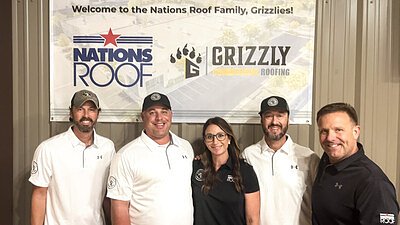
One Roof at a Time: A National Firm's Quiet Conquest of a Local Market
LAFAYETTE, LA – June 04, 2026 – On the surface, the press release was standard corporate fare. Nations Roof LLC, a national commercial roofing giant, announced its acquisition of Grizzly Commercial Roofing, a respected local contractor in Lafayette, Louisiana. The language was familiar: “strategic expansion,” “shared values,” “enhanced capabilities.” Yet, beneath the polished veneer of business-speak lies a story that is far more significant than a single transaction. It’s a window into the quiet, relentless consolidation of America’s blue-collar industries, a trend fueled by private equity and fundamentally reshaping the gap between local craftsmanship and national scale.
This isn't just about who fixes the roof on the local big-box store. It’s about the changing nature of work, community, and economic power in regions like the Gulf Coast. The acquisition of Grizzly by Nations Roof—a company itself acquired by private equity firm AEA Investors in 2024—is a textbook example of a “roll-up” strategy. A larger, well-capitalized entity methodically buys up smaller, successful local businesses to build a national empire in a fragmented market. And the commercial roofing industry, valued at over $45 billion, is a prime target.
A National Blueprint for Local Dominance
The commercial roofing sector is an investor’s dream. Unlike new construction, which ebbs and flows with economic cycles, maintenance and replacement are non-discretionary. Roofs age, storms hit, and warranties expire. This creates a predictable, recurring revenue stream. In the Gulf Coast, this dynamic is amplified by a near-constant barrage of severe weather, creating what one analyst called a “forced replacement cycle” that keeps demand perpetually high.
Nations Roof, with its more than 40 locations and a reported revenue approaching half a billion dollars, has been executing its growth strategy with precision. The Grizzly deal is not an isolated event. In 2025 alone, the company absorbed Preferred Roofing Services in Ohio and Boone Brothers Roofing in the Midwest. This pattern reveals a deliberate effort to stitch together a national network of local experts. The goal is to offer large, multi-site corporate clients a single point of contact for their properties nationwide, while leveraging the reputation and relationships of the local brands they acquire.
“We're excited to welcome Clint, Phil, and the entire Grizzly team to the Nations Roof family,” said Robby Speights, CEO of Nations Roof, in the official announcement. He highlighted Grizzly’s “strong team, a great strategic location, and trusted customer relationships.” These are not just pleasantries; they are the core assets being acquired. In an industry where valuation multiples can range from 5x to 9x EBITDA, a stable workforce and a book of recurring service contracts are pure gold, significantly boosting a company’s worth in the eyes of an acquirer.
Preserving the 'Grizzly' Standard
For the founders of Grizzly Commercial Roofing, Clint Baer and Phil Devey, the deal represents a new chapter. Their company, built on a reputation for quality and accountability, now has the backing of a national powerhouse. “From our earliest conversations with the Nations Roof team, it was clear that our companies share the same values,” they stated, emphasizing a commitment to people, quality, and safety.
The decision to retain the local branding—the firm will now operate as “Grizzly Commercial Roofing, a Nations Roof Company”—is a crucial part of this strategy. It’s a tacit acknowledgment that in the service industry, trust is local. The Grizzly name carries weight with general contractors and property managers across Louisiana. Erasing it would be erasing the very goodwill Nations Roof paid for. Baer and Devey will remain with the company, a move designed to assure employees and customers that the local leadership and commitment to service excellence will not change.
This approach aims to create a 'best of both worlds' scenario: the responsiveness and familiarity of a local crew, backed by the resources, technology, and purchasing power of a national corporation. For Grizzly’s employees, it can mean access to better benefits, more advanced training, and a broader career path. For its customers, it promises expanded capabilities and the ability to handle larger, more complex portfolio-based projects.
The Art of the Deal: Integrating Culture, Not Just Companies
However, the history of mergers and acquisitions is littered with failures born from culture clashes. The true test for Nations Roof will be in the execution. Integrating a fiercely independent local team into a sprawling corporate structure is a delicate art. The press release’s emphasis on “shared values” is a non-negotiable for a reason. When a company’s primary product is the skill and reliability of its people, a cultural mismatch can quickly erode value.
Nations Roof's recent string of acquisitions suggests it has developed a playbook for this process. By keeping local leadership in place and preserving brand identity, the company seeks to avoid the pitfalls of a top-down, homogenizing integration. The model is less about assimilation and more about federation, where local outposts maintain their operational character while plugging into a central support system for finance, marketing, and national accounts.
The challenge is to ensure that the pressure for national-level efficiency and quarterly growth doesn't slowly chip away at the local autonomy and craftsmanship that made Grizzly successful in the first place. The promise of “expanded resources” must not become a reality of “more bureaucracy.” For now, the leadership of both companies is projecting a unified front, confident that the combination will create a stronger entity.
This single transaction in Lafayette is a microcosm of a larger economic transformation. Local, founder-led businesses are increasingly becoming cogs in larger, private equity-backed machines. While the move provides an exit for founders and can bring new opportunities, it also concentrates market power and changes the economic fabric of communities. The long-term impact on pricing, competition, and the definition of 'local' service remains to be seen. As national giants continue to consolidate the landscape one roof at a time, the question for customers and communities is whether the local touch can truly survive under a corporate umbrella.