
- 180 units deployed since late 2024, with a target of 1,000 intersections by 2027 in the APAC region.
- 100,000 intersections in APAC rely on outdated sensing systems.
- The APAC Intelligent Transportation System (ITS) market was valued at USD 8.4 billion in 2023 and is projected to nearly double by 2030.
Experts view XVision AI's EagleEye platform as a promising solution to modernize traffic management in APAC, leveraging AI and edge computing to provide real-time, granular data that legacy systems cannot, potentially transforming urban mobility and safety.
One AI Box to Rule the Road: XVision's Bid to Fix APAC Traffic
SYDNEY, Australia – June 01, 2026 – Across the sprawling, dynamic cities of the Asia-Pacific, a daily battle unfolds on the streets. Crippling congestion, a consequence of rapid urbanization and soaring vehicle numbers, costs economies billions and citizens countless hours. Now, an Australian technology firm is making an audacious bid to bring order to the chaos, not with massive infrastructure projects, but with a single, intelligent box.
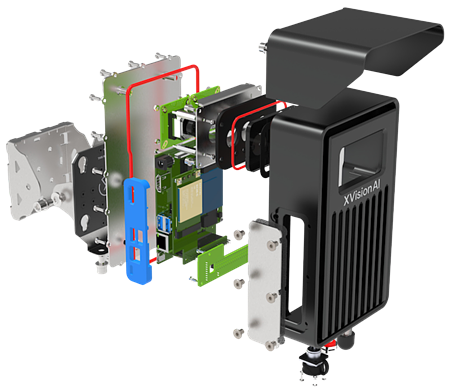
XVision AI, a Sydney-based company, is rolling out its EagleEye platform, an AI-powered stereo-vision device designed to replace the tangled mess of legacy hardware that currently manages most traffic intersections. Since its commercial launch in late 2024, the company has deployed 180 units and has set a bold target: upgrading 1,000 intersections across the APAC region by 2027.
The 100,000-Intersection Problem
The challenge XVision AI is tackling is immense. According to industry analyses, more than 100,000 intersections in the Asia-Pacific region rely on outdated sensing systems. These systems, often simple in-road magnetic loops or basic cameras, can detect the presence of a vehicle but offer little else. They are the technological equivalent of a light switch—on or off—in an era demanding the nuance of a smart home.
This infrastructure gap has become a critical bottleneck for progress. As government transport authorities push for safer roads and smarter cities, they require granular data: How many cyclists are using an intersection? Are pedestrians crossing safely? Where are near-misses occurring? Legacy systems are incapable of answering these questions, leaving city planners to rely on historical accident data and educated guesswork.
The market to close this gap is booming. The APAC Intelligent Transportation System (ITS) market was valued at over USD 8.4 billion in 2023 and is projected to nearly double by 2030. This explosive growth is fueled by government initiatives aimed at mitigating the severe congestion that plagues the region, which is home to six of the world's ten most congested cities.
A Single Device to Rule Them All
Historically, upgrading an intersection has been a complex and costly affair, requiring multiple components from different vendors—radar, cameras, analytics software, and the connective tissue to make them communicate. XVision AI's EagleEye proposes a radical simplification. The platform consolidates what previously required five or six separate systems into a single, deployable unit.
At its core is a stereo-vision system that uses two lenses to create a three-dimensional understanding of the road, a technique that provides depth perception akin to human vision. This allows the device to not only detect but also classify and track all road users—vehicles, cyclists, pedestrians, and scooters—in real-time.
Crucially, all this data processing happens onboard the device. This “edge-first” approach is EagleEye's most significant technological differentiator. By analyzing data directly at the intersection, it eliminates the need to transmit vast amounts of raw video footage to a central server. This design choice has profound implications, addressing key government concerns around data privacy and sovereignty while enabling the near-instantaneous response times needed for adaptive traffic signal control.
"For the first time, councils and integrators can move beyond guesswork," said Simon Maselli of XVision AI in a recent announcement. "XVision AI gives them the evidence to answer critical questions — where risk is building, why congestion persists, and where investment will have the greatest impact — before those issues turn into costly or dangerous outcomes."
Rewiring the Business of Traffic Tech
The platform's architecture is not just a technical advantage; it's a strategic one. By offering a single-box solution, XVision AI simplifies procurement and installation for infrastructure integrators. For government agencies, the appeal lies in its future-proof design.
EagleEye's capabilities are software-extensible, meaning new features, from advanced safety analytics to connected vehicle integration, can be added via over-the-air updates without replacing the hardware. This directly counters a major source of hesitation for public procurement teams: the fear of investing heavily in technology that could become obsolete within a few years. It transforms a one-time capital expenditure into a long-term, upgradeable platform.
This model allows cities to adopt the technology at their own pace, paying only for the capabilities they need today while ensuring their investment can adapt to the regulatory and mobility demands of tomorrow.
Navigating a Crowded Field
XVision AI is not without competition. The intelligent traffic market is a bustling space with established players and innovative startups. UK-based VivaCity has gained traction with its AI sensors that provide multimodal data and integrate with existing traffic control systems. Similarly, Swedish giant Axis Communications leverages its high-end network cameras, running AI applications from partners on the device itself.
Against these competitors, XVision AI asserts that its all-in-one design remains unique. While others may pair hardware with third-party software or require multiple components to achieve similar results, EagleEye's promise is one of radical integration—a single piece of hardware running proprietary software, providing one coherent source of data.
With 180 units deployed, the company has established a small but strategically meaningful foothold in a market dominated by entrenched legacy providers. The journey from 180 to 1,000 intersections by 2027 will be the ultimate test of its technology and business model. If successful, it would not only mark substantial penetration in a notoriously slow-moving sector but also signal a fundamental shift in how cities manage the arteries that give them life.