
- Launch Date: December 1, 2025
- Parent Company Growth: Kasumigaseki Capital reported a 2.4-fold increase in net income for fiscal 2024, forecasting a near doubling to ¥10 billion for fiscal 2025
- Portfolio Expansion: The company manages 18 properties with at least 30 more in development
Experts view this initiative as a high-stakes test of experiential luxury's ability to sustainably drive off-season demand in seasonal destinations, with outcomes hinging on balancing commercial success with environmental preservation.
Okinawa's Winter Glow-Up: A Resort's Bet on Experiential Luxury
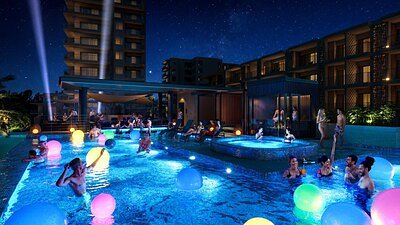
ISHIGAKI, JAPAN – November 24, 2025 – In the tranquil subtropical islands of Okinawa, where tourism typically ebbs with the winter tide, a new strategy is about to light up the night. Kasumigaseki Capital Group's luxury hotel, seven x seven Ishigaki, has announced "Lightscape Ishigaki," a winter-exclusive illumination event designed to lure high-end travelers during the traditional off-season. Launching December 1, the event promises a dreamlike experience of light, water, and relaxation.
But behind the shimmering façade of floating orbs and firefly-inspired glows lies a calculated business gambit. This is more than just a hotel decorating for the holidays; it's a high-stakes test case for the future of luxury hospitality in seasonal destinations. As companies seek to maximize asset utilization year-round, the move by seven x seven Ishigaki highlights a critical intersection of technology, experiential marketing, and environmental sensitivity. The question is whether this strategy of manufacturing a new season can generate sustainable profits without disrupting the very paradise it monetizes.
The Off-Season Gambit: Crafting Year-Round Demand
The core of the strategy is to transform a perceived weakness—the quiet winter months—into a unique strength. While Okinawa is Japan's premier summer playground, its pleasant winter climate remains a largely untapped asset. "Lightscape Ishigaki" aims to change that by creating an exclusive, compelling reason to visit now.
The event, available only to hotel guests, is split into two distinct atmospheric zones. The first floor's "Breath of Light" will transform the sauna and pool area into a serene sanctuary, with lighting inspired by the gentle rhythms of the native Yaeyama firefly. On the second floor, the "Bloom of Light" will turn the hotel's signature infinity pool into a dynamic spectacle of floating luminous orbs and light beams, creating an exhilarating, photogenic experience against the night sea.
This is a textbook example of modern experiential luxury. In an age where affluent travelers increasingly prioritize unique experiences over mere accommodation, operators are racing to create "Instagrammable moments" that drive both bookings and organic marketing. By integrating the light show with its existing wellness facilities, the hotel is offering a new form of winter wellness travel, blending relaxation with high-tech artistry.
The move doesn't happen in a vacuum. Competition in Okinawa's luxury hotel market is fierce, with rivals also innovating to capture the winter traveler. Halekulani Okinawa, for instance, promotes a heated "Eternal Winter Pool," while Hoshinoya Taketomi Island, on a neighboring isle, leans into cultural immersion and tranquility. Seven x seven Ishigaki's approach is a direct attempt to differentiate itself, betting that a high-concept, art-driven spectacle will provide a more powerful draw than competitors' more conventional offerings. It's a strategic pivot away from competing with Japan's dominant winter attractions—the ski slopes of Hokkaido and Nagano—and toward creating an entirely new category of warm-weather winter escape.
A Developer's Blueprint for High-Growth Hospitality
The ambition behind "Lightscape Ishigaki" is reflective of its parent company, Kasumigaseki Capital Co., Ltd. (TSE Prime: 3498). Far from being a traditional hotelier, the Tokyo-based firm is a real estate developer with a high-growth, asset-light business model that has captured investor attention. The company functions primarily as a developer and fund manager, identifying and planning projects before selling them to development funds, thereby minimizing long-term risk while collecting lucrative management fees.
This model is fueling explosive growth. The company reported a 2.4-fold increase in net income for the fiscal year ending August 2024 and is forecasting it will nearly double again to ¥10 billion for fiscal 2025. Hospitality, operated through its subsidiary fav hospitality group, is a central pillar of this expansion. The group already manages 18 properties and has a pipeline of at least 30 more projects across Japan.
Okinawa is a clear focus of this strategic push. Beyond the Ishigaki property, Kasumigaseki Capital is planning two large-scale developments on nearby Miyako Island. The "seven x seven" brand, creatively directed by David Miskin, is the portfolio's luxury spearhead, designed to offer a "play with luxury" experience that eschews traditional stuffiness. The launch of the Ishigaki hotel, its second under the brand, and this subsequent investment in a major off-season event, signal a deep commitment to establishing the Okinawa region as a flagship market.
Digital Fireflies in a Dark Sky Park
While the business strategy is compelling, its implementation on Ishigaki Island raises complex questions about the balance between development and preservation. This is not just any island; it is a place of rare natural beauty, and a significant portion of it is designated as the Iriomote-Ishigaki National Park. In 2018, the park was certified as Japan's first International Dark Sky Park, recognizing its exceptional, unpolluted night skies—a tourism asset in its own right that draws stargazers from around the world.
Herein lies the central tension of "Lightscape Ishigaki." An event predicated on illuminating the night, no matter how artfully, inevitably clashes with the ethos of a Dark Sky Park. The irony is particularly sharp given the hotel's stated inspiration for its ground-floor lighting: the Yaeyama firefly. This native insect, a symbol of the island's natural magic, is itself highly sensitive to the very light pollution that large-scale development can create. The project's success will depend heavily on whether its "thoughtful lighting design" can thread this needle, delivering a spectacle for guests without contributing to what some environmental advocates might call digital blight.
This tension is layered onto existing local concerns about the impact of tourism. Even before the pandemic, a 2018 survey by a local newspaper found a significant number of Ishigaki residents felt tourist numbers should be reduced, citing traffic congestion and environmental strain. While off-season tourism can provide more stable, year-round employment, the arrival of more high-end, resource-intensive projects is viewed with a mixture of hope and apprehension.
The fate of "Lightscape Ishigaki" will therefore be measured by more than just occupancy rates. It will be scrutinized by investors as a test of the experiential luxury model, by competitors as a strategic threat, and by the local community and environmental groups as a bellwether for the future of sustainable development. The event's ability to deliver on its theme of "Revitalized by Light" will be judged not only by the guests it rejuvenates, but by the delicate natural and cultural ecosystem in which it now shines.