
- 40 metric tons of HALEU needed by 2030 (DOE projection)
- 1.2-gigawatt clean energy campus planned by Oklo in Ohio
- $700 million allocated to DOE’s HALEU Availability Program (Inflation Reduction Act)
Experts view this joint venture as a critical step toward overcoming the HALEU supply bottleneck, strengthening U.S. energy independence, and accelerating the deployment of advanced nuclear reactors.
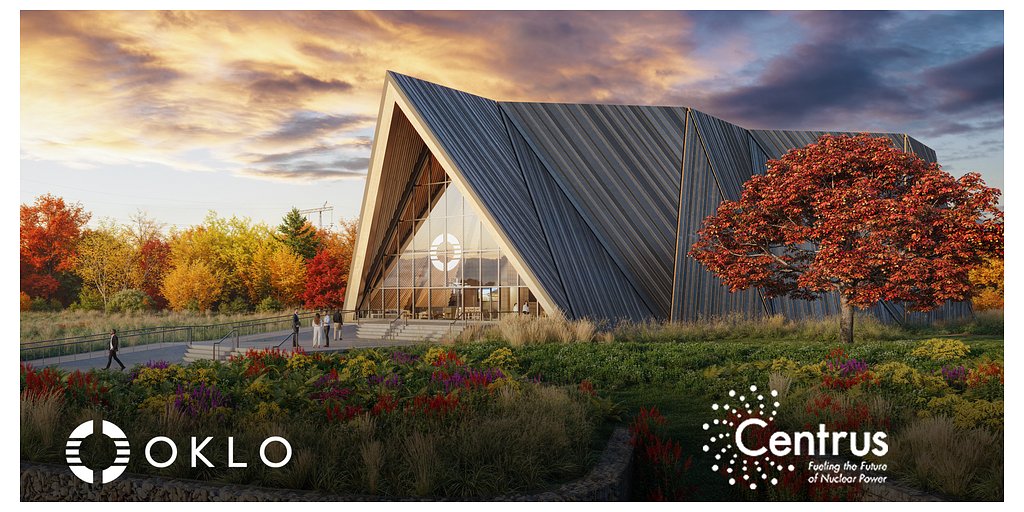
Ohio Nuclear Hub Forms to Break Advanced Reactor Fuel Bottleneck
PIKE COUNTY, OH – March 09, 2026 – In a pivotal move to secure America’s energy future, advanced nuclear firm Oklo Inc. and fuel provider Centrus Energy Corp. have announced plans to pursue a joint venture that promises to solve a critical bottleneck hindering the nation's next-generation nuclear fleet. The collaboration will establish vital fuel services in Southern Ohio, creating an integrated hub designed to produce the specialized fuel required by a new wave of advanced reactors.
The proposed venture will focus on the deconversion of high-assay low-enriched uranium (HALEU), a crucial step in the nuclear fuel cycle. Activities are slated to occur at Centrus’s facility in Piketon, Ohio, a site with a deep history in the nation’s nuclear program, located adjacent to where Oklo is planning a massive 1.2-gigawatt clean energy campus.
Breaking the HALEU Bottleneck
For years, the deployment of advanced nuclear reactors has faced a classic “chicken-and-egg” dilemma. Reactor developers have been hesitant to commit to designs that require HALEU without a guaranteed supply, while fuel producers have been reluctant to invest in production without firm commercial orders. This impasse has created a significant bottleneck, with the U.S. Department of Energy (DOE) projecting a need for up to 40 metric tons of HALEU by 2030, a figure expected to grow substantially in the following years.
HALEU, enriched to between 5% and 20% uranium-235, is more potent than the fuel used in the current fleet of light-water reactors. This higher enrichment allows for smaller, more efficient reactor designs with longer operating cycles. However, after uranium is enriched into a gaseous form, it must be chemically converted—or deconverted—into a metal or oxide form before it can be fabricated into fuel assemblies. This deconversion step is a critical missing link in the domestic supply chain.
Until recently, Russia was the only commercial-scale global supplier of HALEU, a reality that created undeniable strategic vulnerabilities. The new joint venture aims to directly address this by co-locating enrichment and deconversion services, a move intended to streamline logistics, reduce costs, and build a resilient American fuel supply.
“Advanced nuclear energy development requires not only reactors but also reliable fuel-cycle capabilities that support those reactors,” said Jacob DeWitte, CEO and co-founder of Oklo, in the initial announcement. “This framework supports deeper discussions with Centrus on potential pathways to expand deconversion capacity, strengthen domestic supply chains, and advance a more efficient fuel-cycle model that operates from the same location.”
Centrus, which has already produced over 900 kilograms of HALEU at its Piketon demonstration cascade, views the venture as a natural extension of its mission to rebuild America’s nuclear fuel infrastructure.
“We look forward to exploring options to co-locate and scale deconversion services to improve efficiency and support growing demand,” noted Centrus President and CEO Amir Vexler.
A Nuclear Renaissance in Southern Ohio
The project is set to become a cornerstone of economic revitalization in Pike County. The Centrus facility is located at the former Portsmouth Gaseous Diffusion Plant (PORTS), a site now being repurposed for a new era of energy and manufacturing. This transformation is being guided by the Southern Ohio Diversification Initiative (SODI), a non-profit community reuse organization dedicated to attracting new industries and high-quality jobs to the region.
By establishing an advanced nuclear hub, the Oklo-Centrus collaboration aligns perfectly with SODI’s vision of creating an “all-of-the-above” energy complex. The economic ripple effects are expected to be substantial. While specific figures for the joint venture have not been released, past expansion plans at the Centrus site have carried projections of around 1,000 construction jobs and hundreds of permanent operational roles. This initiative, combined with Oklo's adjacent power campus, is poised to generate thousands of jobs, attract billions in private capital, and significantly boost local and state tax revenues.
Support at the state level is also robust. Ohio Governor Mike DeWine’s $100 million JobsOhio Energy Opportunity Initiative is specifically aimed at attracting nuclear supply chain companies and establishing the state as a center of excellence for nuclear energy, ensuring that projects like this have a supportive policy environment in which to grow.
An Integrated Clean Energy Ecosystem
This joint venture is more than just a single facility; it is a key component of a larger, synergistic energy ecosystem. Oklo is simultaneously advancing plans for a 1.2 GW powerhouse campus on an adjacent 206-acre parcel, a project backed by a power purchase agreement with technology giant Meta. This campus will provide carbon-free electricity to support Meta’s growing data center operations in Ohio.
The timeline for the power campus is ambitious, with pre-construction to begin in 2026 and the first phase of power generation targeted for as early as 2030. The synergy is clear: the deconversion facility will help produce fuel for Oklo’s Aurora powerhouses, while the powerhouses can, in turn, provide clean, reliable electricity to the fuel cycle facilities. This integrated model—combining enrichment, deconversion, and power generation at a single site—could eliminate logistical hurdles and create unparalleled operational efficiencies for the entire industry.
Charting a Path Through a New Nuclear Frontier
The Oklo-Centrus initiative does not exist in a vacuum. It is part of a broader, national push to onshore critical nuclear capabilities, heavily supported by federal policy. The Inflation Reduction Act allocated $700 million to the DOE’s HALEU Availability Program, which was further bolstered by $2.7 billion in funding to develop both low-enriched and high-assay low-enriched uranium infrastructure.
Recognizing the importance of deconversion, the DOE has already awarded contracts to six companies, including Centrus’s subsidiary, to support the deployment of the necessary technology. This competitive environment underscores the national significance of the mission. The Oklo-Centrus plan to create a central hub for deconversion services could prove a game-changer, potentially eliminating the need for every advanced reactor fuel fabricator to build its own costly deconversion line.
As the companies move forward with discussions and engage with federal agencies on regulatory and R&D coordination, the project in Piketon stands as a powerful symbol of America’s renewed commitment to nuclear energy—not just as a source of clean power, but as a foundation for industrial strength and energy independence.
Topics & Related
Financial Services
Sustainability & Climate
Digital Transformation
Cryptocurrency & Digital Assets
Related Company Pulse