
- $1.8 trillion: Projected size of the natural cosmetic ingredient market by 2035, up from $909 billion in 2025.
- 1,000x: Hyaluronic acid's water retention capacity compared to its weight, a benchmark for humectant performance.
- $100/kg: Current cost of high-quality nanocellulose, a key barrier to widespread adoption.
Experts view the discovery of nanocellulose from Caulerpa racemosa as a promising, sustainable alternative to conventional humectants, aligning with the growing demand for clean beauty solutions, though scalability and regulatory challenges remain critical hurdles.
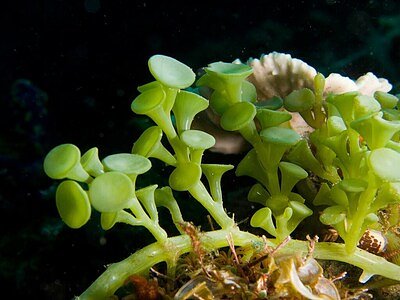
Ocean's Secret: A Seaweed Revolutionizing Natural Skincare
MAKASSAR, Indonesia – January 23, 2026 – In the turquoise waters of Indonesia, a common green alga is poised to make an uncommon splash in the multi-billion-dollar global beauty industry. Researchers have unlocked the potential of Caulerpa racemosa, colloquially known as sea grapes, to produce a powerful, natural moisturizing agent that could challenge synthetic incumbents and redefine sustainable skincare.
A study from Hasanuddin University, published in the prestigious International Journal of Biological Macromolecules, details the successful extraction and characterization of nanocellulose from this abundant seaweed. The findings reveal a humectant with superior moisture retention and skin compatibility, arriving at a critical moment as consumers worldwide increasingly demand cleaner, safer, and more eco-conscious beauty products.
The Science of Seaweed Hydration
At the heart of the discovery is the work of a research team led by Professor Indah Raya, a respected expert in biomaterial chemistry at Hasanuddin University. Humectants are a cornerstone of modern skincare, working by drawing moisture from the air to hydrate the skin's outer layers. This process is vital for maintaining the skin's barrier, protecting it from environmental damage, and giving it a plump, healthy appearance. While synthetic options like glycerol and natural powerhouses like hyaluronic acid dominate the market, they are not without drawbacks, ranging from potential irritation to high cost and environmental concerns.
Professor Raya's team turned to the ocean for a solution. "Due to their unique structure, nanocellulose are known for their high biocompatibility and excellent water-absorbing ability," stated Dr. Raya in the announcement. "As Caulerpa racemosa is abundantly available in Indonesia, we wanted to understand the efficacy of nanocellulose derived from this alga as a natural skin moisturizer."
The team collected fresh seaweed from the Takalar Aquaculture village in South Sulawesi and subjected it to a sophisticated process to isolate nanocellulose. The resulting material, examined at a microscopic level, demonstrated remarkable properties. Its nanoscale structure allows for deeper skin penetration and more even application, while its chemical makeup enables it to bind with water molecules more efficiently and for longer periods than many conventional humectants. The result is a highly effective moisturizer with a lower risk of skin irritation, making it a promising ingredient for sensitive skin formulations.
Riding the Green Wave in a Booming Market
This scientific breakthrough lands in a market ripe for disruption. The global appetite for natural and sustainable beauty is surging, with the natural cosmetic ingredient market projected to swell from approximately $909 billion in 2025 to over $1.8 trillion by 2035. Consumers are meticulously scanning labels, rejecting harsh chemicals in favor of plant- and marine-derived ingredients. This 'clean beauty' movement, expected to be a $22 billion market by 2024, has put immense pressure on brands to innovate with ingredients that are both effective and ethical.
The seaweed-derived nanocellulose enters a competitive landscape. Glycerin remains a cost-effective and popular natural humectant, though it can leave a sticky residue. Hyaluronic acid is celebrated for its ability to hold up to 1,000 times its weight in water, but its premium price point can be a barrier. The nanocellulose from Caulerpa racemosa offers a compelling middle ground: a high-performance, natural ingredient sourced sustainably. Its potential applications are vast, spanning moisturizers, anti-aging serums, body lotions, and facial masks, offering a biodegradable and renewable alternative that aligns perfectly with consumer values.
From Laboratory to Lotion: The Path to Commercialization
While the scientific promise is clear, the journey from a research paper to a product on store shelves is fraught with challenges. The primary hurdle is scalability and cost. The industrial production of nanocellulose is notoriously complex and energy-intensive, with current costs for high-quality material running as high as $100 per kilogram, limiting its use to niche, high-value applications. Bringing this price down to a level competitive with mainstream ingredients will require significant innovation in processing and manufacturing.
Furthermore, the use of nanomaterials in cosmetics faces increasing regulatory scrutiny, particularly in Europe, where concerns over safety and potential toxicity have led to stricter rules. Any commercial product utilizing this new ingredient will need to undergo rigorous safety assessments to gain market approval.
Despite these obstacles, there is cause for optimism. The raw material, Caulerpa racemosa, is plentiful in Indonesia, providing a stable and local supply chain. Advances in green chemistry and biotechnology are continuously yielding more efficient and cost-effective methods for nanocellulose extraction. The immense market demand for novel, sustainable ingredients also provides a powerful incentive for investment in overcoming these production hurdles.
Indonesia's Blue Economy and a Greener Future
This research extends far beyond the beauty counter, representing a significant step forward for Indonesia's 'blue economy'—a strategic national initiative to sustainably develop its vast marine resources. By creating a high-value product from a local seaweed, the project transforms a common marine resource into a driver of economic growth and innovation.
This aligns directly with the United Nations Sustainable Development Goal 14, "Life Below Water," which advocates for the conservation and sustainable use of marine ecosystems. Seaweed farming is already a vital source of income for many coastal communities in Indonesia, including in South Sulawesi. Developing value-added products like cosmetic ingredients can dramatically increase the crop's economic value, providing greater financial stability for local farmers and encouraging the conservation of the marine environments they depend on.
As Professor Raya noted, the research highlights a path toward balancing utilization with preservation. "Studies like this highlights the importance of marine ecosystem conservation and ways of utilizing them to maintain a harmony and sense of balance," she explained. While further research is needed to optimize production and confirm long-term efficacy, this humble green alga has illuminated a promising new direction for a skincare industry seeking a future that is both beautiful and sustainable.