
- 35,000 robotaxis: Nuro aims to deploy a fleet of at least 35,000 robotaxis worldwide over the next six years.
- $6 billion valuation: Nuro's last valuation, reflecting its progress in the autonomous vehicle industry.
- Elite five: Nuro joins Waymo, Cruise, Zoox, and one other company as the only firms with both key California permits for autonomous vehicle testing.
Experts would likely conclude that Nuro's strategic partnerships and methodical regulatory approach position it as a strong contender in the competitive autonomous vehicle market, though public trust and regulatory hurdles remain critical challenges.
Nuro Joins Elite Club for Uber Robotaxi Launch in California
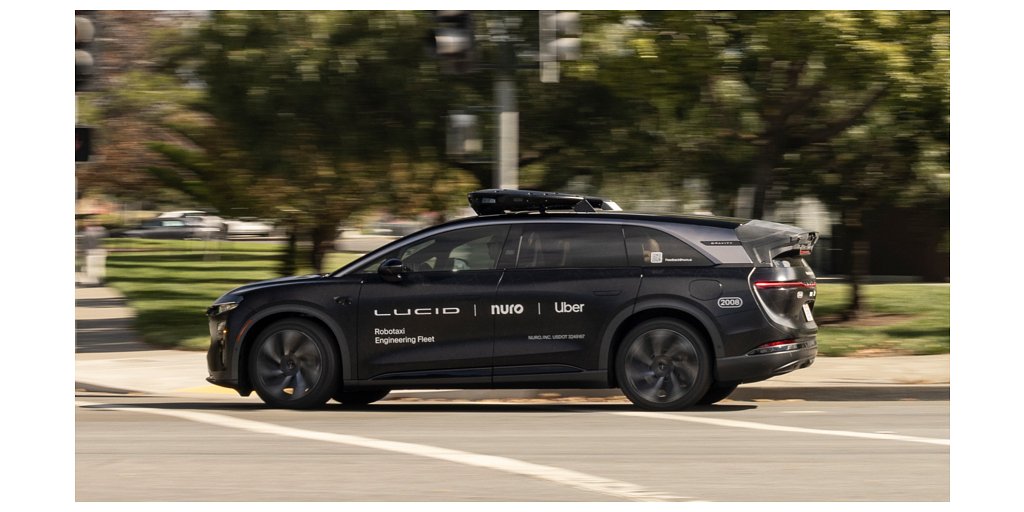
MOUNTAIN VIEW, CA – May 08, 2026 – Autonomous driving firm Nuro has secured a pivotal permit from California regulators, clearing a significant hurdle in its plan to launch a robotaxi service with partners Uber and Lucid. The move places the company in an exclusive circle of firms authorized for advanced autonomous vehicle testing in the state, signaling a major step forward in a market defined by intense competition and increasing public scrutiny.
Nuro announced it has received a Drivered Pilot Permit from the California Public Utilities Commission (CPUC). This authorization allows the company to begin carrying passengers in its autonomous vehicles on public roads, provided a human safety driver remains behind the wheel. The permit is a critical building block for the company's ambitious robotaxi program, which aims to integrate its self-driving technology into Lucid electric vehicles and deploy them on Uber's massive ride-hailing network.
“These approvals mark another meaningful step forward as we continue preparing for launch in California,” said James Owens, Nuro's Chief Legal and Policy Officer, in a statement. “They expand what we can validate on public roads and reflect the steady progress our team is making across technology, operations, rider experience, and regulatory readiness.”
A Calculated Step in a Complex Regulatory Maze
The new CPUC permit is not a final green light for a fully driverless, commercial service. It specifically allows for pilot operations with a safety driver and prohibits charging passengers a fare. However, its importance lies in its synergy with a separate permit Nuro received from the California Department of Motor Vehicles (DMV) in April, which allows for driverless testing without passengers.
Together, these two permits make Nuro one of only five companies to hold both key authorizations in California. This dual approval allows the company to pursue two parallel testing tracks: validating its core driverless technology on its own and simultaneously refining the passenger experience with a human supervisor onboard. This methodical, step-by-step approach appears calculated to build confidence with regulators in a climate of heightened caution.
Navigating California's regulatory environment has become increasingly complex. In response to a series of high-profile incidents involving autonomous vehicles obstructing emergency responders and causing traffic disruptions, state agencies have tightened their oversight. New rules adopted by the DMV in April 2026 empower law enforcement to issue citations directly for AV traffic violations and require companies to have a plan for emergency geofencing, allowing officials to clear AVs from an area within minutes. For Nuro, demonstrating flawless compliance and safety under these stricter rules will be paramount as it moves toward the next, most coveted prize: a "Driverless Deployment" permit that would authorize paid, fully autonomous rides.
Joining California's Elite AV Circle
By securing both the DMV and CPUC permits, Nuro officially enters the top tier of autonomous vehicle developers operating in the state, a proving ground widely seen as the epicenter of the industry. The company joins a small but formidable group of competitors that includes Waymo, Cruise, and Zoox.
This "elite five" represents the companies that have successfully navigated the state's rigorous, multi-stage approval process. Waymo, an Alphabet subsidiary and an early leader in the space, already operates a commercial, drivered ride-hailing service in parts of California and is testing driverless rides. Zoox, owned by Amazon, is also actively testing and preparing for a commercial launch.
The competitive landscape is also a cautionary tale. Cruise, a subsidiary of General Motors, was the first to receive a permit for paid driverless rides in San Francisco but had all its permits suspended in late 2023 following a serious incident and allegations that it withheld information from regulators. Cruise has only recently begun a slow, supervised return to public roads, illustrating the high stakes and the fragility of regulatory trust. Nuro's entry into this group, amid such intense scrutiny, underscores the perceived maturity of its technology and its careful, transparent approach to regulatory engagement.
The Power of Three: Nuro, Uber, and Lucid's Alliance
What sets Nuro’s strategy apart is its powerful three-way partnership, a collaboration that leverages the distinct strengths of a tech specialist, a premium EV manufacturer, and a global mobility platform. The alliance aims to deploy a fleet of at least 35,000 robotaxis worldwide over the next six years.
Under the agreement, Lucid will manufacture its Gravity electric SUVs with the necessary hardware for autonomy integrated directly on the assembly line at its Arizona factory. The choice of the Lucid Gravity is strategic, offering the long range, fast-charging capabilities, and spacious interior ideal for a ride-hailing service.
Nuro provides the brain of the operation: the "Nuro Driver," its universal AI-powered autonomy platform. Nuro is responsible for developing and validating the comprehensive safety case for the system through extensive simulation and real-world testing. This licensing model, where Nuro provides the self-driving stack to an automotive partner, represents a strategic pivot for the company, which initially focused on its own delivery-specific vehicles.
Finally, Uber brings its unmatched scale and market access. The robotaxis will be owned and operated by Uber or its fleet partners and made available exclusively through the Uber app. This provides Nuro with a direct path to millions of customers, bypassing the immense challenge of building a consumer-facing brand and network from scratch. To solidify the partnership, Uber is making multi-hundred-million dollar investments in both Nuro and Lucid, including a reported $300 million for Lucid, signaling deep financial commitment to the venture's success. The first market is set for the San Francisco Bay Area, where Uber employees began pilot testing the service in April.
Navigating Public Trust and Market Headwinds
While the CPUC permit is a significant technical and regulatory victory, the road ahead is filled with challenges that extend beyond engineering. The ultimate success of Nuro's robotaxi service will depend on earning public trust—a commodity in short supply following a string of AV incidents in San Francisco and other cities. Local officials have grown increasingly vocal in their opposition to what they see as unchecked expansion, citing concerns over safety, traffic congestion, and the lack of local control. Lawsuits and proposed legislation aim to give cities more power to regulate AV deployment within their boundaries.
In this context, Nuro's decision to begin passenger trials with a safety driver is a strategically sound move. It allows the public to become accustomed to the vehicles while providing a human failsafe, potentially mitigating some of the anxiety associated with fully driverless cars. This period of supervised operation will be crucial for gathering data not only on vehicle performance but also on public interaction and acceptance.
This milestone is also critical for Nuro's financial standing. The company, which has raised over $2.3 billion and was last valued at $6 billion, operates in a capital-intensive industry where progress is measured in regulatory approvals and deployment milestones. Achieving this permit validates its technology and strategy for key investors like SoftBank, Tiger Global, and Uber itself, shoring up confidence as it continues the long and expensive journey toward full commercialization. As the company's fleet of nearly 100 Lucid Gravity test vehicles becomes a more common sight on California roads, each successful trip will be a small deposit in the bank of public and regulatory trust it needs to build.