
- Methane intensity: <0.05% (verified by MiQ standard)
- Industry median methane loss: 0.23% (North Sea platforms)
- Project powered entirely by offshore wind energy
Experts view this project as a groundbreaking model for balancing energy security with climate responsibility, demonstrating that low-emission gas production is achievable through innovative design and renewable integration.
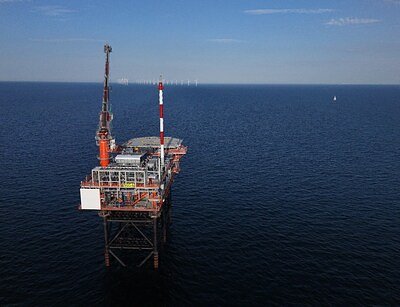
North Sea's First 'Green Gas' Platform Sets New Emissions Benchmark
LONDON – February 11, 2026 – In a landmark achievement for Europe's energy sector, a Dutch-German natural gas project has become the first in the North Sea to receive a top-tier certification for its exceptionally low methane emissions. The N05-A development, operated by ONE-Dyas, is powered entirely by an offshore wind farm, setting a new and demanding benchmark for an industry under pressure to address its climate impact.
The project has been awarded a "Grade A" rating under the rigorous MiQ standard, an independent framework for certifying natural gas based on its methane performance. The certification, verified by the global assurance firm Intertek, signals that the facility's methane intensity—the amount of methane leaked relative to the gas produced—is below an impressive 0.05%. This achievement provides a potential blueprint for how to balance energy security with climate responsibility during Europe's complex energy transition.
A Wind-Powered Blueprint for Production
At the heart of the N05-A project's success is a radical departure from traditional offshore platform design. Instead of relying on gas-powered turbines for electricity—a major source of both CO2 emissions and unburnt methane "slip"—the entire installation runs on renewable energy. A nine-kilometre subsea power cable connects the platform directly to the EWE-operated Riffgat offshore wind farm, located in German waters.
This direct electrification eliminates the need for onboard combustion, slashing the platform's operational greenhouse gas emissions to near-zero. The innovation extends even to the drilling phase, with the mobile jack-up rig also powered by the same wind-generated electricity.
"By combining innovative design with renewable power from the Riffgat wind farm, we demonstrate that domestic energy security and climate responsibility can go hand in hand," said Chris de Ruyter van Steveninck, CEO of ONE-Dyas, in a statement. "This certified gas shows what the future of cleaner, transparent and accountable gas production looks like in the energy transition."
This model directly tackles the technical challenges of offshore production. While integrating intermittent renewables requires significant upfront investment and complex engineering, ONE-Dyas has demonstrated its viability, creating a precedent for future projects in the North Sea and beyond.
The Weight of a 'Grade A' Certification
Achieving MiQ's highest grade is more than a symbolic victory; it represents adherence to a stringent, data-driven standard. The certification process evaluates performance across three key areas: methane intensity, the robustness of company practices for managing emissions, and the deployment of advanced monitoring technology. To earn a Grade A, a facility must excel in all three.
This stands in stark contrast to the wider industry's historical performance. Independent studies have repeatedly suggested that methane emissions from North Sea operations are significantly under-reported in official inventories, with some analyses indicating actual leakage rates are several times higher than what is declared. A median methane loss of 0.23% found in one academic study of North Sea platforms is more than four times higher than the sub-0.05% intensity verified at N05-A.
The MiQ standard requires operators to move beyond estimates and use verifiable, source-level measurements to track and repair leaks. This granular, third-party-audited data provides a new level of accountability.
"The certification of N05-A highlights how innovative design and best-in-class operational practices can deliver meaningful methane emissions reductions," commented Georges Tijbosch, Chief Executive Officer of MiQ. "MiQ's independent assessments provide governments, regulators, and end-users with trusted data that supports accountability and continuous improvement across the energy sector."
Reshaping the European Gas Market
The certification is set to have commercial ripple effects. Energy giant bp, which is the offtaker for the project, will market the certified gas to large buyers like utilities and industrial consumers. This creates a differentiated market where natural gas is no longer a uniform commodity, but a product graded on its environmental credentials.
For customers in the Netherlands and Germany, the N05-A project, part of the larger GEMS area holding up to 50 billion cubic metres of gas potential, offers a source of domestic energy with verifiable low-methane credentials. This is increasingly critical as corporate sustainability goals and investor pressure push companies to clean up their supply chains and reduce their Scope 3 emissions.
While a significant premium for certified "green gas" is not yet standard, the market is evolving. The ability to purchase gas with a verified low-methane footprint provides a powerful tool for companies looking to meet their own climate targets and demonstrate environmental responsibility to shareholders and consumers alike. The MiQ digital registry, which tracks each unit of certified gas from production to end-use, ensures this environmental attribute is not double-counted and remains traceable.
Ahead of the Regulatory Curve
The N05-A project's achievement is not just a voluntary step; it strategically positions ONE-Dyas and its partners ahead of a wave of stringent new European regulations. The EU's recently enacted Methane Regulation will impose mandatory Measurement, Monitoring, Reporting, and Verification (MMRV) requirements across the energy sector.
Starting in 2027, the regulation will extend these strict standards to gas imported into the EU, effectively creating a methane intensity threshold for market access. Producers who cannot provide verified, low-emission data may find themselves at a significant disadvantage. The regulation also mandates aggressive Leak Detection and Repair (LDAR) programs and bans routine venting and flaring, practices that the N05-A's electrified design inherently avoids.
By meeting the MiQ standard—widely considered to be aligned with or even exceeding the EU's forthcoming requirements—the gas from N05-A is essentially future-proofed for the European market. This proactive approach demonstrates a shift from reactive compliance to a strategic embrace of transparency and emissions reduction as a core business principle, setting a powerful example for the entire oil and gas industry as it navigates its role in a decarbonizing world.