
- $4.5 billion: The autonomous aerial systems market is projected to be worth over $4.5 billion within the decade.
- 450 Wh/kg: Amprius's silicon anode batteries achieve energy densities of up to 450 Wh/kg, surpassing the 250 Wh/kg typical of standard lithium-ion cells.
- $1 billion: The global 'Drone-in-a-Box' (DIAB) market is currently valued at over $1 billion and is on a steep growth trajectory.
Experts view this partnership as a strategic move that will redefine the competitive landscape for autonomous drone operations, emphasizing the critical role of advanced battery technology in enabling long-range, high-performance missions.
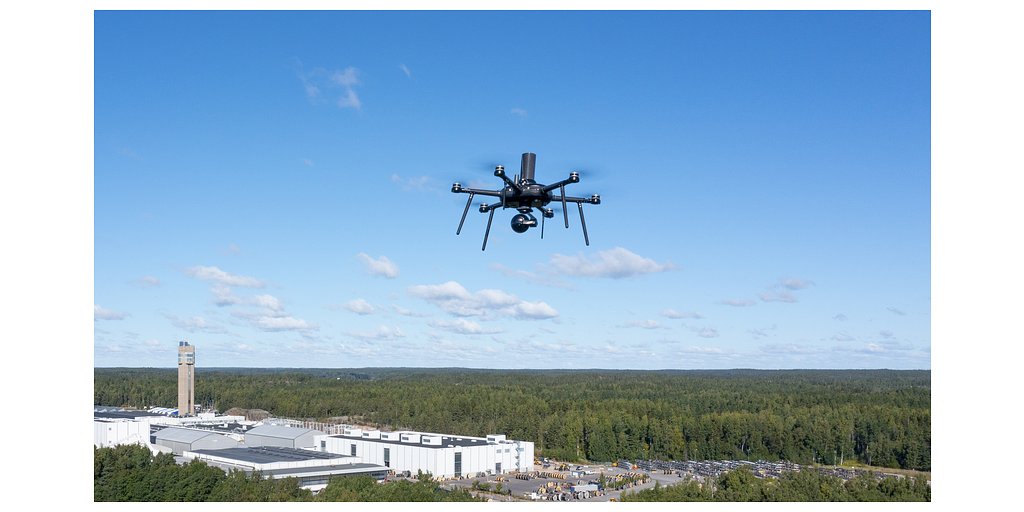
Nokia Taps Amprius to Power a New Era in Autonomous Drone Operations
FREMONT, CA – December 02, 2025 – In a move that signals a critical inflection point for the autonomous aerial systems market, telecommunications giant Nokia has selected Amprius Technologies (NYSE: AMPX) to supply the advanced batteries for its next-generation drone networks. While on the surface a component supply agreement, this partnership is a deeply strategic play that reveals much about the future of industrial automation, public safety, and the technology enabling it. By integrating Amprius’s high-performance SiCore® silicon anode batteries, Nokia is not just upgrading its hardware; it is making a definitive statement about its ambition to lead the rapidly expanding market for automated, long-range drone solutions.
The collaboration follows extensive testing by Nokia, which validated the endurance and power delivery of Amprius's cells. For financial analysts and institutional investors, the story isn't just that a drone got a better battery. It's about how this specific technological integration unlocks new operational capabilities and revenue models in a market projected to be worth over $4.5 billion within the decade. This deal is a case study in how foundational technology—in this case, energy storage—acts as the primary catalyst for industry evolution.
A Partnership Forged in Performance
This alliance is a powerful symbiosis. For Nokia, it’s a crucial step in solidifying its position as a B2B technology leader, moving beyond its legacy in mobile networks into the lucrative world of enterprise-grade robotics. The company's 'Drone-in-a-Box' (DIAB) solution, which combines 5G connectivity with an open architecture for secure, Beyond Visual Line of Sight (BVLOS) missions, was already a formidable offering. However, it faced the same fundamental constraint as all electric aircraft: battery life.
By integrating Amprius’s SiCore® batteries, Nokia directly addresses this limitation. The lightweight, energy-dense cells allow its drones to fly longer, carry more sophisticated payloads like LiDAR and thermal cameras, and maintain power for critical safety systems. “Amprius’ batteries offer performance gains that meaningfully enhance our drone capability,” noted Thomas Eder, Head of Embedded Wireless Solutions at Nokia, in the official announcement. This enhancement is not merely incremental; it's transformative, enabling the extra-long-range (XLR) missions that are essential for monitoring vast industrial sites or providing emergency services over wide areas.
For Amprius, a Fremont-based specialist in silicon anode technology, the partnership is a landmark validation. Securing a supply agreement with a global powerhouse like Nokia elevates Amprius from a promising innovator to a proven, mission-critical supplier. “Nokia’s selection further demonstrates Amprius’ leadership in aviation battery technology,” said Dr. Kang Sun, CEO of Amprius. This deal provides a powerful market signal, putting Amprius’s competitors on notice and likely accelerating demand from other players in the UAV, advanced mobility, and eVTOL sectors who are racing to match these new performance benchmarks.
The Multi-Billion Dollar 'Drone-in-a-Box' Prize
The strategic importance of this partnership is best understood in the context of the DIAB and BVLOS markets. A 'Drone-in-a-Box' is a fully automated system where a drone launches from, returns to, and recharges in a weatherproof docking station without human intervention. This automation is the key to unlocking 24/7, scalable operations for security, inspection, and emergency response.
Industry analysis shows the global DIAB market, valued at over $1 billion today, is on a steep growth trajectory. The core drivers are clear: a relentless push for operational efficiency, cost reduction, and enhanced worker safety. Industries from energy and construction to logistics and public safety are looking to automate repetitive or dangerous tasks. However, the true value of these systems is only realized when they can operate autonomously over long distances—a capability known as BVLOS.
BVLOS is the holy grail of commercial drone operations, but it comes with significant regulatory and technical hurdles, primarily centered on safety and reliability. A drone operating miles from its pilot must have an unfailing power source. Amprius’s technology directly addresses this, providing the sustained energy needed for extended flight while ensuring that safety-critical subsystems—from obstacle avoidance to return-to-home functions—remain powered for the entire mission. As regulatory bodies like the FAA and EASA continue to streamline rules for BVLOS, companies with technologically robust and reliable platforms like Nokia's will be best positioned to capture the market.
The Silicon Anode Edge: Redefining Flight Envelopes
At the heart of this strategic advantage is Amprius's silicon anode battery chemistry. Unlike conventional lithium-ion batteries that rely on graphite anodes, Amprius uses a proprietary silicon anode platform. Silicon can theoretically hold ten times more lithium ions than graphite, translating into a dramatic increase in energy density—the amount of energy stored per unit of weight.
Amprius reports commercially available cells with energy densities of up to 450 Wh/kg, a figure that far surpasses the 250 Wh/kg typical of standard lithium-ion cells. For a weight-sensitive application like a drone, this is a revolutionary leap. It means a drone can fly significantly longer on a single charge or carry a heavier, more capable sensor package for the same flight duration. This is the technological enabler that allows Nokia to market its drones for advanced missions that were previously impractical.
Of course, silicon anode technology is not without its challenges. Battery scientists note that a key historical hurdle has been managing the physical swelling and contraction of the silicon during charge and discharge cycles, which can degrade battery life. Amprius's commercial success with its SiCore® platform indicates it has engineered a viable solution to this problem, creating a cell that balances extreme energy density with the power, resilience, and cycle life required for demanding commercial applications. This technological moat is a key asset for Amprius and, by extension, a key advantage for Nokia.
From Critical Infrastructure to Public Safety
The real-world implications of this partnership will be felt most acutely in sectors where remote monitoring and rapid response are paramount. With Amprius-powered drones, Nokia's platform becomes a far more potent tool for public safety agencies. The 'Drone as a First Responder' (DFR) model, where a drone is automatically dispatched to an emergency scene to provide situational awareness before human responders arrive, becomes more effective with longer loiter times and the ability to carry high-resolution thermal cameras.
In the industrial sphere, the applications are equally compelling. Energy companies can conduct automated inspections of pipelines, power lines, and wind turbines over vast, remote territories with fewer flights and less downtime. Mining and construction firms can perform volumetric surveys and monitor site security more efficiently. The combination of Nokia's secure 5G connectivity and Amprius's extended endurance creates a platform for collecting and transmitting high-fidelity data in real-time from almost anywhere.
This partnership doesn't just improve an existing product; it redefines the competitive landscape. Other drone manufacturers and service providers will now be measured against the new endurance and payload standards set by the Nokia-Amprius collaboration. It forces the entire ecosystem to accelerate its own innovation cycle, particularly in energy storage, pushing the industry further away from consumer-grade components and toward specialized, high-performance systems. As UAVs take on increasingly complex and autonomous roles, the capital flowing into the sector will undoubtedly follow the companies that can master the foundational physics of flight time and power.