
- $560M in export consultations secured at CES 2026
- 17 CES Innovation Awards won by Incheon-supported companies
- 1,419 business consultations conducted, up over 400 from the previous year
Experts view Incheon's AI City vision as a strategic leap forward in urban innovation, positioning the city as a global leader in AI-driven smart city development.
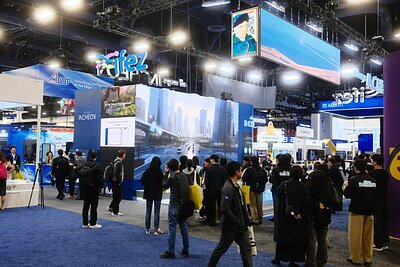
Incheon's AI City Vision Shines at CES, Securing $560M in Deals
INCHEON, South Korea – January 16, 2026 – By Gary Clark
The global technology community turned its eyes to Las Vegas for CES 2026, but it was the delegation from Incheon, South Korea, that captured significant attention, translating futuristic concepts into tangible business success. The Incheon Free Economic Zone (IFEZ) has announced a landmark achievement from the event, with its supported companies securing an estimated $560 million in export consultations. This remarkable figure, coupled with a record haul of 17 CES Innovation Awards, signals a major validation of Incheon's ambitious strategy to evolve from a 'Smart City' into a global 'AI City' powerhouse.
The INCHEON–IFEZ booth, a centerpiece of the city's presence, drew more than 15,000 visitors, all eager to glimpse the future of urban living as envisioned by Incheon's innovators. The theme, "Destination Incheon — From Smart City to AI City," was more than a slogan; it was a comprehensive showcase of a sustainable, efficient, and interconnected urban future powered by artificial intelligence. The results represent a significant leap from the previous year, where consultations were valued at $400 million, demonstrating accelerating global interest in the city's burgeoning tech ecosystem.
From Smart City to AI Powerhouse
For years, Incheon has been lauded as a leading 'Smart City,' built from the ground up with integrated IoT sensors and connected infrastructure. However, its presence at CES 2026 made it clear that the city's ambitions have evolved. The 'AI City' vision represents a strategic leap forward, aiming to embed sophisticated artificial intelligence across all layers of urban management, industry, and daily life.
This transition moves beyond simple data collection towards predictive and optimized systems. IFEZ's pavilion was thoughtfully structured into three thematic zones that brought this vision to life. The AI Smart Living Zone demonstrated citizen-centric services in mobility, public safety, and healthcare. The AI Innovation Hub Zone highlighted Incheon’s industrial prowess, with AI-driven advancements in manufacturing and logistics. Finally, the AI Creative City Zone explored AI's role in entertainment and culture, painting a picture of a city where technology and creativity merge.
This vision is backed by a concrete roadmap. The '2030 IFEZ Smart City Promotion Strategy,' unveiled in late 2021, outlines 40 distinct projects focused on urban innovation and business development. These initiatives range from intelligent CCTV control systems to pilot programs for autonomous driving, all designed to leverage AI and big data to create a more responsive and resilient urban environment. By proactively building this AI-centric model, Incheon is positioning itself not merely as a participant in the global tech race, but as a leader shaping the blueprint for the cities of tomorrow.
The Innovation Showcase: Award-Winners and Game-Changers
Substantiating Incheon's high-level strategy was a wave of groundbreaking technologies from its local companies. A record 14 IFEZ-supported firms earned a collective 17 CES Innovation Awards, the highest total for Incheon to date. The pinnacle of this achievement was the coveted 'Best of Innovation' honor awarded to Deep Fusion AI.
The company's winning technology, a radar-based sensor-fusion AI system called RAPA (Real-time Attention-based Pillar Architecture), generated significant buzz in the autonomous driving and robotics sectors. By using multiple 4D imaging radars to create a real-time, 360-degree environmental model, RAPA offers perception capabilities on par with more expensive LiDAR systems. Its ability to distinguish between static and moving objects with 40% higher accuracy than public benchmarks makes it a game-changer for next-generation autonomous systems, from cars to unmanned surface vessels.
Beyond this standout winner, the breadth of Incheon's innovation was on full display. Leadpoint System, a specialist in smart manufacturing, showcased its AI-powered logistics platform, "BioTrack." emCT presented advanced fire detection and safety management solutions aimed at making buildings safer. In the burgeoning bio-healthcare sector, Medicell Healthcare highlighted its work in regenerative medicine. These companies, among the 50 that IFEZ supported at CES, demonstrated that Incheon's innovation is not confined to a single sector but spans the entire spectrum of technologies needed to build a modern, intelligent city.
Forging Global Pathways: MOUs and Strategic Alliances
The success at CES was not limited to awards and accolades; it was decisively translated into global business opportunities. The 1,419 business consultations conducted—an increase of over 400 from the previous year—led to the signing of 20 Memoranda of Understanding (MOUs) by nine different companies. While preliminary, these agreements lay the critical groundwork for international expansion, investment, and technology adoption.
Several key partnerships illustrate the strategic inroads made, particularly into the U.S. market. Leadpoint System signed an MOU with U.S.-based R&D firm Webtronic Labs to accelerate the entry of Korean manufacturing solutions into North America. emCT's fire safety technology found a potential application pathway through an MOU with Texas Legacy Realty, a real estate development firm, for use in U.S. commercial and residential buildings. Furthermore, Medicell Healthcare's agreement with the City of Phoenix, Arizona, opens the door for collaboration on public healthcare technology and local proof-of-concept initiatives.
Perhaps the most significant strategic move was IFEZ's meeting with the Fairfax County Economic Development Authority (FCEDA) of Virginia. Often called the "Silicon Valley of the East," Fairfax County is a major U.S. economic hub with a well-established track record of helping international firms, including over 60 from Korea, establish a U.S. presence. The planned collaboration aims to create practical joint programs that provide Incheon startups with a direct 'highway' into the lucrative U.S. public procurement and private technology markets. This partnership elevates IFEZ's support from simple exhibition assistance to a comprehensive global market entry strategy.
Incheon's Mayor, Yoo Jeong-bok, affirmed this direction, stating that CES participation advanced the city's AI vision on the global stage and pledging continued support to strengthen Incheon's role as a global business hub. With record-breaking deals, a trove of innovation awards, and strategic alliances in place, the Incheon Free Economic Zone has proven it is not just imagining the future—it is actively building it, one global partnership at a time.