
- 30-kilometer belt of ultramafic rock at the Pipestone XL project being developed for dual hydrogen and metal extraction.
- Engineered Mineral Hydrogen (EMH) technology aims to produce hydrogen on-site, potentially eliminating the need for long-distance fuel transport.
- Awaruite, a naturally occurring nickel-iron-cobalt alloy, allows for energy-efficient separation from waste rock.
Experts would likely conclude that this pioneering project represents a significant step toward decarbonizing the mining industry while securing critical mineral supply chains, though its success hinges on overcoming technical, regulatory, and economic challenges.
Newfoundland's Green Revolution: Mining Rock for Both Metals and Hydrogen
GRAND FALLS-WINDSOR, Newfoundland – June 08, 2026 – In the rugged heart of central Newfoundland, a pioneering partnership is taking shape that could fundamentally redefine the relationship between resource extraction and clean energy. Vema Hydrogen, a clean energy innovator, and First Atlantic Nickel & Cobalt Corp., a critical minerals explorer, have announced a plan to jointly develop a project that sounds like science fiction: producing low-carbon hydrogen directly from the same rock that will be mined for nickel and cobalt.
The non-binding Letter of Intent (LOI) signed by the two companies outlines a 50/50 joint venture at the Pipestone XL project, a vast 30-kilometer belt of ultramafic rock. The goal is to create a symbiotic industrial ecosystem where Vema’s Engineered Mineral Hydrogen (EMH) technology provides clean, on-site power for First Atlantic’s mining operations, potentially transforming one of the world's most energy-intensive industries into a model of green self-sufficiency. This initiative doesn't just represent a step forward for a single mine; it offers a template for how a nation can secure critical mineral supply chains while simultaneously advancing its decarbonization goals.
A Symbiotic Approach: Hydrogen Fuel from the Mine Itself
At the core of this venture is a powerful synergy. Mining is a notoriously energy-hungry business, often reliant on diesel fuel in remote locations. This project proposes to flip that paradigm on its head by turning the mine's geology into its own power plant. Vema Hydrogen’s technology is designed to stimulate and accelerate a natural geochemical reaction called serpentinization, where iron-rich rock reacts with water to release high-purity hydrogen, with no grid electricity required.
This locally produced hydrogen could then fuel the heavy machinery and processing facilities needed to extract awaruite, a naturally occurring and highly magnetic nickel-iron-cobalt alloy found in the Pipestone XL deposit. Awaruite itself represents an innovation, as its magnetic properties allow it to be separated from waste rock using far less energy and without the harsh chemical leaching required for conventional nickel ores.
"Given the link between awaruite formation and hydrogen, we're excited about the potential for Vema's technology to maximize the value of our unique nickel-cobalt alloy project," said Adrian Smith, P.Geo., CEO of First Atlantic. The collaboration aims to demonstrate a model that not only decarbonizes operations but also strengthens regional energy resilience by eliminating the need for long-distance fuel transport.
For Vema, this partnership provides a commercial-scale stage to prove its technology. "Engineered Mineral Hydrogen is a promising new primary energy source for regions with iron-rich rock, like at Pipestone," stated Pierre Levin, CEO and Co-Founder of Vema Hydrogen. “Now with validated rock samples and permitting in place, we have a clear path to advance EMH at Pipestone and to expand the model across North America."
Unlocking Earth's Power: The Science of Geologic Hydrogen
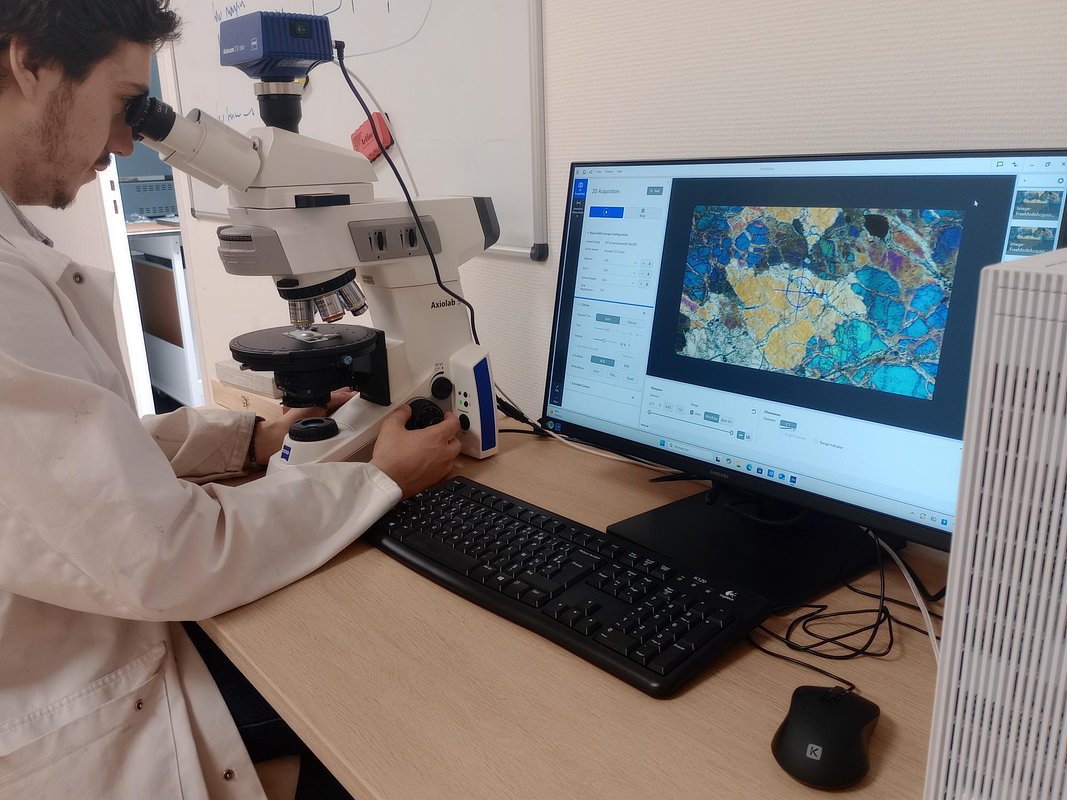
While the concept of "gold hydrogen"—naturally occurring geologic hydrogen—has gained significant traction in recent years, Vema’s "engineered" approach seeks to make the process predictable and commercially viable. The company has already established the world's first EMH project at the Thetford ophiolite in Quebec, and laboratory testing of rock samples from Pipestone XL at Vema's facility in Orléans, France has confirmed their hydrogen-producing potential.
The science hinges on serpentinization, a process where water transforms iron-rich minerals, releasing hydrogen as a byproduct. "Awaruite forms through serpentinization when hydrogen reduces nickel and iron, so its presence at Pipestone XL is a clear signature of a hydrogen-rich system," explained Dr. Douglas Wicks, Strategic Advisor to First Atlantic & Cobalt and former Program Director for ARPA-E’s MINER program. "Vema’s technology could engineer that same reaction for hydrogen production, and Pipestone XL is an ideal location due to its size, proximity to infrastructure, and the potential for cost efficiencies."
Dr. Wicks, who has followed Vema's development since before its founding, believes the project represents a compelling opportunity to bring the technology to commercial scale. While the field is still nascent, the potential is immense. Proponents suggest that geologic hydrogen could be produced for less than $1 per kilogram, making it cost-competitive with even the most carbon-intensive forms of hydrogen production today. With growing global interest and over 50 companies now exploring for geologic hydrogen, this partnership in Newfoundland could become a landmark case study.
Beyond Oil: Forging Newfoundland’s Green Industrial Future
This project arrives at a pivotal moment for Newfoundland and Labrador, a province historically reliant on oil and gas that is now aggressively pursuing a future as a clean energy and critical minerals hub. The Vema and First Atlantic venture aligns perfectly with two of Canada's most pressing national strategies: the push to build a robust hydrogen economy and the urgent need to secure domestic supply chains for critical minerals like nickel and cobalt, which are essential for electric vehicle batteries.
By demonstrating that these two objectives are not mutually exclusive but can be mutually reinforcing, the Pipestone XL project could become a cornerstone of the province’s economic diversification. The vision extends beyond powering a single mine. The partners hope to attract co-located investment in downstream industries, such as green ammonia production for export or advanced materials manufacturing, creating a high-value industrial cluster in central Newfoundland. If successful, the project could supply enough hydrogen to power industrial demand in the province for generations.
The Road Ahead: Navigating Risks and Realities
Despite the immense promise, the path from a letter of intent to a fully operational mine and hydrogen plant is long and fraught with challenges. The LOI is non-binding, and the next phase will involve intensive due diligence, technical studies, and the negotiation of a definitive joint venture agreement.
Securing regulatory approval will be a major hurdle. Both EMH production and mining will face a rigorous environmental assessment process under provincial and likely federal regulations. Key questions will revolve around water usage for the serpentinization process, the management of co-produced gases to ensure a low-carbon footprint, and the potential for any subsurface disturbances. Building trust and securing a social license to operate from local communities and Indigenous groups will be paramount for the project's success.
Furthermore, while the science of geologic hydrogen is sound, scaling it to a commercial level is an unproven frontier. The joint venture will need to demonstrate not only that hydrogen can be produced reliably and in sufficient quantities, but that the entire integrated system is economically viable amidst fluctuating commodity and energy markets. Yet, for those watching the intersection of innovation and industry, this bold experiment in Newfoundland is a powerful signal of a future where the resources we need are sourced in a way that helps heal the planet, rather than harm it.