
- $1.3 billion: Cost of romance scams in the U.S. alone in 2022 (FBI IC3).
- Hundreds of unauthorized firms and clone brokerages listed by UK’s FCA.
- Minutes: Timeframe within which fraudulent funds are often laundered into untraceable crypto.
Experts would likely conclude that while Finance Complaint List's platform offers a structured approach to fraud recovery, its success remains uncertain given the complexities of international financial crime and the historically low effectiveness of asset recovery methods.
New Fraud Platform Promises Recovery, But Can It Beat the Odds?
MANCHESTER, ENGLAND – June 25, 2026 – In a world where digital financial crime has evolved from clumsy emails to sophisticated, multi-layered operations, a UK-based initiative has announced a new weapon in the fight for consumer protection. The Finance Complaint List this week launched a comprehensive fraud recovery platform, promising a centralized defense for victims of online stock-trading and romance scams. By integrating a global reporting database with specialized asset recovery pathways, the organization aims to turn the tide against criminals who siphon billions annually.
The announcement speaks to a desperate market need. Yet, in the high-stakes, low-success world of international asset recovery, promises are plentiful but quantifiable results are scarce. The launch presents a critical question for investors and victims alike: Is this an executable plan for reclamation or another well-intentioned effort destined to be swallowed by the complexities of global financial crime?
The Anatomy of Modern Scams
To appreciate the challenge Finance Complaint List is undertaking, one must first grasp the scale and sophistication of the problem. We have moved far beyond rudimentary phishing. Today’s financial predators are criminal enterprises running multi-million-dollar operations. They build cloned websites of legitimate brokerages, use AI-driven deepfakes to impersonate executives, and leverage social media to cultivate long-term relationships built on manufactured trust.
The numbers are staggering. In 2022 alone, the FBI’s Internet Crime Complaint Center (IC3) reported that romance scams—a key target for the new platform—cost victims over $1.3 billion in the U.S. Meanwhile, regulators like the UK’s Financial Conduct Authority (FCA) constantly update warning lists with hundreds of unauthorized firms and clone brokerages that appear legitimate to the untrained eye. These aren't just scams; they are highly engineered psychological and financial attacks that leave victims devastated.
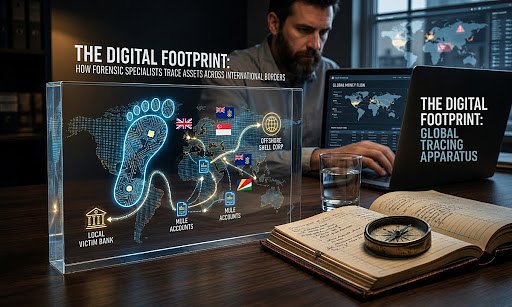
"Victims are often targeted over months, groomed with promises of love or exclusive market insights," notes one independent fraud analyst. "By the time they realize it's a scam, the money has been wired across multiple borders, converted to untraceable crypto, and laundered through a web of shell companies. The trail goes cold in a matter of hours."
A Centralized Defense?
Finance Complaint List proposes a solution built on collective intelligence and guided intervention. The new platform is designed as a two-pronged system. First, it acts as a secure, privacy-focused clearinghouse where victims can report fraud. This data feeds a global intelligence database that cross-references scam patterns, flags fraudulent websites, and identifies criminal banking infrastructure in real-time. The goal is to create a public alert network that can preemptively disrupt criminal operations.
Second, the platform offers what it calls "specialized asset recovery pathways." This is the active component, where the organization assists victims in navigating the labyrinth of reclamation. The press release details guidance on compiling digital evidence, filing regulatory complaints, and executing legal protocols like bank chargebacks and international asset freezing orders. For romance scams, the focus is on mapping the local "money mule" accounts used by overseas syndicates.
"Our mission is to give victims a credible, secure voice to report fraud and reclaim what is rightfully theirs through forensic tracing and structured legal coordination," said Lauren Winston, a PR Team Member for the organization, in the official announcement. The promise is one of empowerment—transforming a victim’s isolated, chaotic experience into a structured, evidence-based process.
Execution Over Hype: The Hard Realities of Recovery
While the mission is laudable, the gap between a well-articulated plan and successful execution is where most recovery efforts fail. The methods described—chargebacks, wire reversals, and asset freezes—are legitimate tools, but their effectiveness in the context of sophisticated international fraud is notoriously low.
Bank chargebacks are primarily effective for credit card transactions and are subject to strict time limits. Wire transfer reversals are nearly impossible once the recipient has withdrawn the funds, a process that often takes mere minutes. Obtaining an international asset freezing order is a complex and expensive legal endeavor, requiring a high burden of proof and cooperation between jurisdictions that may not be forthcoming. The term "forensic financial tracing," while technically impressive, runs up against the hard wall of cryptocurrency mixers and decentralized finance protocols designed for anonymity.
Furthermore, the fraud recovery industry itself is a minefield. For every legitimate effort, there are a dozen "recovery room" scams—fraudsters who re-victimize victims by promising to recover lost funds for a steep upfront fee. It is a telling sign that Finance Complaint List itself has issued alerts about this very type of secondary fraud. This underscores a critical reality: anyone seeking help for fraud must exercise extreme caution.
Due Diligence in a Field of Red Flags
For any potential user, this brings us to the most important phase: rigorous due diligence. While Finance Complaint List presents a compelling case, a grounded analysis reveals areas that warrant further scrutiny. The press release was issued from Manchester, England, yet other business records and online profiles suggest a primary base of operations in New York City. Such a discrepancy, while potentially benign, raises questions about the firm's primary legal jurisdiction and regulatory oversight.
Speaking of regulation, the platform's status is ambiguous. It explicitly states it is not a law enforcement agency. But offering "forensic asset recovery" and assisting with "legal reclamation protocols" often places a firm in a gray area that borders on providing financial or legal services, which are typically regulated. A search of registers for the UK’s FCA or the U.S. SEC does not show Finance Complaint List as a regulated entity for providing these specific services. This doesn't inherently imply wrongdoing, but it does mean that a consumer's recourse may be limited if services are not rendered as promised.
Finally, the court of public opinion remains largely empty. At the time of this analysis, the platform's public footprint on independent review sites like Trustpilot is minimal, making it difficult to gauge a track record based on verified, independent customer outcomes. While the company's website features positive testimonials, the true measure of success lies in independently verifiable data on recovery rates, timelines, and costs to the victim. The burden of proof rests squarely on the platform to demonstrate its efficacy with transparent, quantifiable results.