
- Single Controller Platform: The OpenECU™ NX3 consolidates high-power Megawatt Charging System (MCS) protocols and full vehicle supervisory control into one Electronic Control Unit (ECU).
- Megawatt Charging Support: The NX3 supports MCS, capable of delivering up to 3.75 MW, enabling 20-30 minute recharges for heavy-duty EVs.
- ASIL-D Certification: The NX3 meets the highest level of ISO 26262 functional safety standard, ensuring robust safety and reliability.
Experts view the OpenECU™ NX3 as a groundbreaking solution to reduce EV complexity, enhance efficiency, and accelerate the adoption of high-power charging systems, marking a significant advancement in vehicle control architecture.
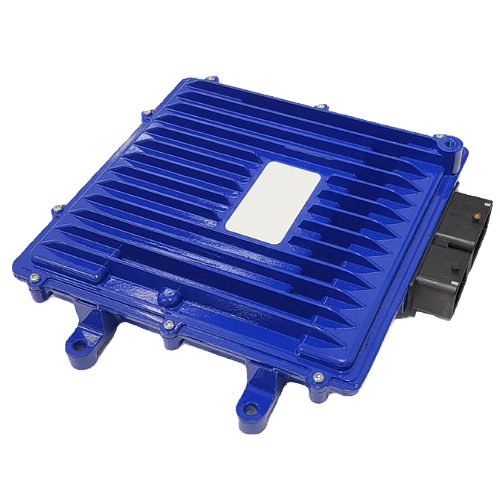
New Eagle's NX3: A Single Brain for EV Charging and Vehicle Control
LAS VEGAS, NV – May 04, 2026 – At the ACT EXPO 2026, a hub for clean transportation technology, New Eagle unveiled a product that aims to fundamentally simplify the architecture of next-generation electric vehicles. The new OpenECU™ NX3 is being hailed as the industry’s first single-controller platform that consolidates high-power Megawatt Charging System (MCS) protocols and full vehicle supervisory control into a single Electronic Control Unit (ECU).
This launch marks a significant step in the automotive industry's push towards more integrated and efficient electronic systems. For years, electric vehicle manufacturers have grappled with a growing web of specialized controllers, each managing a different function—from the powertrain and battery to charging and cabin comfort. The NX3, developed by the embedded control systems specialist, proposes a radical simplification by combining these critical functions into one robust, production-ready unit.
The Challenge of Growing EV Complexity
The transition to electric mobility has introduced a new set of design challenges. Modern EVs, especially complex commercial trucks and buses, can contain dozens of individual ECUs. This distributed architecture, while functional, creates a cascade of issues for Original Equipment Manufacturers (OEMs). The sheer volume of components increases wiring complexity, adds weight, consumes physical space, and drives up both material and assembly costs.
Furthermore, each additional controller and connection point represents a potential point of failure, complicating diagnostics and long-term reliability. The software integration between these disparate units is another significant hurdle, often leading to extended development timelines and increased risk. This multi-box approach is becoming a bottleneck for innovation, particularly as vehicles become more software-defined.
The industry has been actively seeking a solution. Major players like NXP Semiconductors and General Motors have been vocal about their moves toward centralized computing platforms to consolidate ECU functions. This trend underscores a universal need: to reduce the hardware complexity in order to unlock greater software flexibility, enable faster over-the-air (OTA) updates, and accelerate the deployment of new vehicle features.
A Unified Solution for a New Era
New Eagle's OpenECU™ NX3 is designed to be a direct answer to this industry-wide challenge. By integrating full vehicle supervisory control—the “brain” that manages the powertrain, auxiliary systems, and overall vehicle behavior—with the specific protocols for both the established Combined Charging System (CCS) and the emerging Megawatt Charging System (MCS), the NX3 eliminates the need for multiple, dedicated controllers.
“The OpenECU NX3 is designed to simplify vehicle control systems architecture,” said Kevin Alley, chief commercial officer at New Eagle, in the official announcement. “We’re eliminating multi-controller complexity and delivering a single, production-ready platform that accelerates deployment of next-generation EV systems.”
This consolidation offers tangible benefits. For OEMs, it means less wiring to route, fewer components to source and install, and a smaller physical footprint for the vehicle's electronic core. This not only reduces cost and weight—critical for maximizing EV range—but also streamlines the entire manufacturing and integration process. The platform is built to support flexible development workflows, including model-based design with New Eagle’s Raptor® toolchain and traditional C-code, giving engineering teams the freedom to work in their preferred environment.
Powering the Future with Megawatt Charging
Perhaps the most forward-looking feature of the NX3 is its native support for the Megawatt Charging System. MCS is a new high-power charging standard, formalized by organizations like CharIN and SAE, designed specifically for heavy-duty electric vehicles. With the ability to deliver power up to a theoretical 3.75 MW, MCS can recharge a large commercial truck's battery in 20 to 30 minutes—a timeframe that aligns with mandatory driver rest periods.
This capability is not just an enhancement; it is a critical enabler for the electrification of long-haul trucking, public transit, and industrial vehicle fleets. The lack of rapid, high-power charging has been a major barrier to adoption in these sectors, where vehicle uptime is paramount. By integrating MCS control directly into the central vehicle controller, the NX3 simplifies the implementation of this cutting-edge technology for OEMs.
An integrated controller that manages both the vehicle's operational state and its charging cycle—whether at a standard CCS station or a new MCS depot—ensures seamless communication and optimized performance. This allows for more sophisticated charging strategies, better thermal management during high-power sessions, and a more reliable user experience for fleet operators.
Built on a Foundation of Strategy and Safety
The development of the NX3 was significantly accelerated by New Eagle’s recent acquisition of Pi Innovo. This strategic move brought Pi Innovo's well-regarded OpenECU product portfolio and deep engineering expertise in-house, creating a powerful synergy. The OpenECU platform, known for its robust, off-the-shelf hardware and support for rapid, model-based prototyping, provided the proven foundation upon which the NX3 was built.
Critically, the acquisition also bolstered New Eagle’s capabilities in functional safety and cybersecurity. The NX3 has been designed to meet the stringent requirements of ASIL-D, the highest level of the ISO 26262 functional safety standard. For an OEM, using a component pre-certified to this level dramatically de-risks the vehicle development process and reduces the burden of safety validation.
Alongside safety, the controller is engineered to comply with ISO 21434 for cybersecurity. In an era of increasingly connected vehicles, protecting against digital threats is non-negotiable. By addressing these critical safety and security standards at the component level, the NX3 provides OEMs with a trusted, secure, and reliable core for their vehicle architecture.
As part of a broader portfolio expansion, New Eagle also introduced a dedicated Charge Control Unit (CCU) and a new driveline controller, the DLC-12. This demonstrates a comprehensive strategy to provide scalable, production-ready control solutions for the entire spectrum of electrified vehicle systems, solidifying the company's position as a key supplier in the transition to clean transportation.