
- $172 billion: Annual cost to the U.S. economy from early education crisis due to lost earnings, productivity, and revenue.
- $4 to $9 return: Economic benefit for every dollar invested in high-quality early education.
- $13/hour: Median national wage for early childhood educators, forcing many to rely on public assistance.
Experts agree that high-quality early education is a high-return economic investment, with evidence showing it breaks cycles of poverty and improves long-term outcomes for children.
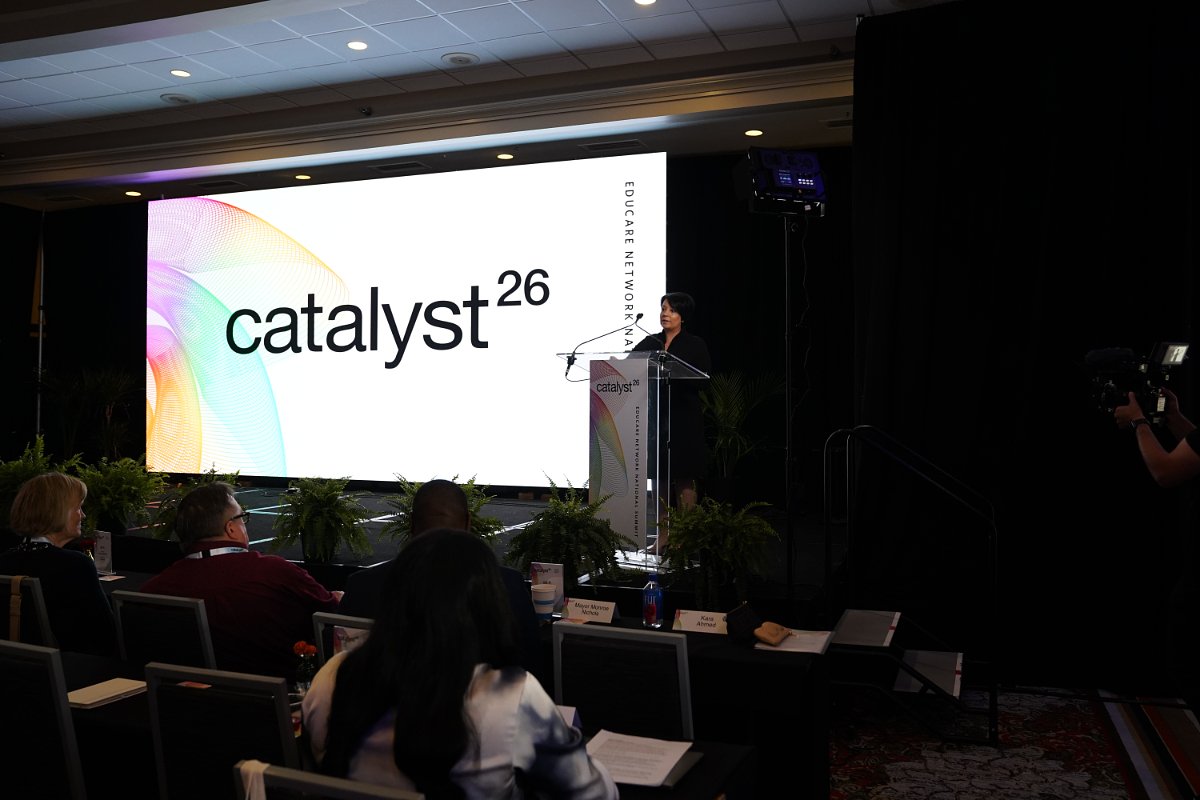
Beyond Child's Play: National Summit Tackles Early Education's Economic Stakes
TULSA, OK – May 16, 2026 – More than 300 of the nation’s top educators, researchers, policymakers, and philanthropists convened in Tulsa this week for a single, urgent purpose: to reimagine the future of an American early childhood education system teetering on the brink of collapse. Hosted by the Educare Network, the Catalyst 26 national summit moved beyond platitudes to confront a sector under immense strain—one defined by workforce shortages, unsustainable costs for families, and vast “child care deserts” leaving millions without access.
Across the country, the system is buckling. Early childhood educators, with a median national wage barely above $13 an hour, are leaving the profession in droves, with many relying on public assistance to support their own families. Meanwhile, providers are forced to raise tuition to cover soaring operational costs, pushing quality care further out of reach for working parents. This crisis costs the U.S. economy an estimated $172 billion annually in lost earnings, productivity, and revenue. It was against this stark backdrop that leaders gathered, not just to discuss the problems, but to forge a new, evidence-based path forward.
“This week reminded us that meaningful change happens when research, practice, policy, and community work not in silos, but in partnership around a shared vision for children and families,” said Kara H. Ahmed, President & CEO of the Educare Network. “At a time of increasing pressure on early childhood systems nationwide, Catalyst 26 challenged us to move beyond conversation toward the leadership, alignment, and long-term investment required for children, families, and educators to truly thrive.”
The Economic Imperative of Early Investment
Framing the summit’s discussions was the powerful economic argument for robust investment in the nation’s youngest citizens. The closing keynote speaker, Raj Chetty, a Professor of Public Economics at Harvard University and Director of Opportunity Insights, presented his groundbreaking research showing the profound link between a child's early environment and their long-term economic success.
“Talent is universal, but opportunity is not,” Chetty stated during his address. “What I see in the broad thesis of the work you are doing is trying to improve that environment. The research is clear that early childhood environments matter greatly in shaping long-term outcomes and economic opportunity.”
Chetty's work, which has mapped upward mobility across the country, provides stark evidence that a child’s zip code can determine their destiny. His research demonstrates that interventions in the earliest years are the most effective way to break cycles of intergenerational poverty. High-quality early education, according to a growing body of evidence, is not a social expenditure but a high-return economic investment, with studies showing returns of $4 to $9 for every dollar spent through increased tax revenues, reduced welfare dependency, and lower crime rates.
Tulsa: A Living Laboratory for National Success
Hosting the summit in Tulsa was a deliberate choice, positioning the city as a case study in what sustained, collaborative investment can achieve. Home to four Educare schools—more than any other city—Tulsa has long been a national leader in early childhood education, offering a blueprint for other communities to follow.
“Tulsa is proud to welcome leaders from across the country who understand that early childhood education is foundational to the future of our communities,” said Monroe Nichols, Mayor of Tulsa. “The conversations taking place at Catalyst 26 reflect the kind of collaboration, innovation, and shared responsibility needed to expand opportunity for children and families nationwide.”
The city’s success is built on a pioneering universal pre-kindergarten program for four-year-olds and a powerful public-private partnership model, heavily supported by local philanthropy like the George Kaiser Family Foundation. Longitudinal studies of Tulsa’s pre-K program have demonstrated its lasting impact, with participants showing higher rates of honors course enrollment and college attendance well into their school careers. Summit attendees experienced this ecosystem firsthand through an immersive Learning Lab session at Educare Tulsa and a visit to the historic Greenwood District, connecting the work of early learning to the broader story of community resilience and equity.
Forging a New Path Through Partnership
The core philosophy of the Educare Network—and the central theme of the summit—is a “unified approach” that dismantles the traditional barriers between academic research, classroom practice, and public policy. The organization's 25 schools serve as innovation hubs, testing and refining best practices in real-world settings.
This evidence-based model has yielded impressive results. A randomized control trial at Tulsa's Educare schools found that children from low-income backgrounds who attended the program performed at the national academic average by third grade, effectively closing the achievement gap. Similar positive outcomes have been documented in cities like Chicago and Omaha.
Discussions at Catalyst 26 featured a wide array of influential voices, including Harvard professor Stephanie M. Jones, education advocate Jonah Edelman, and parent leaders who grounded the policy discussions in their lived experiences. The summit also made space for the foundational importance of joy in learning. Eric Litwin, the original author of Pete the Cat, led a music-filled session that reminded the high-level strategists that for children, learning is built on connection, creativity, and play.
Despite the collaborative energy, the path forward is fraught with challenges. The expiration of federal pandemic-era stabilization funds has pushed many providers to the financial brink, and the sector’s systemic workforce compensation issues cannot be solved by individual programs alone. The task of scaling high-quality, intensive models like Educare to serve all children who need it remains a monumental undertaking. The conversations in Tulsa aimed to build the necessary momentum, but transforming this collaborative vision into a durable, equitable system for every child remains the nation's profound and urgent challenge.