
- $800 billion: Annual cost of Medicaid, highlighting its scale and financial impact.
- 11,000+: Number of Medicaid recipients and incarcerated individuals who accessed hepatitis C treatment through Louisiana's innovative 'Netflix model.'
- 50% reduction: Decline in avoidable emergency department visits in Oregon's Coordinated Care Organization (CCO) system between 2011 and 2017.
Experts acknowledge Medicaid's role as a driver of healthcare innovation, particularly in addressing complex patient needs and social determinants of health, though debates persist about its efficiency and scalability compared to private-sector solutions.
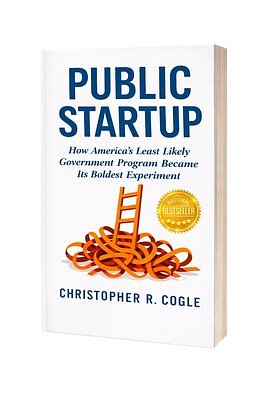
New Book Argues Medicaid is America's Top Healthcare Innovator
GAINESVILLE, FL – March 19, 2026 – In an era of skepticism towards public institutions, a new book is challenging one of the most fundamental beliefs in American healthcare: that true innovation flows from the private sector. In Public Startup: How America’s Least Likely Government Program Became Its Boldest Experiment, physician-scientist and health policy leader Dr. Christopher R. Cogle makes the provocative case that Medicaid, the government program often maligned as a bureaucratic monolith, is actually the nation's most powerful engine for healthcare transformation.
Launched today with an event in Gainesville, the already-bestselling book draws on Dr. Cogle's decades of experience as a University of Florida professor and former state Medicaid chief medical officer. It argues that the most impactful breakthroughs are not always born in Silicon Valley startups but forged within public systems, driven by necessity, limited resources, and the urgent needs of the country's most vulnerable populations.
"Some of the most important breakthroughs in American healthcare aren't coming from Silicon Valley," Dr. Cogle stated in the book's announcement. "They're happening inside public systems, under pressure, with limited resources, and with real lives at stake."
Laboratories of Policy in Action
Dr. Cogle's thesis rests on a foundation of real-world examples where states have used Medicaid's flexibility to pioneer solutions to intractable health crises. One of the most prominent case studies is Louisiana's subscription-based payment model for hepatitis C medication, widely dubbed the "Netflix model." Faced with curative drugs costing upwards of $80,000 per patient, the state negotiated a fixed annual fee with a manufacturer for an unlimited supply of the treatment. Since the program's CMS-approved launch in 2019, over 11,000 Medicaid recipients and incarcerated individuals have accessed the life-saving cure, a feat that would have been impossible under a traditional fee-for-service structure. The model has since been replicated in states like Washington and Colorado, setting a new precedent for tackling public health emergencies.
Another cornerstone of the book's argument is Oregon's Coordinated Care Organization (CCO) system. Established in 2012, CCOs are locally governed entities that operate on a global budget to manage the complete physical, behavioral, and dental health of Medicaid members. By incentivizing preventative care and integrating services, the model has yielded impressive results, including a 50% reduction in avoidable emergency department visits between 2011 and 2017. The CCOs' mandate to address social determinants of health—such as housing and food insecurity—represents a fundamental shift from reactive medical treatment to proactive community wellness.
These are not isolated incidents. Across the country, states are using Medicaid waivers to innovate. North Carolina's "Healthy Opportunities Pilot" pays for non-medical services like housing and transportation. Arizona has integrated housing referrals into its Medicaid program, while California is tackling homelessness and complex behavioral health needs through its own ambitious initiatives.
The Architect of the Argument
Dr. Cogle's perspective is uniquely shaped by a career spent straddling the worlds of frontline medicine, academic research, and high-level policy. A Professor at the University of Florida and the Founding Director of the Florida Health Policy Leadership Academy, he has led pioneering research from blood stem cell discoveries to first-in-human clinical trials. His work has earned recognition from the National Academy of Medicine, Harvard Business School, and the American Cancer Society.
This background informs the book's three core ideas: that solutions designed for the most complex patients often become the standard of care for everyone; that public servants are quietly and effectively testing bold new models; and that Medicaid's role extends far beyond a safety net to actively rebuilding lives and communities. The book has already garnered praise from national health leaders.
Debra Houry, MD, former CDC Chief Medical Officer, called it "a source of hope at a moment when trust in public health is under strain." Jessica Lee, MD, CEO of the Maven Project and a former CMS Medicaid leader, described it as "an important and timely contribution."
A Necessary and Contentious Debate
Despite the evidence of innovation presented in Public Startup, the book's central premise is far from universally accepted. For decades, critics have characterized Medicaid as a deeply flawed system. They point to its ballooning cost—now exceeding $800 billion annually—and argue it has morphed into a "bloated program plagued by fraud, inefficiency, and poor results," as one analyst from the Paragon Health Institute described it.
A central criticism revolves around access and quality. Low reimbursement rates, often a fraction of what private insurance or Medicare pays, lead many physicians to limit or refuse to accept new Medicaid patients. This can result in long wait times for appointments and challenges in finding specialist care, potentially leading to poorer health outcomes for its beneficiaries. Some studies have suggested that Medicaid patients may face higher in-hospital mortality rates and longer stays compared to privately insured individuals.
Furthermore, a powerful counter-narrative, championed by free-market think tanks and economists, holds that genuine, scalable innovation is overwhelmingly driven by the private sector's profit motive and competitive pressures. A report from the Competitive Enterprise Institute argues that major health gains have historically stemmed from private, profit-driven research and development, not government mandates. From this perspective, the bureaucracy, complex rules, and federated structure of programs like Medicaid stifle, rather than encourage, the rapid iteration and risk-taking that define true innovation.
While public systems may ensure equitable access, critics contend they are often too slow and regulated to compete with the agility of private enterprise, which is rapidly transforming care through telehealth, AI, and personalized medicine. The debate over whether public necessity or private competition is the more potent catalyst for progress remains a central tension in American healthcare policy. Dr. Cogle's work does not settle this debate, but it forcefully argues that one side of the equation has been profoundly underestimated.