
- 150 tons/day: Capacity of Vary Tech's pyrolysis unit to process plastic waste.
- 8,000+ hours/year: Proven operational reliability of the pyrolysis system.
- 30% reduction target: Singapore's goal to cut waste sent to landfill by 2030.
Experts view this alliance as a breakthrough in addressing hard-to-recycle plastics, offering a scalable, regulatory-compliant solution that bridges gaps in the circular economy.
New Alliance Unlocks Chemical Recycling for Hard-to-Recycle Plastics
MUNICH, Germany – May 11, 2026 – A landmark collaboration unveiled today at the IFAT Munich 2026 trade fair promises to tackle one of the most persistent challenges of the circular economy: what to do with low-value, mixed plastic waste that cannot be mechanically recycled. Solid waste specialist Vary Tech, in partnership with chemical giant Evonik and engineering firm SupeZET, has launched a complete, end-to-end process package designed to transform this problematic waste stream into high-quality circular naphtha and plastic pyrolysis oil (PPO).
This announcement marks a significant step beyond basic pyrolysis, offering a sophisticated, multi-stage solution that bridges a critical gap in the plastics value chain. By converting mechanically non-recyclable polyolefins—such as mixed plastic films, bags, and containers—into premium feedstocks, the alliance aims to provide the petrochemical industry with a viable, scalable alternative to virgin fossil resources.
The Alchemy of Modern Recycling
The technological heart of the collaboration is a three-stage process that combines decades of specialized expertise. The journey from waste to valuable chemical begins with Vary Tech's mature oxygen-free pyrolysis technology. Developed over 20 years and six generations, this system heats plastic waste in an oxygen-starved environment, breaking it down into a synthetic oil. A single unit boasts an impressive capacity of 150 tons per day and is engineered for industrial-scale reliability, with a proven record of over 8,000 annual operating hours.
However, raw pyrolysis oil is often riddled with contaminants like chlorides, silicon, and other impurities that prevent its direct use in sensitive petrochemical processes. This is where the partnership's next stages become crucial. The PPO is fed into Evonik's proprietary "Rocket" module, a specialized purification skid that uses advanced adsorbents and catalysts to remove these harmful substances. The removal of organic chlorides, in particular, has been a long-standing technical barrier for the industry, and overcoming it is a key innovation of this process.
Finally, the upgraded oil undergoes deep refining through SupeZET's advanced hydrogenation and fractionation systems. This last step polishes the product to meet exacting international petrochemical standards, yielding circular naphtha that can be used as a "drop-in" replacement for fossil-based naphtha in steam crackers to create new plastics.
From Global Mandates to Market Opportunity
The timing of this launch is no coincidence. Industries worldwide are facing mounting pressure from a wave of environmental legislation aimed at curbing plastic pollution. Regulations like the EU's Packaging and Packaging Waste Regulation (PPWR), France's AGEC law, and India's Plastic Waste Management Rules are setting aggressive targets for recycled content in new products. This has created an urgent demand for high-quality recycled materials that traditional mechanical recycling alone cannot satisfy.
The process package from Vary Tech and its partners is designed to directly address this regulatory pressure, turning it into a market opportunity. By providing a stable, compliant source of circular feedstock, the alliance offers a pathway for plastic producers, consumer brands, and manufacturers to meet their legal obligations and corporate sustainability goals. Furthermore, it helps insulate them from the price volatility of the crude oil market by creating value from a feedstock—plastic waste—that was previously considered a disposal cost.
Singapore to Host Asia's First Closed-Loop Hub
To accelerate the commercial rollout of this technology, Vary Tech and SupeZET have formalized their partnership by establishing a Singapore-based joint venture, CARBON LOOP SYSTEMS PTE. LTD. The new entity will focus on chemical plastic recycling and the development of Sustainable Aviation Fuel (SAF) from biomass.
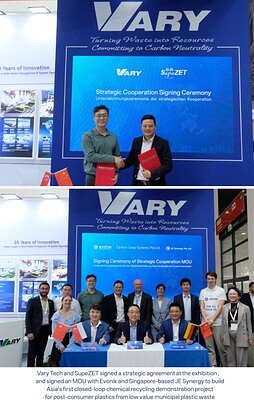
In a significant move underscoring its regional ambitions, the joint venture, along with Evonik and the Singapore-based firm JE Synergy, has signed a Memorandum of Understanding (MOU) to build Asia's first closed-loop chemical recycling demonstration project. The project will process low-value post-consumer plastics from municipal waste, directly supporting Singapore's ambitious 'Zero Waste Masterplan,' which aims to reduce waste sent to its Semakau Landfill by 30% by 2030.
This initiative positions Singapore as a potential leader in Asia's burgeoning circular economy, creating a blueprint for how advanced technological solutions can be integrated with national policy to tackle plastic waste on a large scale. The involvement of local partner JE Synergy is expected to provide crucial on-the-ground expertise to navigate the logistical and regulatory landscape.
A Two-Pronged Approach to Waste
While this new chemical recycling venture marks a major advancement, it complements Vary Tech's established leadership in the mechanical recycling sector. The company's dual-drive model of manufacturing high-end equipment and leveraging its own industrial operating experience was also on display in Munich. Vary Tech showcased an AI-powered intelligent dismantling system for home appliances that can process 200 units per hour—a global efficiency record.
This system achieves high-purity separation of materials from complex e-waste, a notoriously difficult recycling stream. Having already provided green recycling services for over 130 million obsolete appliances for global brands like Haier, TCL, and Midea, Vary Tech has demonstrated its capability across the recycling spectrum. This holistic approach, integrating both mechanical and chemical solutions, allows the company to offer tailored strategies for a wide array of solid waste types, from tires and oil sludge to industrial and medical waste.
By integrating global supply chain resources and deploying both advanced mechanical and chemical recycling technologies, the company and its partners are building a comprehensive toolkit for the circular economy. This integrated strategy provides the scalable, economical, and sustainable solutions necessary to meet global climate action goals and redefine the future of waste.