
- 2mm-wide adhesive tape: The specialized tape used in the debondable bonding solution.
- 2026 Q2: Planned integration into volume production.
- Thousands of dollars: Potential savings in repair costs for consumers.
Experts view this debondable adhesive technology as a significant advancement in automotive sustainability and cost efficiency, enabling easier repairs, compliance with circular economy principles, and reduced electronic waste.
New Adhesive Tech Makes Car Display Repairs Cheaper and Greener
NORDERSTEDT and BABENHAUSEN, Germany – April 21, 2026 – A groundbreaking partnership is set to solve one of the modern driver's most expensive frustrations: the unrepairable digital dashboard. Adhesives giant tesa and automotive tech firm AUMOVIO have unveiled a new bonding solution that allows for the easy removal and repair of the sleek, expansive display screens that dominate new vehicle interiors, heralding a future of more sustainable and cost-effective car ownership.
The collaboration introduces a fully automated process using a "debondable" adhesive tape. This innovation promises to securely bond display assemblies to their housing while allowing them to be detached on demand, a move that could fundamentally change how cars are manufactured, serviced, and recycled.
Revolutionizing the Smart Cockpit
Modern vehicle cockpits are increasingly defined by large, seamless glass surfaces and pillar-to-pillar displays. To achieve this minimalist aesthetic, manufacturers rely on powerful optical bonding technologies that permanently fuse the display to its protective cover glass. While this process eliminates air gaps and improves visual clarity, it creates a significant downstream problem: if any single component—the screen, the touch sensor, or the cover glass—fails or is damaged, the entire expensive module must be replaced. Repair is often technically impossible or economically unfeasible.
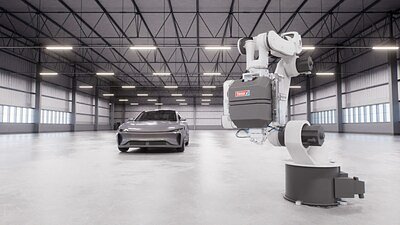
The new solution from tesa and AUMOVIO, a recent spin-off from automotive supplier Continental, directly confronts this challenge. Their process uses a robotic arm to apply a specialized, 2mm-wide adhesive tape that creates an instant, load-bearing bond without any curing time. This allows it to be seamlessly integrated into fast-paced, automated production lines.
The true innovation, however, lies in its reversibility. Using a proprietary "Debonding on Demand" technology, the bond can be selectively detached with minimal effort. This enables manufacturers to rework faulty units on the assembly line, dramatically reducing material waste and production costs. More importantly, it extends this capability throughout the vehicle's life.
"The combination of highly precise, automated application and targeted detachability adds an important element to our manufacturing and quality processes," explained Pavel Prouza, Head of the User Experience (UX) business area at AUMOVIO. "It strengthens the robustness of our production, reduces material waste, and promotes efficient use of valuable components."
Driving the Circular Economy in Automotive
This technological shift arrives at a critical moment for the automotive industry, which faces mounting regulatory and consumer pressure to embrace sustainability. The debondable adhesive directly supports the principles of the circular economy—an economic model focused on eliminating waste and promoting the continual use of resources.
In Europe, the "Right to Repair" movement is gaining significant legislative traction, with new directives compelling manufacturers to design products that are easier to service and dismantle. By enabling the selective replacement of individual display components, the tesa-AUMOVIO solution helps carmakers comply with these emerging regulations and reduce the growing mountain of automotive electronic waste.
"This partnership demonstrates how innovative materials technology is advancing the mobility of tomorrow," said David Caro, Head of Automotive at tesa. "Together with AUMOVIO, we offer automated adhesive bonds that not only provide long-term durability but can also be deliberately debonded – enabling efficient production, longer product life cycles, and circular product concepts."
This facilitates not only repairs during the vehicle's operational life but also simplifies the recycling process at its end. Valuable materials from display units can be more easily recovered and repurposed, a key goal of AUMOVIO's sustainability strategy. The company has confirmed it is already in discussions with automotive manufacturers to implement dedicated recycling and repair programs based on this technology.
The End of Costly Screen Replacements?
For consumers, the most tangible benefit could be a significant reduction in repair costs. A small crack on a modern car's expansive touchscreen can currently lead to a repair bill running into thousands of dollars, as the entire integrated display unit must be swapped out. The new system promises a future where a technician can simply detach the assembly, replace only the broken part, and rebond it, drastically lowering the cost and complexity of the repair.
Pavel Prouza of AUMOVIO elaborated on this consumer-facing advantage: "For the end customer, this could even mean that future repairs may require replacing only the affected individual components in a cost-effective way."
Beyond repairs, this technology opens the door to future upgrades. As display technology evolves, owners could potentially have the option to upgrade their vehicle's screen to a newer model with better resolution or features, extending the technological relevance and lifespan of the entire vehicle. The 2mm-wide tape also allows for the ultra-narrow bezels seen in high-end smartphones, giving car designers greater freedom without sacrificing future serviceability.
With plans to integrate the solution into volume production in the second quarter of 2026, the era of the disposable car display may soon be coming to an end. This shift from permanent fixtures to serviceable, sustainable components marks a significant step forward in the automotive industry's evolution toward a smarter and more responsible future.