
- $115 million investment by DHS to secure the 2026 World Cup and America250 celebrations
- 11 U.S. venues protected by Fortem's DroneHunter system
- $1.5 billion contract vehicle proposed by DHS for advanced counter-drone capabilities
Experts agree that Fortem's net-wielding DroneHunter system represents a critical advancement in counter-drone security, offering a safe and effective solution for protecting large public events like the 2026 World Cup from aerial threats.
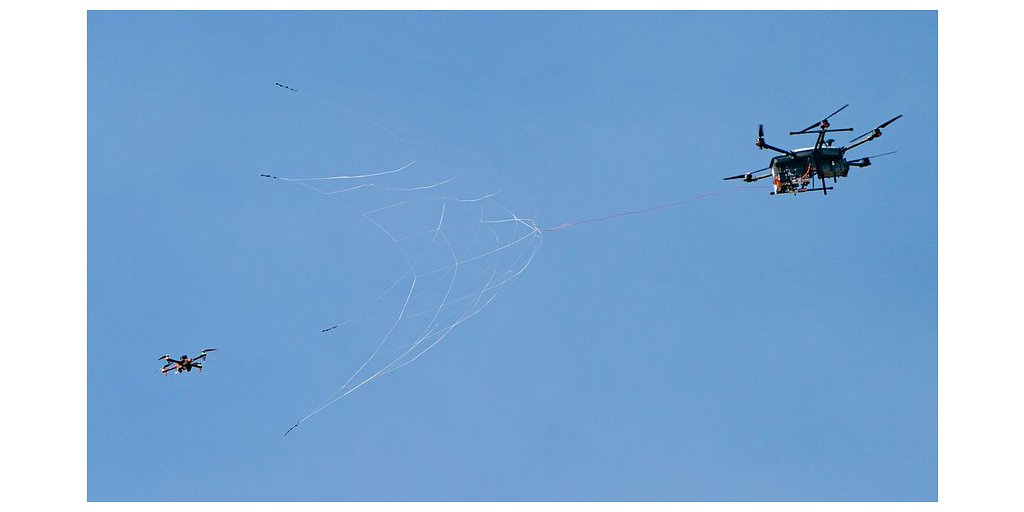
Net-Wielding Drones to Defend 2026 World Cup From Aerial Threats
LINDON, UT – February 12, 2026 – As the United States prepares to co-host the largest FIFA World Cup in history, federal authorities are turning to advanced technology to secure the skies above its stadiums. The Department of Homeland Security (DHS) has awarded a multimillion-dollar contract to Utah-based Fortem Technologies, tasking the company with deploying a fleet of autonomous, net-wielding drones to protect all 11 U.S. venues from potential aerial threats.
The decision places Fortem's DroneHunter system at the forefront of a complex, multi-layered security operation for an event expected to draw millions of international visitors. The technology is designed to physically capture and remove unauthorized drones without creating falling debris or interfering with stadium operations, a critical capability for safeguarding dense crowds. This marks the second consecutive World Cup deployment for the company, solidifying its position as a key player in the rapidly evolving field of counter-drone security.
A New Era of Stadium Security
The 2026 FIFA World Cup, with an expanded format of 48 teams competing across the U.S., Mexico, and Canada, presents an unprecedented security challenge. The proliferation of small, commercially available drones has transformed the threat landscape for large public gatherings. Once dismissed as hobbyist toys, these unmanned aerial systems are now recognized as potential tools for surveillance, disruption, and even coordinated attacks, forcing security officials to look beyond ground-level threats and into the airspace above.
In this high-stakes environment, Fortem has been selected as the sole kinetic mitigation provider for the U.S. portion of the tournament. This follows a successful deployment during the 2022 World Cup in Qatar, where its technology was also the only authorized kinetic solution.
“The threat posed by small drones is one of the most consequential shifts in security of our lifetime,” said Jon Gruen, CEO of Fortem Technologies, in a statement accompanying the announcement. “But it’s a threat we know how to stop – and we’ve already proven it on one of the world’s biggest stages.”
The challenge for security planners is neutralizing these airborne threats without creating new dangers for the tens of thousands of spectators below. This requirement for a low-collateral-damage solution has pushed innovative, non-destructive technologies to the forefront.
The Science of Safe Interception
At the heart of Fortem's solution is the DroneHunter, an autonomous hexcopter interceptor that does not use explosives or projectiles. Instead, it employs a patented net-based capture system. When an unauthorized drone is detected by the accompanying TrueView™ R30 radar system, the SkyDome® command-and-control software can autonomously dispatch a DroneHunter to intercept it. The interceptor pursues the target and fires a tethered net to entangle it, effectively capturing the hostile drone intact. The DroneHunter can then carry the captured drone to a designated safe zone for disposal, eliminating the threat cleanly.
This method stands in stark contrast to other counter-drone technologies. Electronic warfare systems, or "jammers," can disrupt the control links of some drones, but they can also interfere with essential stadium communications, such as Wi-Fi, cellular networks, and broadcast signals. Furthermore, jamming is often ineffective against pre-programmed, autonomous drones that do not rely on a live radio link. More aggressive "hard-kill" systems, which use projectiles or missiles, are entirely unsuitable for civilian environments due to the unavoidable risk of falling debris over populated areas.
Fortem's net-capture system bypasses these issues, making it uniquely suited for the zero-tolerance environment of a World Cup stadium. Its status as the only company authorized by U.S. authorities to deploy a drone-on-drone kinetic interceptor in domestic airspace underscores the system's vetted safety and reliability.
A National Strategy for Counter-Drone Defense
The contract with Fortem is a key component of a much broader, proactive national security strategy spearheaded by the Department of Homeland Security. Recognizing the escalating drone threat, DHS is making substantial investments to bolster the nation's defenses ahead of the World Cup and the upcoming America250 celebrations marking the nation's 250th anniversary.
In a significant organizational move, DHS announced the formation of a new Program Executive Office (PEO) for Unmanned Aircraft Systems and Counter-UAS in January. This office is tasked with streamlining the acquisition and deployment of drone and counter-drone technologies across the department. Alongside this, DHS is finalizing a $115 million investment specifically aimed at securing these two major national events.
The federal effort extends even further. DHS recently sought proposals for a massive $1.5 billion contract vehicle to enable its components, including Customs and Border Protection (CBP) and Immigration and Customs Enforcement (ICE), to rapidly procure advanced counter-drone capabilities. In December, the Federal Emergency Management Agency (FEMA) awarded $250 million in grants to the 11 states hosting World Cup matches and the National Capital Region to enhance their own counter-drone security. These financial injections are supported by expanded legal authorities granted to DHS and its state, local, tribal, and territorial law enforcement partners to actively combat drone threats.
Proven on the World Stage, Deployed at Home
Fortem's technology is not an unproven concept. Its effectiveness was validated during the 2022 FIFA World Cup in Qatar, where its systems were integrated into the overarching security command and control structure. The company also cites successful operational deployments in high-stakes security zones, including Ukraine, the Middle East, and East Asia, demonstrating the system's robustness under diverse and challenging conditions.
The deployed systems for the 2026 tournament are designed for mobility. The package of radar units, software, and DroneHunter interceptors can be rapidly deployed and repositioned, allowing security assets to follow the tournament as it moves between the 11 host cities, from Los Angeles to New York. This ensures a consistent and adaptable security posture throughout the six-week event.
While federal agencies are leading the technological charge, the immense cost of securing a global event on U.S. soil raises complex questions of financial responsibility. Local officials in some host communities, such as Foxboro, Massachusetts, have voiced concerns that local taxpayers should not bear the security costs for an international spectacle and are actively seeking federal funding to cover the expenses. This highlights the ongoing logistical and financial negotiations between local, state, and federal governments required to mount a security operation of this magnitude. Nevertheless, the deployment of sophisticated systems like the DroneHunter signals a clear and decisive shift in public safety, establishing a new standard where protecting the skies is now an indispensable part of keeping crowds safe on the ground.
Topics & Related
AI & Machine Learning
Artificial Intelligence
Generative AI
Automation
Restructuring
Related Company Pulse