
- $600 million: Total cost of the Memorial Stadium transformation, funded by $250M in philanthropy and $350M in private bonds.
- 7,300 jobs: Projected new jobs from construction and operation.
- $1.1 billion: Estimated statewide economic impact.
Experts view the $600M stadium plan as a strategic investment to modernize Nebraska Athletics, drive economic growth, and maintain competitiveness in the Power 5 conference, though its success will depend on execution and long-term financial sustainability.
Nebraska's $600M Stadium Plan: A Bet on Economy and Tradition
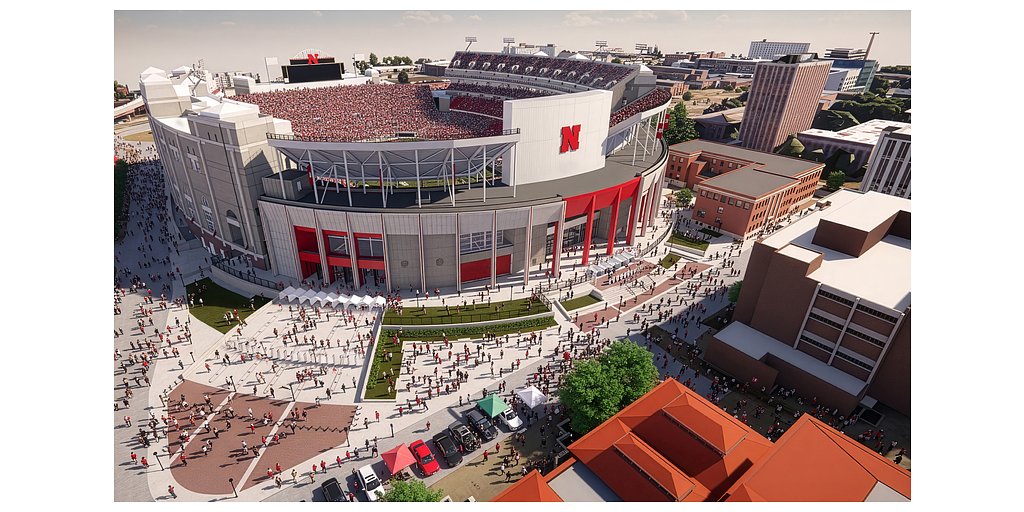
LINCOLN, NE – April 17, 2026 – The University of Nebraska Board of Regents is set to decide the fate of a monumental proposal next week: a $600 million transformation of the iconic Memorial Stadium. Dubbed the "Big Red Rebuild," the plan represents one of the most ambitious undertakings in the university's history, aiming to modernize the century-old venue, secure the financial future of Husker Athletics, and create a significant economic ripple effect across the state.
The Board will consider the historic plan at its April 24 meeting. If approved, it would kick off a new era for a stadium that has been home to Nebraska Football since 1923 and has hosted a record 410 consecutive sellouts. The project promises a "fan-first reimagining" that combines modern amenities with the storied tradition that defines Husker Nation.
The $600 Million Playbook
At the heart of the proposal is a sophisticated financial strategy designed to fund the massive overhaul without relying on taxpayer dollars or university tuition. The project’s cost will be covered by a strategic mix of at least $250 million in philanthropic support and $350 million in private bond financing.
This financial model is a significant evolution from a previous $450 million renovation plan approved in 2023. That project was paused in 2024 for a comprehensive review which, according to university documents, uncovered an essential need to address $200 million in mandatory deferred maintenance. The revised $600 million plan not only absorbs these critical infrastructure costs but also expands the project's scope to include new revenue-generating elements. The athletic department projects that annual revenue from the revitalized stadium will surge by over 40 percent to $95 million, a crucial factor in servicing the bond debt and ensuring long-term financial stability.
"The Board is set to consider this important initiative, which represents an incredible opportunity to leave a lasting impact on the entire University System and will bring real economic benefits to the state of Nebraska," said University of Nebraska System Board of Regents Chairman, Paul Kenney, in a statement.
Beyond the Gridiron: A State Economic Engine?
Proponents of the Big Red Rebuild are framing it as much more than a sports facility upgrade; they see it as a powerful economic development engine for the entire state. The university projects the construction and subsequent operation will create over 7,300 new jobs and drive an estimated $1.1 billion in statewide economic impact.
A key component of this strategy is transforming Memorial Stadium into a year-round destination. By enhancing its capabilities to host major concerts, festivals, and other large-scale events, the university aims to position Lincoln as a premier entertainment hub in the region. This move is intended to attract new visitors, boost tourism, and generate economic activity well beyond the seven or eight home football games each fall.
"This is a multi-generational opportunity to build on the legacy of Memorial Stadium while positioning the University of Nebraska for long-term success," said University of Nebraska System President Jeffrey P. Gold, M.D. He emphasized the project’s role in advancing the university’s broader mission. "By strengthening our ability to attract students, enhance engagement, and drive economic impact, this project advances the university’s commitment to excellence across the entire system."
Tradition Meets Innovation
While the financial and economic figures are staggering, the plan’s success will ultimately be judged by fans in the stands. Nebraska Athletics officials stress that the project is rooted in feedback gathered from thousands of fans across the state.
The most visible changes will be a complete reimagining of the stadium's interior circulation and seating. A new 360-degree main concourse will connect the East and West stands, a long-requested feature to improve movement. The plan also calls for adding 20,000 new chairback seats, replacing vast sections of the current metal benches. This focus on comfort and premium amenities will result in a reduced overall capacity, settling at 80,000 upon full completion in 2028. During the 2027 season, capacity will temporarily dip to around 65,000.
Students, considered a vital part of the game-day atmosphere, will see their section relocated to a new dedicated area in the South Stadium, designed to amplify noise and enhance the home-field advantage. The plan also promises expanded concessions and restrooms to reduce wait times and vastly improved ADA accessibility.
"Big Red Rebuild is a statement about the future of Nebraska Athletics," said Nebraska Athletic Director Troy Dannen. "We have listened intently to Nebraska fans and are building a best-in-class fan experience that will also drive revenue for the University of Nebraska... and position Nebraska to compete and lead at the highest level in a rapidly evolving college athletics landscape."
The Competitive Arms Race
The $600 million price tag places Nebraska's project among the most significant single stadium renovations in recent college sports history. It is a bold move in what is often described as a competitive "arms race" among Power 5 conference schools, where state-of-the-art facilities are seen as essential for recruiting top athletes, attracting fans, and maximizing revenue.
For context, Ohio State University completed a $194 million renovation of Ohio Stadium in 2001 and has since invested tens of millions more in phased upgrades, including a recent $42 million project. The University of Michigan's "Big House" underwent a $226 million renovation completed in 2010 that added suites and club seating. While Nebraska's plan is a larger single investment, it reflects a similar trend of leveraging private funding and athletic revenue to modernize historic venues. The focus on premium seating, year-round use, and enhanced fan amenities mirrors successful strategies employed by its Big Ten peers.
If the Board of Regents gives the green light, fans will see progress quickly. Full construction is slated to begin following the 2026 football season. The project is scheduled to be approximately 50 percent complete for the 2027 season, with the fully transformed Memorial Stadium ready for kickoff in 2028, launching a new chapter for the venerable home of the Huskers.