
- 25 breathtaking looks unveiled by 5 acclaimed Indigenous designers
- Sold-out gala at the Eldorado Hotel and Spa
- SWAIA's third annual Native Fashion Week, launched in 2024
Experts would likely conclude that this event represents a significant cultural and economic milestone for Indigenous fashion, solidifying Santa Fe's position as a hub for Indigenous creative sovereignty and challenging global fashion norms through authentic, community-driven design.
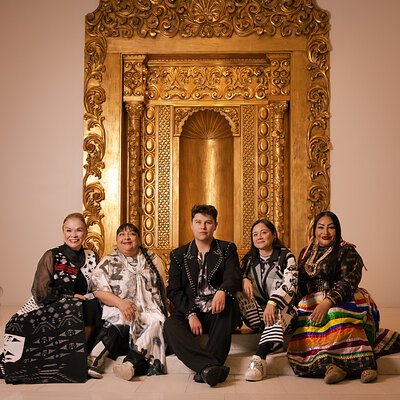
Native Fashion Ascends: Culture and Commerce on the Santa Fe Runway
SANTA FE, NM – May 11, 2026 – This past weekend, the air in Santa Fe was electric not just with the scent of piñon, but with the vibrant energy of creative sovereignty. The Southwestern Association for Indian Arts (SWAIA) capped its third annual Native Fashion Week with a sold-out gala, “A Taste of Native Fashion,” an event that was as much a declaration of cultural power as it was a display of sartorial brilliance. Before a packed audience at the Eldorado Hotel and Spa, five of North America's most acclaimed Indigenous designers unveiled 25 breathtaking looks, each piece a thread in a larger story of heritage, innovation, and economic self-determination.
The evening was a feast for all senses. Between runway presentations, guests savored a menu of traditional ingredients like squash and buffalo short ribs, curated by Chef Raymond Naranjo (Santa Clara Pueblo). The experience was interwoven with performances from Indigenous musicians, creating a holistic celebration that underscored a central theme: this is fashion deeply rooted in a living culture. Produced in partnership with Peshawn Bread (Comanche/Kiowa/Cherokee), the gala was more than a show; it was a powerful demonstration of the depth and dynamism of modern Indigenous creativity.
The Visionaries Behind the Designs
The lineup of designers represented a remarkable convergence of talent, each bringing a distinct voice and vision to the runway. The evening opened with the work of Jamie Okuma (Luiseño/Wailaki/Okinawan/Shoshone-Bannock), whose reputation precedes her. As the first Native American woman inducted into the Council of Fashion Designers of America (CFDA), Okuma’s collection was met with high anticipation. She did not disappoint, anchoring her presentation with a stunning hand-painted leather dress that immediately became one of the most talked-about pieces of the night. Her work, often described as “art ready to wear,” continues to find its place in prestigious museum collections and on influential figures, bridging the gap between gallery and closet.
Patricia Michaels (Taos Pueblo), a celebrated veteran of the fashion world, brought an ethereal quality to the stage with her collection, “Secrets of the Harvest.” Known to a national audience from her time as a finalist on Project Runway, Michaels showcased her signature hand-painted silks in five handmade dresses that seemed to float down the runway. Inspired by memory and the sacred rhythms of the harvest, her work is a testament to her ability to translate deep cultural concepts into flowing, contemporary garments.
Designer Jontay Kham (Plains Cree) presented “River Lily Park,” a collection he described as a “homecoming.” His vibrant pieces were a journey back to childhood dreams, filled with the color and imagination of gardens. “'River Lily Park' revisits the dreams and visions that first started to bloom in my childhood,” Kham stated, capturing the deeply personal and joyful essence of his work. His participation in events celebrating Indigenous Futurism shows a designer keenly aware of both his roots and the forward-looking potential of his craft.
From Vancouver, British Columbia, Himikalas Pamela Baker (Squamish/Kwakiutl/Tlingit/Haida) presented a powerful avant-garde collection titled “Back to Roots — Family: Where the Earth Hears Our Names 2026.” With a career spanning over four decades, Baker is a revered figure and mentor in the Indigenous fashion community. Her collection explored the profound bonds between ceremony, land, and lineage through bold silhouettes and innovative textures that evoked the weight and memory of family regalia, demonstrating a masterful command of both tradition and high-concept design.
Closing the evening was Lauren Good Day (Mandan/Hidatsa/Arikara), whose work is a vibrant exploration of matriarchy and continuity. Drawing on the visual language of the Northern Plains, particularly her celebrated ledger art, Good Day reimagined traditional ribbon dresses and silhouettes. Fresh off dressing prominent figures like actress Lily Gladstone, her collection was a powerful finale, weaving stories of feminine strength and cultural resilience into every seam.
Santa Fe's Bid for the Fashion Crown
The success of the gala is a cornerstone of SWAIA's ambitious goal: to establish Santa Fe as the undisputed Indigenous fashion capital of North America. Since launching the first Native Fashion Week in the United States in 2024, SWAIA has leveraged its century-long history of supporting Native arts through the world-renowned Indian Market to create a powerful new platform. The rapid growth of the event, attracting top-tier designers, industry leaders, and a global audience, strengthens the city's claim.
While other cities like Vancouver and Toronto host significant and well-established Indigenous fashion events, Santa Fe’s unique concentration of artistic talent and SWAIA’s institutional gravity create a potent combination. The sold-out crowds and high-profile attendees are clear indicators of its rising influence. “What is extraordinary about this year's event is that this group of artists will never again come together to create in this format,” noted SWAIA Executive Director Jamie Schulze (Northern Cheyenne/Sisseton Wahpeton Oyate), highlighting the unique, lightning-in-a-bottle energy of the gathering.
A Runway of Reclamation
Beyond the glamour and commerce, SWAIA Native Fashion Week is part of a much larger, global movement. Indigenous designers are using fashion as a tool for reclamation—asserting cultural sovereignty, challenging colonial narratives, and taking economic control of their creative heritage. For generations, Indigenous aesthetics were often appropriated by mainstream brands without credit or compensation. Today, artists like Okuma, Michaels, and Good Day are leading a paradigm shift, moving the conversation from appropriation to appreciation, and from being subjects to being authors of their own stories.
This movement emphasizes holistic sustainability, not as a trend, but as an ingrained value system rooted in a deep respect for the Earth. It also champions a collaborative spirit, challenging the Western fashion industry's “lone genius” archetype by drawing on community knowledge and collective expertise. Events like this affirm why this dedicated space matters. As Schulze remarked, “Events like this affirm why SWAIA Native Fashion Week matters, for our designers, for Indigenous communities, and for the future of fashion.”
The momentum is set to continue. SWAIA has already scheduled its next fashion showcase for August 16 during the 104th Annual Santa Fe Indian Market, ensuring the spotlight on Indigenous design remains bright. Each collection that walks the runway is more than a seasonal statement; it is an act of resilience, a celebration of identity, and a bold step forward in building an equitable and vibrant future for the fashion industry.