
- $28M Funding: Natilus secures $28 million in Series A funding to advance its blended-wing-body aircraft.
- 30% Fuel Savings: The BWB design promises a 30% reduction in fuel usage.
- $24B Order Book: Natilus has a commercial order book valued at $24 billion for over 570 aircraft.
Experts view Natilus's blended-wing-body aircraft as a promising innovation with significant potential to reduce costs and emissions, though challenges in certification and market adoption remain.
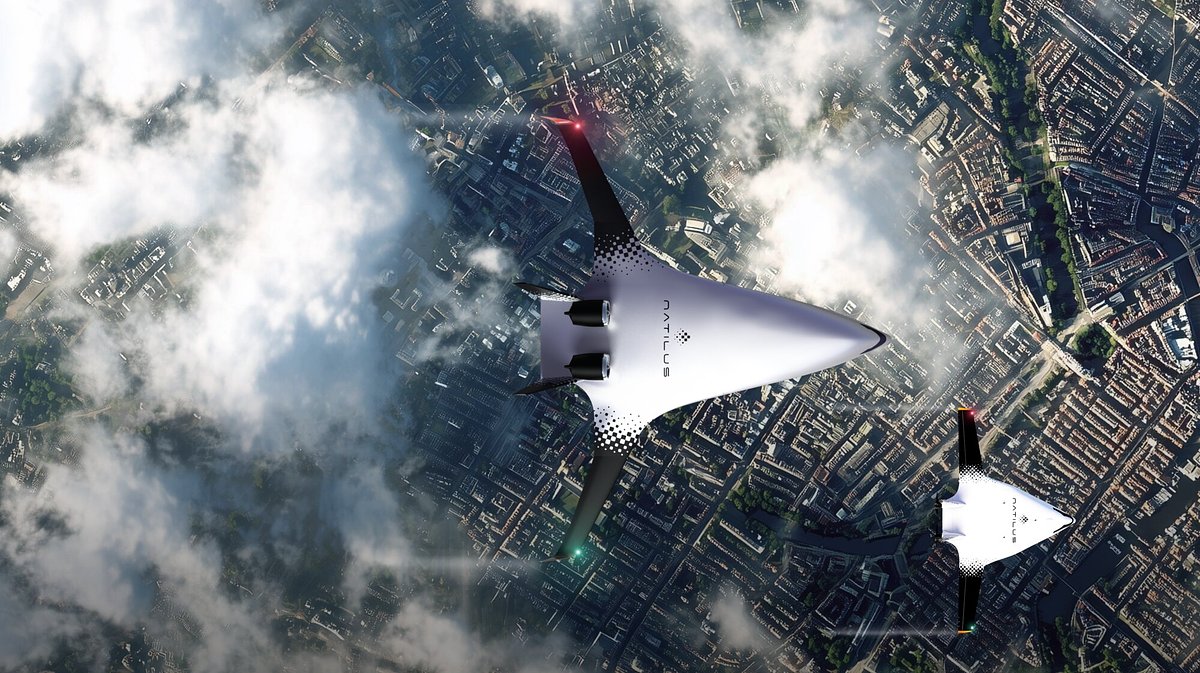
Natilus Secures $28M to Disrupt Aviation with Blended-Wing Aircraft
SAN DIEGO, CA – February 10, 2026 – Aerospace manufacturer Natilus has secured $28 million in a Series A funding round, signaling a major step forward in its quest to reshape the skies with a family of hyper-efficient blended-wing-body (BWB) aircraft. The financing, led by Draper Associates, will accelerate the development of its radical new planes, which promise to slash costs and carbon emissions for both cargo and passenger travel.
The new capital injection is earmarked to complete the manufacturing of the first full-scale prototype of KONA, a regional cargo freighter, with its inaugural flight anticipated within the next two years. The funding will also advance the development of HORIZON EVO, a 200-plus-seat passenger aircraft designed to challenge the long-standing market dominance of the Boeing 737 MAX and Airbus A321-neo.
Reshaping the Skies with Blended-Wing Tech
The core of Natilus's innovation lies in its blended-wing-body design, a concept that has been lauded in aerospace research for decades but has yet to see widespread commercial adoption. Unlike the traditional tube-and-wing configuration that has defined aviation for a century, a BWB aircraft integrates the fuselage and wings into a single, lifting body. This streamlined shape dramatically reduces aerodynamic drag.
Natilus claims its design will cut fuel usage by 30% and reduce both carbon emissions and operational costs by a staggering 50%. Aerospace studies have long supported the potential of BWB designs, with research from NASA and the U.S. Air Force indicating efficiency gains of 20-30% are achievable. Natilus is also promising a 40% increase in payload capacity, a game-changer for the logistics industry.
While legacy manufacturers have explored BWB concepts, they have been historically stymied by challenges related to structural complexity, flight stability, and passenger cabin pressurization. Natilus believes it has found the solution by making key design choices to de-risk the technology. Its aircraft will use existing, proven engine technology and feature vertical tails for conventional control and stabilization. Furthermore, the company recently updated its HORIZON EVO passenger model to a dual-deck configuration, a move intended to enhance passenger experience, simplify emergency egress, and align with FAA certification expectations.
"The aviation market is ripe for a new aircraft manufacturing entrant," said Tim Draper, Founding Partner of Draper Associates, in a statement. "Natilus's innovative and technology-driven approach to developing blended wing aircraft has opened the doors for air freight and passenger airlines alike to embrace these new planes."
A Market Ripe for Disruption
Natilus enters the market at a critical juncture. Global aircraft demand is projected to outpace the combined production capabilities of Boeing and Airbus, creating a shortfall estimated at 15,000 planes over the next 20 years. This manufacturing gap, coupled with intense pressure on airlines to improve sustainability and cut costs, creates a powerful tailwind for a new competitor.
The company has already amassed a commercial order book valued at $24 billion, representing over 570 aircraft. This figure includes a mix of firm purchase agreements, production slot reservations, and letters of intent from a diverse group of customers. Key backers include U.S. regional carrier Ameriflight, which signed a purchase agreement for 20 KONA freighters, and Canadian operator Nolinor Aviation, which plans to use the KONA for remote cargo operations. Other notable names include logistics giant Flexport—also a strategic investor—and Indian carrier SpiceJet, which placed a tentative order for 100 HORIZON jets.
The strong pre-order book demonstrates significant market confidence in Natilus's ability to deliver on its promises of economic and environmental efficiency, offering a lifeline to operators squeezed by high fuel costs and ambitious climate targets.
From Certification to Production
With fresh capital and a robust order book, Natilus is now focused on execution. The company is actively pursuing FAA Part 23, Amendment 64 certification for the KONA freighter. While certifying a novel airframe is a monumental task, Natilus has reportedly received guidance from the FAA that new rulemaking may not be necessary, provided the aircraft performs comparably to its conventional counterparts. The design adaptations, such as the dual-deck passenger cabin, are strategic moves to ease this regulatory journey.
Natilus is currently scouting locations for a 250,000-square-foot manufacturing site capable of producing 60 KONA aircraft annually. The first KONA deliveries are slated for later this decade, with the HORIZON EVO passenger aircraft expected to enter commercial service in the early 2030s. This timeline places Natilus in a head-to-head race with competitors like JetZero, another BWB startup that is also targeting a 2030 service entry and has secured significant backing from the U.S. Air Force.
Beyond Commercial: A New Asset for Defense
The KONA freighter's potential extends far beyond commercial logistics. Its unique capabilities—a 3.8-ton payload capacity and the ability to land on short, unpaved gravel runways—have attracted significant interest from the U.S. Department of Defense.
These features make the KONA an ideal platform for intra-theater lift and logistics resupply, particularly in support of the Pentagon's Agile Combat Employment (ACE) doctrine. ACE focuses on dispersing air assets across a wide range of austere and remote locations to increase survivability in a conflict. The KONA could provide a more efficient and flexible way to transport cargo and support operations in contested regions like the Indo-Pacific. Natilus has confirmed it is in discussions with the U.S. Army, Air Force, and the DoD.
Underscoring its defense ambitions, Natilus has appointed Kory Mathews, a former Boeing executive who led advanced design at Phantom Works and served as Chief Engineer for Boeing Military Aircraft, to its Board of Directors. His deep experience in rapid prototyping and defense programs provides invaluable expertise as the company navigates this dual-use path.
"We're not just building aircraft. We're reshaping the future of aviation beyond the limitations of the tube-and-wing airframe to fundamentally transform how we transport goods and people," said Aleksey Matyushev, Co-Founder and CEO of Natilus. "With this latest funding and newest personnel additions, we are strongly positioned to bring our family of blended-wing aircraft to market, disrupting the Boeing-Airbus duopoly and bringing much-needed innovation to the aviation industry."