
- $3B+: Current value of the global bone grafts and substitutes market, projected to exceed $5.5B by 2030. - NanoLift™ Technology: Engineered to actively stimulate cellular activity, promoting faster and more robust bone regeneration. - Hydroxycarbanoapatite (HCA): Biomimetic material designed for optimal resorption and osseointegration, closely replicating natural bone composition.
Experts view Summit Matrix™ as a significant advancement in orthopedic and spinal healing, leveraging nanotechnology to enhance bone regeneration and surgical efficiency, with potential to improve patient outcomes and streamline procedures.
Nano-Tech Bone Graft Aims to Reshape Orthopedic & Spinal Healing
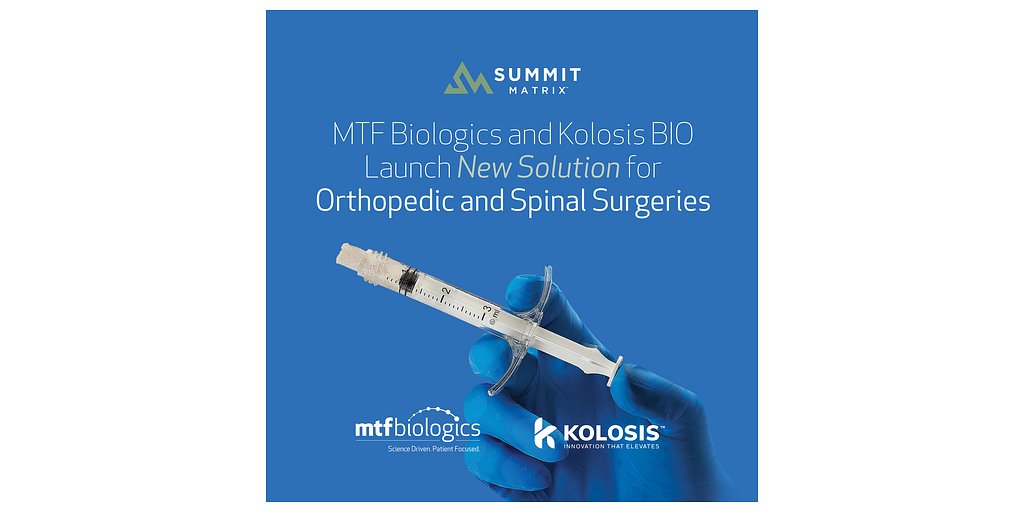
EDISON, N.J. & SALT LAKE CITY, UT – January 14, 2026 – A new partnership is leveraging the power of nanotechnology to set a new standard in bone repair. MTF Biologics, a long-standing nonprofit in tissue science, and Kolosis BIO, a rising orthobiologics innovator, have announced the launch of Summit Matrix™, an advanced synthetic bone graft for orthopedic and spinal surgeries. The new solution, powered by proprietary NanoLift™ surface technology, promises to enhance bone regeneration, improve surgical efficiency, and ultimately deliver better outcomes for patients.
A Leap Forward in Biomimetic Design
At the heart of Summit Matrix™ lies its innovative NanoLift™ surface technology, a design that moves beyond traditional grafting materials by actively engaging with the body's natural healing processes. The technology integrates three key elements: nanoscale topography, biomimetic chemistry, and what the companies describe as "exceptional handling" for surgeons.
The graft's surface is composed of a nanocrystalline, plate-like structure. This intricate, microscopic architecture is not merely a passive scaffold for bone to grow upon; it is engineered to actively support and stimulate cellular activity. Broader scientific research into nanostructured surfaces has consistently shown they can significantly improve the way bone-forming cells, or osteoblasts, function and can even encourage stem cells to differentiate into osteoblasts. This cellular-level interaction is critical for promoting robust and rapid bone formation.
Further enhancing its biological performance is the graft's unique chemical composition: hydroxycarbanoapatite (HCA). This material is engineered to closely mimic the mineral component of natural human bone. By replicating the body's own building blocks, Summit Matrix™ is designed for optimal resorption and osseointegration—the process by which the graft is safely absorbed by the body and becomes seamlessly integrated with the patient's existing bone. This biomimicry is a significant advantage over other ceramic-based materials that may lack the carbonate component found in natural bone, potentially leading to faster and more complete healing.
“MTF Biologics was founded by orthopedic surgeons nearly 40 years ago with a focus on providing solutions that improve patient care,” said Brad Bailey, Vice President and General Manager of MTF Biologics’ Orthopedic Franchise. “Summit Matrix continues this legacy, representing a significant leap forward in bone graft technology.”
Navigating the Competitive Orthobiologics Landscape
The launch of Summit Matrix™ places it directly into the highly competitive and rapidly growing global bone grafts and substitutes market. Valued at over $3 billion, this sector is projected to grow significantly, with some estimates predicting it will exceed $5.5 billion by 2030. This growth is fueled by an aging population, a subsequent rise in orthopedic conditions like osteoporosis, and continuous advancements in surgical techniques.
The market is currently dominated by medical technology giants such as Stryker, Zimmer Biomet, Medtronic, and DePuy Synthes, all of whom offer extensive portfolios of orthobiologic products. These established players are joined by specialized companies like Biogennix and Biocomposites, which are also focused on advanced synthetic solutions, some featuring their own nanostructured technologies.
In this environment, differentiation is key. The MTF Biologics and Kolosis BIO partnership is banking on NanoLift™ technology to be its primary competitive advantage. "This technology will be a formidable contender in the market immediately," stated Collin Begley, CEO of Kolosis BIO. He expressed confidence that the collaboration will allow them to "offer a best-in-class portfolio of allograft tissues and synthetic ceramics, all through one trusted partner.”
This strategy of offering a comprehensive suite of solutions—from traditional allografts to advanced synthetics—under one umbrella is a powerful market differentiator. It allows the partnership to cater to a wider range of surgeon preferences and clinical needs, streamlining the procurement process for hospitals and surgical centers.
The Synergy of a Strategic Alliance
The collaboration between MTF Biologics and Kolosis BIO is a case study in strategic synergy. It pairs a revered nonprofit with a deep legacy in tissue science with an agile, commercially focused "pure-play" biologics company. MTF Biologics, as one of the world's largest tissue banks, brings decades of trust, extensive distribution networks, and unparalleled expertise in tissue processing and safety.
Kolosis BIO, in turn, provides the "relentless execution" and market focus needed to commercialize cutting-edge technologies. This exclusive partnership allows Kolosis to leverage MTF Biologics' established contracts with major hospital purchasing groups and networks, granting immediate, widespread market access for new products.
Summit Matrix™ is designed to integrate seamlessly with the partnership's existing portfolio of allograft tissues, which includes established products like Kore Fiber®, Prime HD®, and the DBX® line of putties and mixes. By adding a next-generation synthetic option, the companies are creating a holistic toolkit for spine and orthopedic surgeons. This diversification not only strengthens their market position but also reflects a broader industry trend toward integrated care models where providers seek comprehensive solutions from trusted suppliers. The introduction of Summit Matrix™ marks a significant expansion of this strategy, moving beyond allografts to capture a larger share of the synthetic graft market.
Redefining the Patient and Surgeon Experience
The ultimate measure of any new medical technology is its impact on surgeons and their patients. Summit Matrix™ is engineered to deliver tangible benefits in both arenas. For surgeons, the promise of "exceptional handling" is a significant practical advantage. The material's consistency and moldability can reduce complexity and time in the operating room. Furthermore, using a sterile, readily available synthetic graft eliminates the need for a second surgical site to harvest the patient's own bone (an autograft), a procedure that adds time, risk, and is a source of post-operative pain.
For patients, these surgical advantages translate into a better recovery experience. The primary benefit is the potential for accelerated and more reliable bone healing. The graft's nanostructure and biomimetic chemistry are designed to stimulate a more robust biological response, leading to faster fusion and a quicker return to mobility and quality of life.
By obviating the need for an autograft, patients are spared the associated donor site morbidity, which can include chronic pain, nerve damage, and an increased risk of infection. This makes the procedure safer and less painful. The biocompatibility of the hydroxycarbanoapatite material is also a key safety feature, minimizing the risk of inflammatory or immune reactions. In an era where patient outcomes and recovery speed are paramount, technologies like Summit Matrix™ represent a critical step forward, aligning advanced material science with the fundamental goal of healing patients more effectively and with fewer complications.
The introduction of this advanced synthetic graft by MTF Biologics and Kolosis BIO signals a strong commitment to pushing the boundaries of regenerative medicine, offering a sophisticated new tool that could improve the standard of care for countless patients undergoing spinal and orthopedic procedures.