
- 40 years of tradition: The Qinhuai Lantern Festival celebrates its 40th anniversary in 2026, reflecting four decades of growth since its revival in 1986.
- 390 lantern installations: This year's festival features around 390 distinct lantern displays across eight exhibition areas.
- 200 million visitors: Since 1986, the festival has attracted nearly 200 million visitors, making it a premier tourist destination.
Experts would likely conclude that the Qinhuai Lantern Festival exemplifies the successful fusion of ancient tradition with modern innovation, serving as a powerful cultural and economic asset for Nanjing while fostering global cross-cultural understanding.
Nanjing's Lanterns: A 40-Year Beacon for Culture and Connection
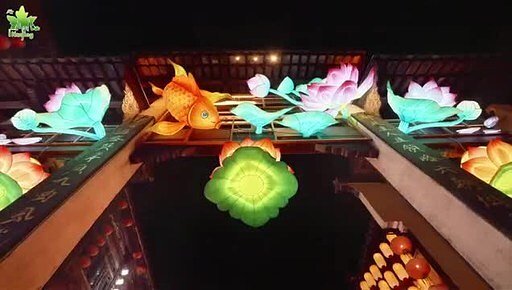
NANJING, China – March 06, 2026 – As the vibrant energy of the Spring Festival sweeps across China, the ancient city of Nanjing once again transforms into a breathtaking sea of light. The 40th Qinhuai Lantern Festival has set the historic riverside aglow, its dazzling installations reflecting a tradition that is both deeply rooted in history and dynamically embracing the future. More than just a local celebration, the festival has matured into a global cultural phenomenon, serving as a luminous calling card for Nanjing and a unique window into modern China for a new generation of international observers.
This year, as international students from Southeast University embarked on a self-guided “lantern quest,” their journey through the illuminated corridors offered a profound lesson in cultural discovery. They found a story told not in textbooks, but in light, color, and intricate design—a story of a nation that honors its heritage while confidently innovating.
From Folk Art to Global Icon
The Qinhuai Lantern Festival’s history stretches back over 1,700 years, but its modern incarnation marks four decades of spectacular growth. Since its official revival in 1986, the event has evolved from a cherished local tradition into a globally recognized cultural touchstone. In 2006, the intricate craft of Qinhuai lantern-making was designated one of China’s first national-level intangible cultural heritage items, a testament to its artistic and historical significance.
This recognition was further amplified in December 2024, when the festival played a key role in the successful inscription of “Spring Festival—Chinese Social Practices for Celebrating the Traditional New Year” on the UNESCO Representative List of the Intangible Cultural Heritage of Humanity. The festival is no longer confined to the area around the historic Confucius Temple; it now sprawls across a five-mile scenic belt along the Qinhuai River, with this year's 40th edition boasting around 390 distinct lantern installations across eight exhibition areas. Its influence extends far beyond Nanjing’s city walls, with showcases in over 50 countries and dedicated overseas exhibition zones in the Netherlands and France for this anniversary year, bringing a piece of Nanjing's magic to a worldwide audience.
Where Ancient Craftsmanship Meets Modern Spectacle
The enduring allure of the festival lies in its masterful fusion of the ancient and the avant-garde. At its heart is a centuries-old craft that integrates paper-tying, painting, calligraphy, and sculpture. Artisans, who are inheritors of this intangible heritage, meticulously construct each piece. A traditional lotus lantern, for example, can involve up to 62 distinct hand-making steps, from shaping delicate bamboo slices into a frame to cutting, dyeing, and pressing paper for its petals.
Yet, this deep respect for tradition is paired with a bold embrace of contemporary technology. The soft flicker of candles has given way to over 14,000 meters of brilliant LED strips, holographic projections, and laser beams that create immersive, multi-sensory experiences. Modern materials like steel, fiberglass, and silk allow for larger, more durable, and increasingly realistic installations, from majestic dragons to lifelike zodiac animals.
Perhaps the most striking example of this synthesis is the use of advanced drone technology. During the festival, swarms of over 100 UAV drones have been programmed to perform synchronized aerial ballets, suspending traditional Kongming lanterns and forming shimmering patterns in the night sky. This high-tech reinterpretation of the ancient sky lantern ritual perfectly encapsulates the festival's spirit: honoring the past by reimagining it for a 21st-century audience.
Illuminating Nanjing's Economy and Global Brand
Beyond its cultural significance, the Qinhuai Lantern Festival is a formidable economic engine. Since 1986, the event has attracted a cumulative total of nearly 200 million visitors, cementing its status as a premier tourist destination. Recent data underscores its powerful draw; bookings for the festival surged by over 50% year-on-year during the first two days of the 2024 Spring Festival holiday. This influx of visitors provides a massive boost to Nanjing's tourism, retail, and hospitality sectors.
The festival is a cornerstone of the city's booming “night economy,” encouraging consumption and activity long after sunset. Its economic impact is a key factor in Nanjing's impressive tourism figures, which saw the city welcome a record 200.5 million visitors in 2025, generating approximately 239 billion yuan in spending. The lantern-making craft itself has also evolved from a collection of small, family-run workshops into a significant local industry, providing employment and preserving artisanal skills.
By successfully leveraging its cultural assets, Nanjing has created a powerful model for cultural tourism. The festival not only generates substantial revenue but also enhances the city's global brand as a vibrant, innovative, and culturally rich metropolis, fueling a broader “China travel” boom.
Cultural Bridges: Discovering China by Lantern Light
The festival's most profound impact may be its role in fostering cross-cultural understanding. For international students, it serves as a living classroom. As they wandered through the radiant displays, they discovered that each lantern is a vessel of meaning, reflecting core Chinese values of family reunion, hope for prosperity, and respect for history.
This immersive experience provides a perspective that cannot be found in books or lectures. “For me, this is more than a festival,” one student from Southeast University shared. “It's a way to understand how Nanjing connects its past with its future, and how it welcomes the world.” This sentiment is central to China's broader cultural diplomacy strategy, which views such events as a vital pillar for “telling China’s story well.”
Nanjing, along with Jiangsu Province, actively supports this exchange through initiatives like the “Discover Jiangsu Program” and scholarships designed to attract international talent. Universities like Southeast University and Nanjing University host thousands of students from over 100 countries, organizing cultural forums and activities that encourage deep engagement. By participating in events like the lantern festival and sharing their stories online and with friends back home, these young people become invaluable cultural bridges, carrying with them personal accounts of a China illuminated not only by lanterns, but by a spirit of openness and exchange.