
- 20 nanoamps (nA) average current consumption: The MRMS166R sensor operates at an ultra-low power level, enabling multi-year battery life for wearables.
- 1.2-volt operation: The sensor functions reliably at low voltages, extending device lifespan.
- 1.0 × 1.0 × 0.4 mm package: The sensor's minuscule size meets demands for miniaturization in electronics.
Experts view Murata's AMR sensor as a breakthrough in power efficiency, enabling longer battery life for wearables and IoT devices, and addressing a critical barrier in modern electronics.
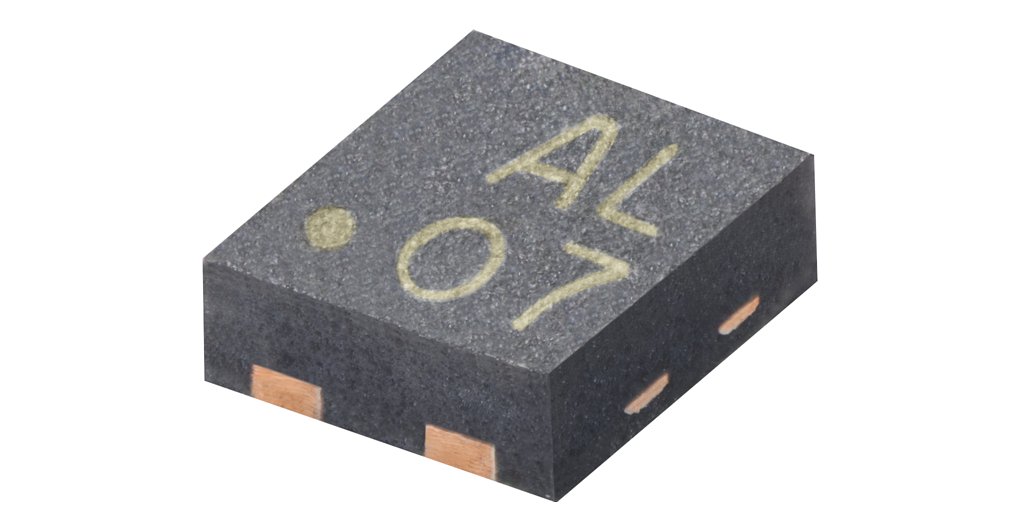
Murata's Tiny Sensor Promises Multi-Year Battery Life for Wearables
KYOTO, Japan – April 26, 2026
Murata Manufacturing Co., Ltd. has commenced mass production of a new series of magnetic sensors so power-efficient they could fundamentally reshape the landscape for battery-powered devices. The new anisotropic magnetoresistance (AMR) sensors, particularly the MRMS166R model, combine an unprecedented average current consumption of just 20 nanoamps (nA) with the ability to operate from a 1.2-volt supply. This breakthrough paves the way for healthcare devices, wearables, and Internet of Things (IoT) gadgets that can run for more than two years on a single, tiny coin cell battery, addressing one of the most significant barriers to innovation in modern electronics.
Redefining Power Efficiency in Miniaturized Devices
At the heart of this development are solid-state magnetic sensors designed for contactless switching. In countless battery-powered devices, from wireless earbuds to medical patches, these components detect the presence of a magnet—for instance, in a charging case lid or a device cover—to automatically switch the system between active and low-power sleep modes. By eliminating mechanical parts, these sensors enhance reliability and allow for sealed, durable designs.
The challenge, however, has always been the power they consume. Even in a standby state, traditional sensors draw a small but constant current that, over time, drains the limited capacity of the small silver oxide or lithium coin cells common in miniaturized electronics.
Murata's new AMR sensors tackle this problem head-on. By redesigning the sensor's internal circuitry, the company has achieved an average current consumption of 20 nA for the MRMS166R—a figure that is orders of magnitude lower than many existing solutions. To put this in perspective, a single microamp (µA) is 1,000 nanoamps; this sensor sips power at a rate that is almost negligible.
Equally important is its ability to operate reliably down to 1.2 volts. This is critical for devices powered by single-cell batteries, whose voltage drops as they discharge. The sensor's stable performance at low voltages ensures the device remains functional for its entire battery lifespan, which Murata estimates can exceed two years in typical use cases. Housed in a minuscule 1.0 × 1.0 × 0.4 mm package, the sensor also meets the relentless demand for miniaturization, giving engineers more freedom in product design.
The Competitive Landscape of Low-Power Sensing
Murata's announcement does not happen in a vacuum. The race to minimize power consumption is a defining feature of the modern semiconductor industry. Major players like Honeywell, NXP Semiconductors, and Infineon Technologies have their own impressive lineups of low-power magnetic sensors, utilizing technologies including Hall effect, AMR, and Tunnel Magnetoresistance (TMR).
For instance, competitors offer sensors with deep-sleep modes that consume single-digit nanoamps or achieve low average current by employing rapid "awake/sleep" duty cycles. NXP's NMH1000 Hall effect switch, for example, boasts a 75 nA typical current at a 1 Hz sampling rate. What makes Murata's MRMS166R stand out is its combination of an exceptionally low average current for an AMR sensor, a technology known for its sensitivity, with the very low 1.2 V operating voltage. This pairing is particularly potent for "always-aware" applications where the sensor must remain vigilant without being a significant drain on the system.
While TMR sensors are often lauded for their high sensitivity and low power, Murata's refinement of AMR technology demonstrates that significant innovation is still possible within established platforms. The launch represents a strategic move to offer a highly optimized solution for a specific but massive market segment: coin-cell-powered devices where every nanoamp counts. The MRMS168R variant, which operates at a slightly higher voltage and current (80 nA) but provides a much stronger 12 mA output drive, further illustrates a nuanced strategy to cater to different system requirements within the same low-power ecosystem.
Unlocking the Next Wave of Innovation
The true significance of this technological advancement lies in the real-world applications it enables. By drastically extending battery life, these sensors remove a critical design constraint that has long hampered progress in key growth markets.
In healthcare, the impact could be profound. For capsule endoscopes—pills with cameras that patients swallow—longer battery life means more time to capture diagnostic images as they travel through the digestive tract. For wearable medical patches that monitor vital signs or dispense medication, it means less frequent replacements, improving patient compliance and comfort. The ultra-low power consumption makes these sensors ideal for long-term implantable devices, potentially reducing the need for invasive surgeries to replace batteries.
The burgeoning wearables market, projected to continue its strong growth trajectory, stands to benefit enormously. Imagine AR glasses or wireless earbuds that don't need daily charging, or fitness trackers that run for years. This level of power efficiency could enable new "set-and-forget" functionalities, where devices seamlessly integrate into a user's life without the constant reminder of a dwindling battery meter.
In the vast and expanding Internet of Things (IoT) sector—a market expected to be worth trillions of dollars by 2030—the implications are centered on operational efficiency. For a homeowner, replacing the battery in a smart lock or window sensor every few years instead of every few months is a simple convenience. For a corporation managing thousands of sensors in a smart building, a remote industrial site, or across a logistics network, it translates into a dramatic reduction in maintenance costs and operational downtime.
A Strategic Move for a Component Giant
This launch is far more than an incremental product update for Murata; it is a calculated strategic maneuver that reinforces its position as a key enabler of future technology. Known worldwide as a leader in ceramic-based passive components and high-frequency modules, Murata has been steadily strengthening its sensor portfolio to capitalize on high-growth markets.
The development of the MRMS166R and MRMS168R aligns perfectly with the company's core competencies: miniaturization, high reliability, and advanced material science. It demonstrates a keen understanding of the market's most pressing needs and a commitment to solving fundamental engineering challenges. By providing a component that directly addresses the battery life bottleneck, Murata is not just selling a sensor; it is selling a solution that unlocks value for its customers across the entire product development cycle.
This move also signals a continued diversification away from a heavy reliance on the smartphone market and a deeper push into the automotive, industrial, and healthcare sectors. These markets demand long-term reliability and specialized performance, playing directly to Murata's strengths. By setting a new standard for low-power magnetic sensing, the company solidifies its role as an indispensable partner for innovators building the next generation of connected devices. Murata has stated its intention to continue expanding its AMR sensor lineup and further reduce power consumption, signaling a long-term commitment to leading this critical technology segment.
Topics & Related
Semiconductors
IoT
Related Company Pulse